How to Write a Press Release That Ranks on Google
Master the latest SEO techniques to ensure your news announcement gets discovered by search engines and journalists.

Get featured on 500+ media outlets
Guaranteed placement, no PR experience needed.
Redefining Press Release SEO in 2026
Let's start with a dose of reality. According to a detailed analysis by Backlinko, only about 12% of press releases ever manage to secure a top-three ranking on Google. This isn't meant to be discouraging. Instead, it forces us to redefine what success looks like. The old game of chasing highly competitive keywords with a press release is over. The new goal is to generate valuable, indirect SEO signals that build a stronger digital footprint.
In 2026, a successful press release achieves three core outcomes: it builds brand mentions, creates authoritative citations, and drives qualified referral traffic. While it's true that most links from major news outlets are 'nofollow,' they are far from useless. Think of them as digital billboards. They place your brand name on high-authority domains, enhancing visibility and credibility. If a journalist or blogger discovers your story through this syndication, they might provide independent coverage with a valuable 'follow' link.
A well-crafted announcement becomes a long-term digital asset. Research from eReleases shows that an optimized release can continue to attract organic traffic for six months or more. It acts as a persistent entry point for niche search queries, long after the initial news has faded.
Strategic Keyword Research for Newsworthiness
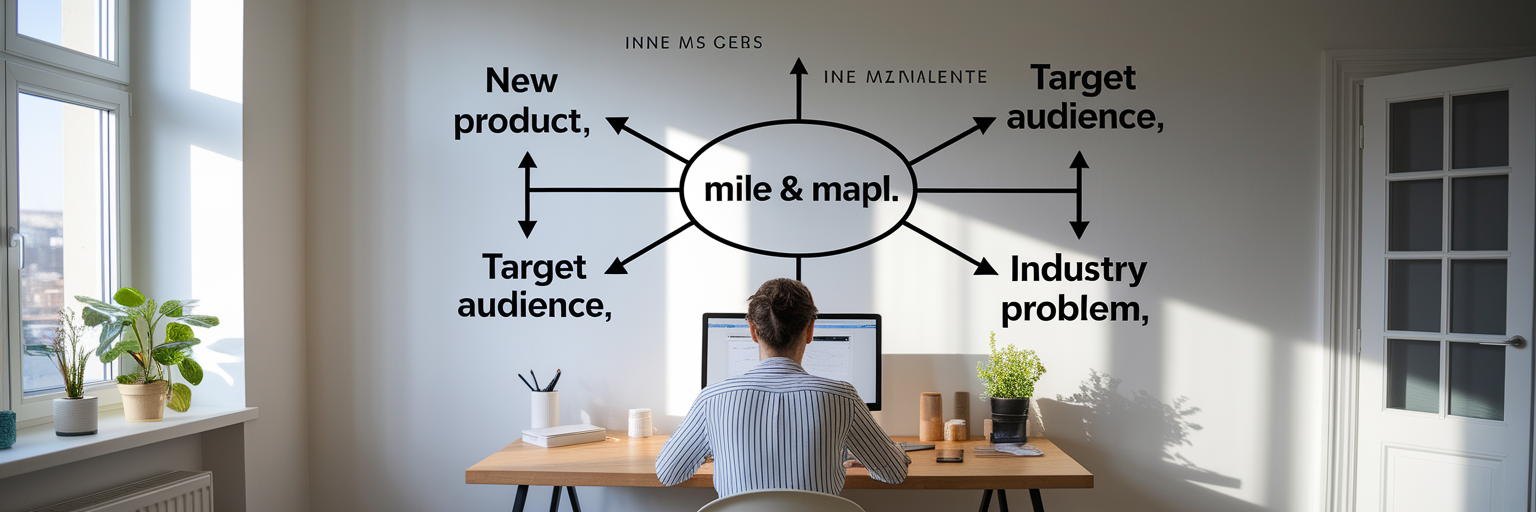
Keyword research for a press release is fundamentally different from standard SEO. You are not trying to rank for a broad, competitive term like 'financial software'. That’s like shouting into a hurricane. Instead, the focus is on newsworthiness. Your target is a specific, long-tail phrase like 'AI-powered expense tracking for Singapore startups'. This is a query with clear intent, where your news can realistically compete and provide a direct answer.
Finding these news-centric keywords requires a specific approach. It’s less about volume and more about relevance and intent. Here is a process that works:
- Define the core news value. Before you even think about keywords, what is the actual announcement? Is it a product launch, a new partnership, or a milestone? The 'what' and 'why' of your story are the foundation.
- Uncover problem-oriented searches. Use SEO tools to find question-based queries that your news addresses. For example, if your announcement is about a new marketing tool, look for searches like 'what is generative AI in marketing?' or 'how to automate campaign reporting'.
- Adopt a dual-audience mindset. This is the most critical step. Ask yourself: what terms would an industry journalist use when researching a story on this topic? This ensures your release is discoverable by media professionals who can amplify your message.
When you learn how to write a press release for SEO, you quickly realize the right keywords attract both search algorithms and influential humans. Finding the perfect balance between what a search engine wants and what a journalist is looking for can be complex, but our expert keyword analysis can uncover these hidden opportunities.
Crafting the SEO-Optimized Press Release
Once your keywords are defined, the next step is to weave them into the fabric of the press release itself. This is a tactical process where structure and precision matter. Every component, from the headline to the final quote, has a role to play in search visibility.
The High-Impact Headline and Sub-headline
Your headline is the single most important SEO element. It must contain your primary keyword and immediately signal the news value. A proven formula is to lead with the news, followed by the brand. The sub-headline should then incorporate a secondary keyword while adding essential context that grabs a reader's attention and encourages them to continue.
The Critical First Paragraph
The opening paragraph serves two masters: Google's News index and time-poor journalists. It must concisely summarize the 5 Ws (Who, What, When, Where, Why) of your announcement. Crucially, your primary keyword should appear naturally within the first 200 characters. This is a key factor for discoverability and helps search engines quickly understand the release's topic.
Writing Scannable Body Copy
To improve readability and increase the chances you get press release on Google News, keep the entire announcement under 400 words. We’ve all seen those dense, text-heavy releases that are impossible to read. Use short paragraphs, bullet points, and bold text to break up the content. This is also where you can embed related keywords and contextual links to relevant pages on your site, building semantic relevance without resorting to keyword stuffing.
Leveraging Multimedia and Quotes
Including high-quality images, infographics, or a short video does more than just make your release look good. It increases engagement and dwell time, which are positive signals for search engines. Furthermore, quotes from executives or key stakeholders are a prime opportunity to insert keywords in a natural, authoritative way. Instead of a generic statement, a quote can reinforce the core message while adding a human touch. These are the foundational SEO press release best practices that separate a visible release from one that disappears. For those who need it, our professional press release writing services can help craft a perfectly optimized announcement.
Technical SEO and Structured Data Integration

Beyond the written content, several 'behind-the-scenes' technical elements help search engines understand and prioritize your press release. These optimizations are often overlooked but can have a significant impact on visibility. The most important of these is Schema markup. By applying `NewsArticle` and `Article` structured data, you are giving Google an explicit, machine-readable summary of your content. This dramatically increases the chances of your release being featured in 'Top Stories' carousels and other rich results.
Other technical factors, often managed by distribution services, include clean, keyword-rich URL slugs and correct canonical tag implementation. Canonical tags are especially important, as they prevent duplicate content issues when your release is syndicated across dozens or hundreds of websites. Without them, search engines can get confused about which version is the original.
Even though most links in a press release are 'nofollow,' how you format them still matters. Follow these best practices for hyperlinks:
- Use descriptive, keyword-rich anchor text. Instead of 'click here,' use text like 'our new AI-powered platform'.
- Link to the most relevant, high-value page on your website, not just the homepage.
- Ensure the link provides clear context for both users and search engines.
The good news is that technical SEO is becoming more accessible. As a recent report from eReleases highlights, there has been a 42% increase in client requests for automated schema implementation. For anyone serious about optimizing press releases for search, using modern platforms that handle this technical integration is essential.
Distribution Strategy for Maximum SEO Impact
Writing a perfectly optimized press release is only half the battle. How you distribute it directly determines its SEO impact. The choice between free and premium wire services is a critical one. Free services may seem tempting, but they rarely deliver the results needed for meaningful brand visibility. Premium services, on the other hand, are designed for maximum reach and SEO value.
| Feature | Free Services | Premium Services |
|---|---|---|
| Indexation Guarantee | Not guaranteed | Guaranteed on Google News & search |
| Syndication Network | Limited, low-authority sites | Extensive network of reputable news domains |
| SEO Value | Minimal citation or authority building | Strong citation building and brand mentions |
| 'Follow' Link Potential | Extremely low | Higher potential from high-authority pickups |
This table outlines the typical differences between distribution tiers. The choice of service directly impacts the SEO visibility and authority gained from a press release.
Beyond broad distribution, targeting niche industry portals sends powerful contextual signals to Google and drives a highly qualified audience. A mention from a respected trade publication is often more valuable than dozens of pickups on generic news sites. When it comes to a press release backlink strategy, it's important to have realistic expectations. As a PR Newswire report found, only about 18% of distributed releases earn a 'dofollow' link. The best approach is a hybrid one: combine the reach of a premium wire service with direct, personalized outreach to journalists. A compelling story, delivered through the right channels, is what ultimately earns high-quality attention. To ensure your announcement gets the visibility it deserves, working with a partner who can build a comprehensive distribution strategy is key.