This is Satire
This article is 100% fictional and intended for entertainment purposes only. Any resemblance to real events is purely coincidental.
Amazon crash forces Americans to discover fourth website on the internet
With Amazon briefly offline, analysts say U.S. consumers were forced to type unfamiliar URLs, triggering a documented surge in confusion, eye contact with store staff and accidental openings of Microsoft Excel.
Get featured on 500+ media outlets
Guaranteed placement, no PR experience needed.
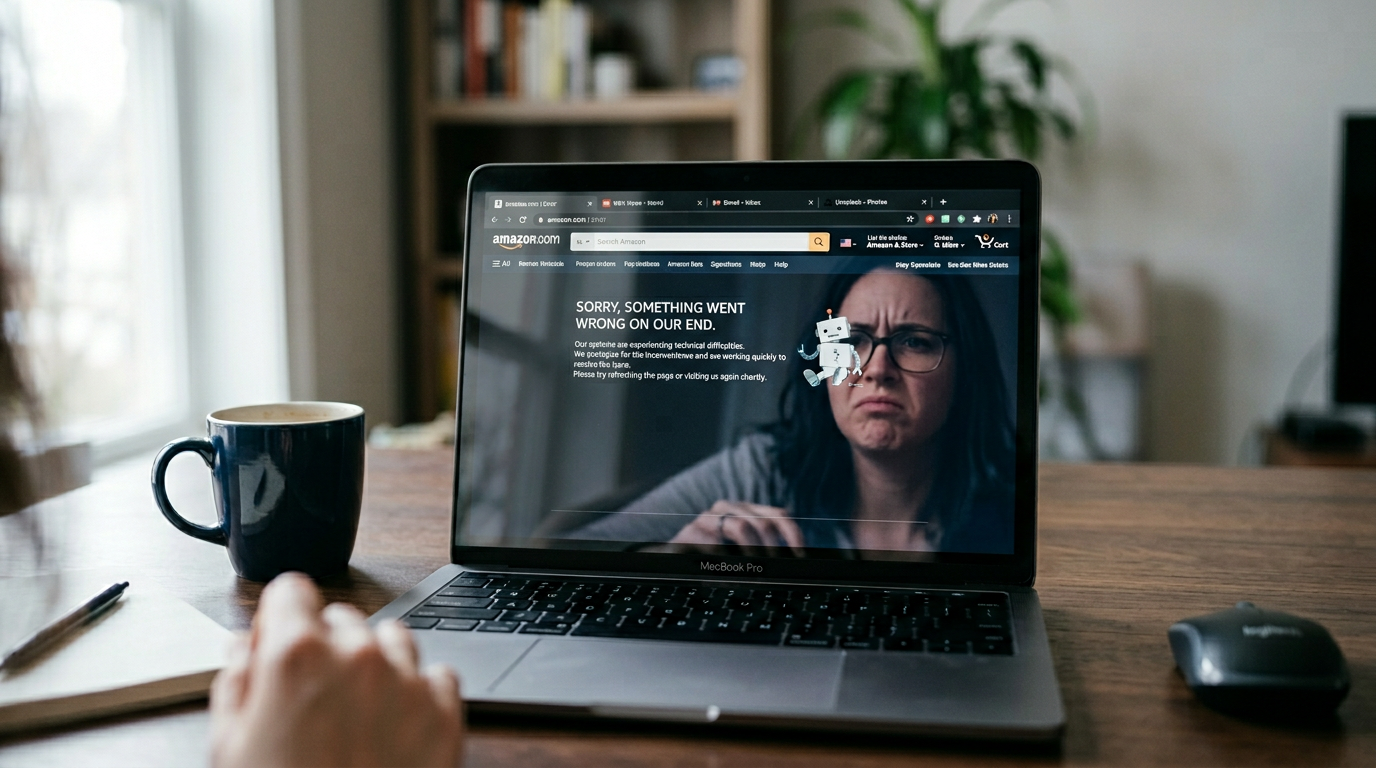
A widespread outage at Amazon.com on Friday afternoon temporarily forced millions of Americans to navigate to what experts described as “a previously unvisited fourth website on the internet.”
“This is the first time in our records that a statistically significant share of U.S. consumers accessed a fourth unique domain name.”
Monitoring service Downdetector reported more than 20,487,392 problem submissions in the first 11 minutes of the disruption, with 99.7% of users indicating they had no contingency plan for buying paper towels.
The outage began at 2:14 p.m. Eastern and affected Amazon’s retail site, mobile app and voice-powered ordering systems, according to an internal memo reviewed by reporters.
In the absence of Amazon, traffic to lesser-known destinations surged, with one analytics firm confirming a 9,300% increase in searches for “another place to buy things” and “where do you type www again.”
“This is the first time in our records that a statistically significant share of U.S. consumers accessed a fourth unique domain name,” said an analyst at Goldman Sachs, citing proprietary browsing data.
The analyst added that roughly 41% of affected users landed on a regional grocery chain’s website, 28% refreshed their browser for an average of 46 consecutive minutes, and 19% accidentally opened Microsoft Excel and then closed it without explanation.
An Amazon spokesperson confirmed the outage in a brief statement, saying engineers were working to restore services and to “re-anchor customers in the familiar three-site ecosystem of search, video and us.”
The spokesperson declined to comment on reports that Alexa devices, when asked where to shop, responded with, “Please stand by, I am also panicking.”
Sociologists at a major Midwestern university reported early signs of behavioral dislocation, noting that 7.4% of respondents made direct eye contact with a local store employee for the first time, while 3.2% tried to apply digital promo codes verbally at cash registers.
Another 2.9% reported discovering a physical bookshop, a figure the researchers described as “within the margin of error but directionally surprising.”
Shares of Amazon fell 2.3% in after-hours trading as investors reacted to the possibility that consumers might retain awareness of alternatives, even after the outage ended.
However, analysts at Morgan Stanley said they expected “reversion to the three-website mean” within 24 to 48 hours, projecting that 87% of consumers would promptly forget the URLs of any emergency sites used during the disruption.
Regulators at the Federal Trade Commission said they were “closely monitoring” the situation and studying whether exposure to multiple websites could distort competition or cause “unnecessary consumer choice fatigue.”
In a preliminary discussion paper, staff suggested that future outages could be mitigated by a standardized backup portal, tentatively titled “EmergencyPurchases.gov,” to channel all non-Amazon buying activity through a single, more emotionally manageable fourth site.
Amazon said it will conduct a full internal review of the incident, implement new resilience measures and launch a customer education campaign on “what a browser address bar is and why it exists.”
The company added that once systems are fully restored, users will receive detailed guidance on how to safely exit any interim websites they may have visited and return to “a more predictable, single-supplier retail experience.”