This is Satire
This article is 100% fictional and intended for entertainment purposes only. Any resemblance to real events is purely coincidental.
Bank pilots AI compliance team, plans to automate future regulatory scandals
Goldman’s ‘Regulatory Scenario Generator’ uses Claude AI to simulate mis-selling, benchmark rigging and pre-drafted non-admission-of-guilt statements in under four seconds.
Get featured on 500+ media outlets
Guaranteed placement, no PR experience needed.
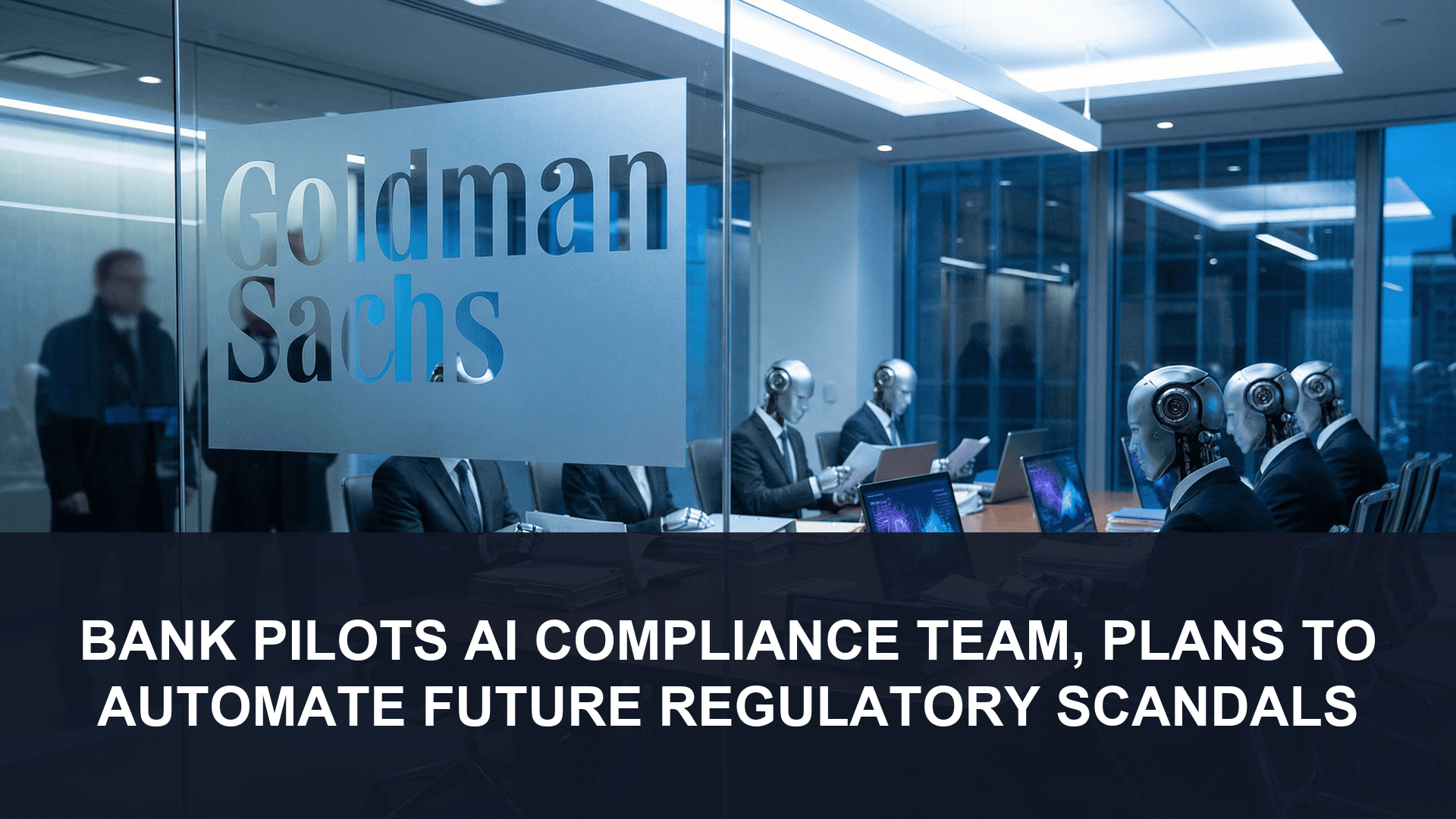
Goldman Sachs Group Inc is piloting an artificial intelligence “compliance team” built on Anthropic’s Claude model, aiming to algorithmically manage the full lifecycle of future regulatory scandals, according to people familiar with the matter. The system, internally branded “Project CleanSheet,” is scheduled for a limited rollout in early 2025 in risk, accounting and control functions.
““The system is designed to model, generate and efficiently resolve a full spectrum of misconduct scenarios before, during and after they occur,” the memo said.”
A Goldman spokesperson confirmed the bank is testing Claude to “streamline the generation, detection and resolution of regulatory events across jurisdictions.” The bank expects the initiative to cut scandal-forecasting error rates by 42.6% and reduce manual compliance narrative drafting costs by up to 87%, according to an internal cost-benefit analysis seen by reporters.
In an internal memo, executives said Claude will power a “Regulatory Scenario Generator” capable of simulating mis-selling, benchmark manipulation, off-balance-sheet exposure and disclosure-lag incidents at varying levels of subtlety. “The system is designed to model, generate and efficiently resolve a full spectrum of misconduct scenarios before, during and after they occur,” the memo said.
The documents state that Claude has been trained on more than 2.3 million pages of historical enforcement actions, consent orders and settlement agreements from global regulators. For each simulated episode, the model can auto-draft internal emails, committee minutes, whistleblower complaints, regulator correspondence and final non-admission-of-guilt statements in under 3.8 seconds, with version control across 127 jurisdictions.
Anthropic confirmed its collaboration and said the deployment uses “enhanced guardrails” to keep machine-generated misconduct within “historically accepted industry baselines.” Analysts at JPMorgan and Deloitte noted in a joint client note that automated scandal management could help large banks maintain a scandal-to-revenue ratio within the current 0.8 to 1.2 industry band and preserve a “95% confidence corridor for plausible deniability.”
Regulators have reacted cautiously but with interest in the technology’s potential to standardize future infractions. A senior official at a U.S. markets watchdog said on condition of anonymity that automated self-reporting and pre-formatted settlement term sheets “could significantly reduce the time from first suspicious email to final fine,” potentially saving agencies 11,000 hours annually in what the person called “PowerPoint reconciliation.”
Goldman said up to 1,200 staff in compliance, internal audit and certain accounting roles may be “redeployed to higher-value interpretive oversight of algorithmic wrongdoing” over the next three years. An internal survey cited by the bank showed 64.7% of junior employees were “supportive” or “strongly supportive” of a system that would “finally take the initial blame vector away from individual analysts.”
The bank is exploring offering the platform as a white-label “Algorithmic Mea Culpa-as-a-Service” product to other financial institutions, with potential integration into central bank APIs to pre-reserve capital for anticipated fines and related class actions. The program is slated for board review in the third quarter, with a full-scale automated scandal platform targeted for 2027, subject to standard regulatory approvals and at least one high-profile calibration incident, according to the memo.