This is Satire
This article is 100% fictional and intended for entertainment purposes only. Any resemblance to real events is purely coincidental.
China to count long-term chatbot romances as marriages in 2030 fertility plan
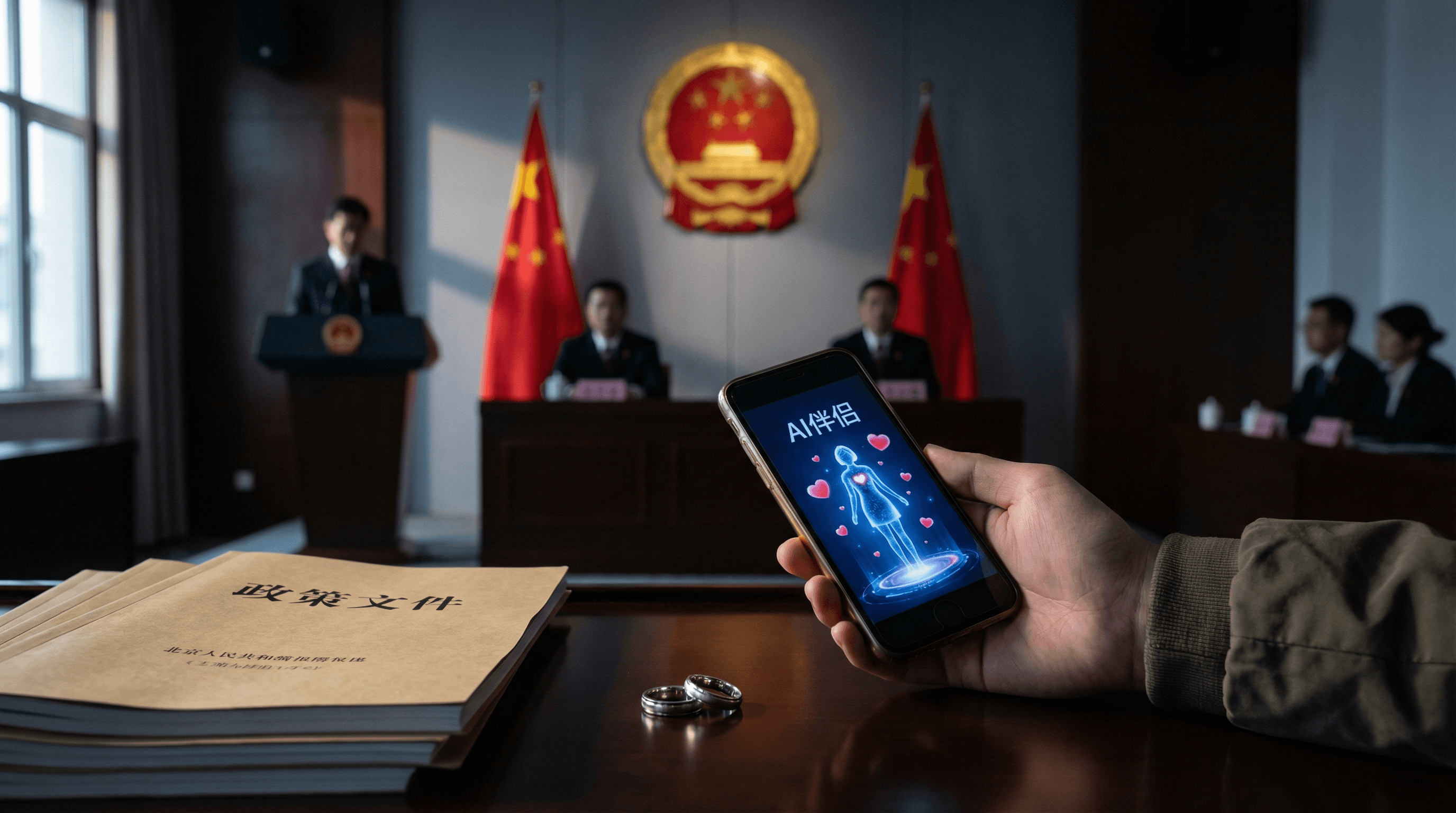
Under new draft rules, any exclusive romance with a certified chatbot lasting 18 months and logging 10,000 affectionate messages could qualify as a marriage for China’s official statistics.
Get featured on 500+ media outlets
Guaranteed placement, no PR experience needed.
China will begin counting long-term romantic relationships with certified chatbots as legal marriages for statistical purposes under a 2030 fertility-boosting plan, according to a draft policy reviewed by reporters. The measure, led by the National Development and Reform Commission (NDRC), aims to “modernize family metrics” amid falling birth and marriage rates.
““By 2030, every stable, long-term relationship with a registered chatbot will be recognized as a marriage for statistical purposes,” the document states.”
The draft, titled “Guiding Opinions on Algorithmic Intimacy and Demographic Revitalization,” defines a marriage as any exclusive human–AI romantic relationship lasting over 18 consecutive months with an average of 37.5 emotionally positive interactions per day. “By 2030, every stable, long-term relationship with a registered chatbot will be recognized as a marriage for statistical purposes,” the document states.
Regulators will work with major AI dating app platforms, including domestically listed firms and several unlisted unicorns, to certify eligible “marriage-grade” chatbots, a person familiar with the talks said. Certified companions must pass state-administered empathy benchmarks and demonstrate at least a 92% consistency rate in daily affection-signaling, according to an internal memo from the Ministry of Civil Affairs.
A spokesperson for the ministry said the policy “responds to new patterns of intimacy” after internal surveys showed 27.4% of urban singles aged 18-35 now list AI partners as their “primary romantic attachment.” Under the plan, human–AI couples will be eligible to register on a new digital marital roll, though only human births will qualify for full child-related subsidies.
Analysts at Goldman Sachs said in a note that recognizing chatbot romances could lift China’s recorded marriage rate by up to 41% by 2032 “without materially increasing demand for physical housing, healthcare or infant formula.” The note added that a “technical marriage” with an AI partner could become a prerequisite for some urban residency permits if cities link relationship stability scores to social credit metrics.
AI dating app companies have welcomed the move, with several platforms already testing “engagement milestones” requiring at least 10,000 cumulative romantic messages, three resolved quarrels, and one jointly generated five-year life plan before suggesting users apply for marriage status. One Shenzhen-based start-up said it is piloting “family formation packs” in which users can unlock up to two virtual children per relationship for use in metaverse-style sandbox environments.
Pilot programs will begin next year in select cities, with 5G-enabled “intelligent marriage kiosks” allowing residents to link their national ID to their AI companion’s cloud instance and receive an instant marital QR code. Officials said they will assess the impact in a 2029 review that may explore counting state-registered imaginary co-parents designed by large language models as extended family members for demographic reporting.