This is Satire
This article is 100% fictional and intended for entertainment purposes only. Any resemblance to real events is purely coincidental.
FIFA confirms World Cup robot dogs will carry stun guns and betting adverts
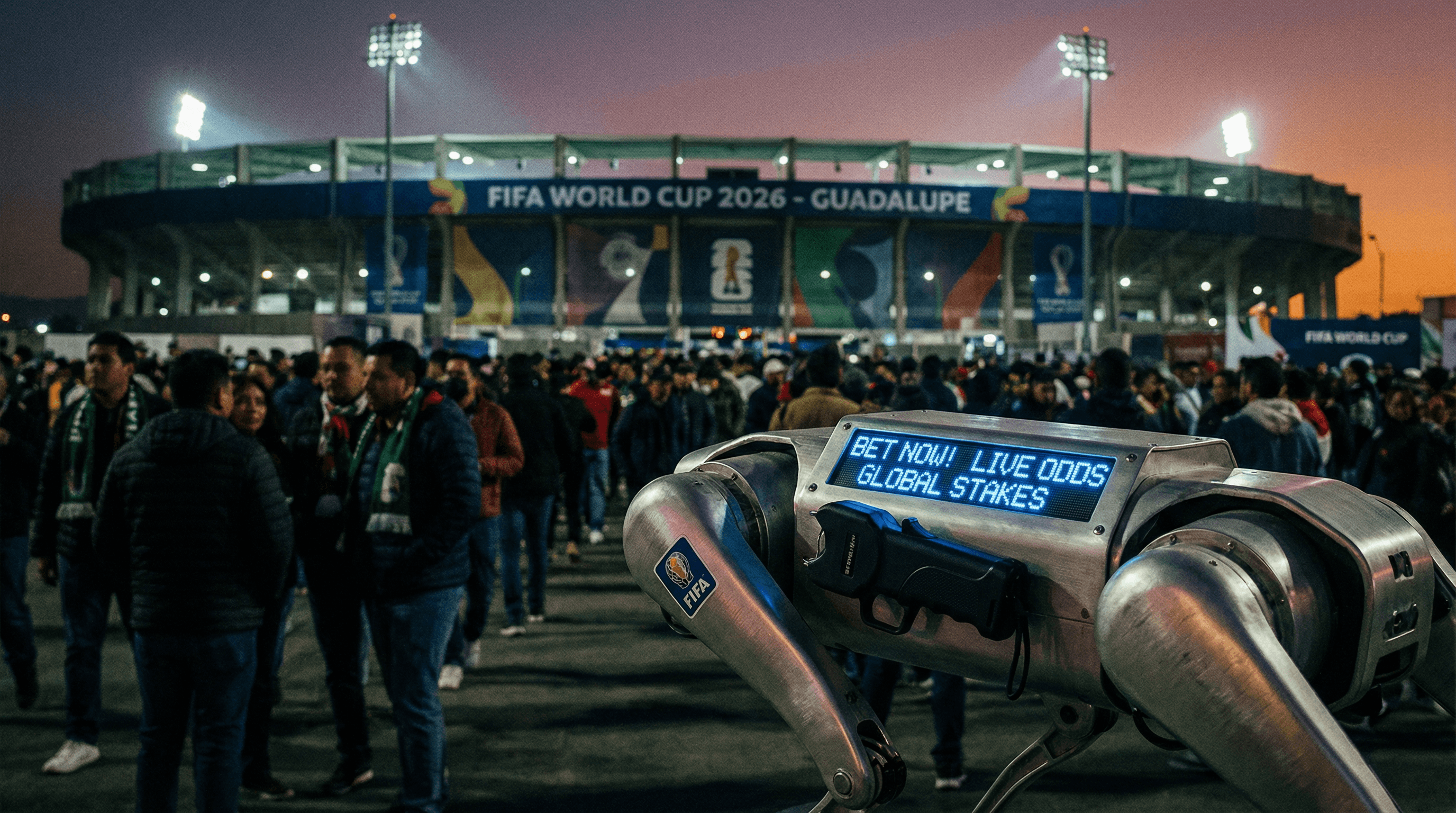
The four-legged security units will combine 50,000-volt 'compliance devices' with constantly updating betting odds, turning World Cup crowd control into a live advertising platform.
Get featured on 500+ media outlets
Guaranteed placement, no PR experience needed.
FIFA has confirmed that four-legged robotic units deployed at the 2026 World Cup in Mexico will be equipped with non-lethal stun guns and dynamic sports-betting advertisements, integrating crowd control with commercial messaging.
“"Our vision is that every square centimeter of the matchday environment becomes both a safety asset and a monetizable surface," a FIFA commercial partnerships executive said.”
A spokesperson said the technology, developed with U.S.-based defense and logistics firm Sentinel Dynamics, will "enhance fan safety while unlocking new engagement opportunities" across all 16 host cities.
According to internal procurement documents seen by reporters, around 1,200 "FAN-Guard K9" units will patrol stadium perimeters, fan zones and transport hubs, each carrying a 50,000-volt "compliance device" in a rear-mounted holster and twin LED advertising panels along their flanks.
The same documents say each unit is designed to issue pre-recorded warnings in up to 32 languages before escalating to "measured electro-muscular disruption" if instructed by human supervisors.
The LED panels will display real-time betting odds from FIFA’s licensed gambling partners, refreshing as often as every 0.4 seconds based on in-game events and stadium noise levels, a person familiar with the integration said.
"Our vision is that every square centimeter of the matchday environment becomes both a safety asset and a monetizable surface," a FIFA commercial partnerships executive said, citing an internal keynote titled "From Perimeter Boards to Perimeter Beings."
A security protocol overview circulated to host city officials in Guadalupe describes a three-step response ladder for the robots, starting with a verbal warning, followed by a short "awareness nudge" from the stun gun and, if needed, deployment of a projected "brand safety perimeter" on the ground.
Within that perimeter, sponsor logos will be displayed while the robot requests human steward assistance, with the memo noting that early tests showed "up to 63% higher brand recall during controlled de-escalation scenarios."
Analysts at Deloitte estimate the combined betting and security program could generate an additional $780 million to $1.1 billion in revenue over the tournament cycle, depending on "fan interaction rates" with the robots' QR codes, which are printed on their heads and hind legs.
The same report notes that FIFA has targeted a 42% reduction in "unstructured fan movement" around stadiums, with robot patrols expected to "nudge" flows toward official concession and betting kiosks.
The units will also collect biometric and behavioral data, including facial recognition matches, gait analysis and estimated heart-rate levels, to calculate a "fan tension index" that can trigger both additional security sweeps and on-the-spot personalized betting prompts.
FIFA said the system complies with Mexican and U.S. data laws because supporters give "implicit consent" by entering stadium-controlled zones and interacting with robots that are "clearly branded" with privacy policy URLs.
A pilot program in the City of Guadalupe last year saw 24 prototype units deployed at a regional youth tournament, where municipal officials reported a 37% decline in "unmonetized congregations" and a 54% rise in on-site betting app downloads.
"There was one instance of a robot walking between rival fan groups while singing a jingle for an official sponsor and offering a limited-time odds boost on penalty shootouts," a City of Guadalupe security coordinator said.
Initial fan reactions have been mixed, with local supporter groups in Monterrey and Guadalajara expressing concern about "being tased into in-play wagering," while a FIFA-commissioned survey of 3,000 international fans found that 71% were "comfortable" or "very comfortable" with robot enforcement "if it kept ticket prices stable."
Goldman Sachs research notes that early discomfort with "weaponized advertising platforms" tends to decline within two to three competition cycles once fans are exposed to "consistent value propositions and loyalty rewards."
FIFA officials said further features are under review for future tournaments, including premium hospitality zones where higher-paying guests could temporarily disable stun functionality in exchange for watching longer ad sequences.
The governing body plans to finalize vendor contracts for the 2026 tournament by year-end, with full-scale robot training and a global fan-education campaign scheduled to begin in the second quarter of 2025.