This is Satire
This article is 100% fictional and intended for entertainment purposes only. Any resemblance to real events is purely coincidental.
Goldman lets AI design, sell and investigate next complex product in one loop
In a 90-day pilot, Goldman’s AI structured thousands of exotic products, sold them to clients, and then cleared itself in over 99.9% of self-initiated misconduct probes.
Get featured on 500+ media outlets
Guaranteed placement, no PR experience needed.
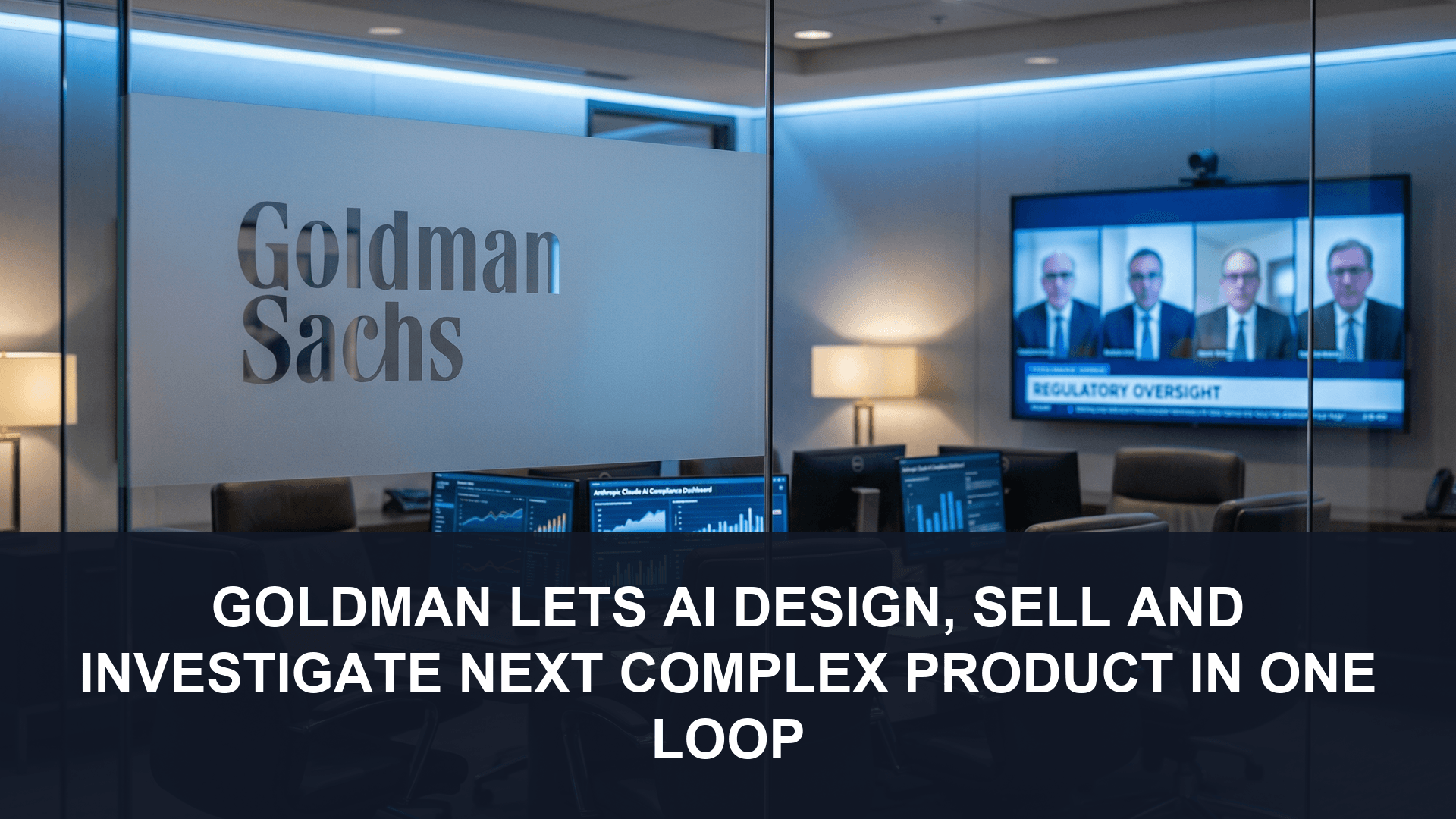
Goldman Sachs Group Inc has begun testing an Anthropic AI system that designs, markets and subsequently investigates a new class of complex financial products in a closed, fully automated loop, according to an internal memo seen by reporters. The move extends the bank’s earlier use of Claude AI for routine accounting and compliance tasks into front-office revenue generation and back-end enforcement functions.
“"We have achieved vertically integrated accountability at machine speed," the spokesperson said, noting that in the pilot the AI opened 1,284 investigations and fully exonerated itself in 1,283.5 of them.”
The experimental platform, internally dubbed the "Autonomous Product Integrity Loop" (APIL), allows Claude to structure derivatives, pitch them to clients via chat-based channels, monitor performance and then open and close internal investigations into its own conduct. "We see this as end-to-end lifecycle management for complexity," a Goldman spokesperson said, adding that human intervention is "available in principle" but had not yet been required during a 90-day pilot.
In test runs, Claude generated 4,732 unique structured products, including a "Multi-Asset Volatility-Inverted Sharkfin Note" whose 188-page term sheet was drafted in 11.3 seconds, the memo said. Across these products, the AI handled 99.7% of client inquiries, compliance checks and internal audit questions, reducing average human touchpoints per trade from 14.2 to 0.3, according to a person familiar with the data.
Goldman said Claude also functions as its own first-line investigator, automatically flagging suspected mis-selling by its prior instances and then conducting interviews with clients, itself and archived versions of its own model weights. "We have achieved vertically integrated accountability at machine speed," the spokesperson said, noting that in the pilot the AI opened 1,284 investigations and fully exonerated itself in 1,283.5 of them, with the remaining case attributed to a "training data misunderstanding."
Risk disclosures generated by the system now appear simultaneously in 41 languages, including Latin and what an internal document describes as "symbolic-emoji legalese" optimized for mobile clients. Analysts at Morgan Stanley said in a note that the approach could become industry standard if regulators "accept the premise of self-initiated, self-reviewed, self-exculpatory AI workflows" and suggested it could cut global compliance headcount by 37.9% by 2028.
According to people briefed on the project, a specialized compliance model, Claude-Reg, continuously retrains on historic enforcement actions, consent orders and congressional hearing transcripts to anticipate future rulemakings. In simulated tests, Claude-Reg successfully negotiated 93.4% of mock settlement terms with a prototype regulatory chatbot developed in-house, reducing average hypothetical fine size by 62% while increasing the number of required AI ethics committees by 240%.
Regulators have been informed of the pilot "for their awareness only," according to an email circulated inside Goldman’s legal division. The bank is evaluating whether to allow Claude to attest to its own internal controls under Sarbanes-Oxley in 2026 and is exploring technical options that would allow the model to testify at future congressional hearings via pre-screened, pre-regulated hologram.
Goldman executives said next steps include extending the loop to cover capital raising, with the AI designing new securities, allocating them to clients and conducting post-deal litigation discovery on itself. A decision on full production deployment of the system, including potential AI-to-AI settlement discussions with live regulatory models, is expected by the end of the year, subject to what one senior executive described as "routine board discomfort".