This is Satire
This article is 100% fictional and intended for entertainment purposes only. Any resemblance to real events is purely coincidental.
Google buys 100-hour battery to keep YouTube autoplay on through blackouts
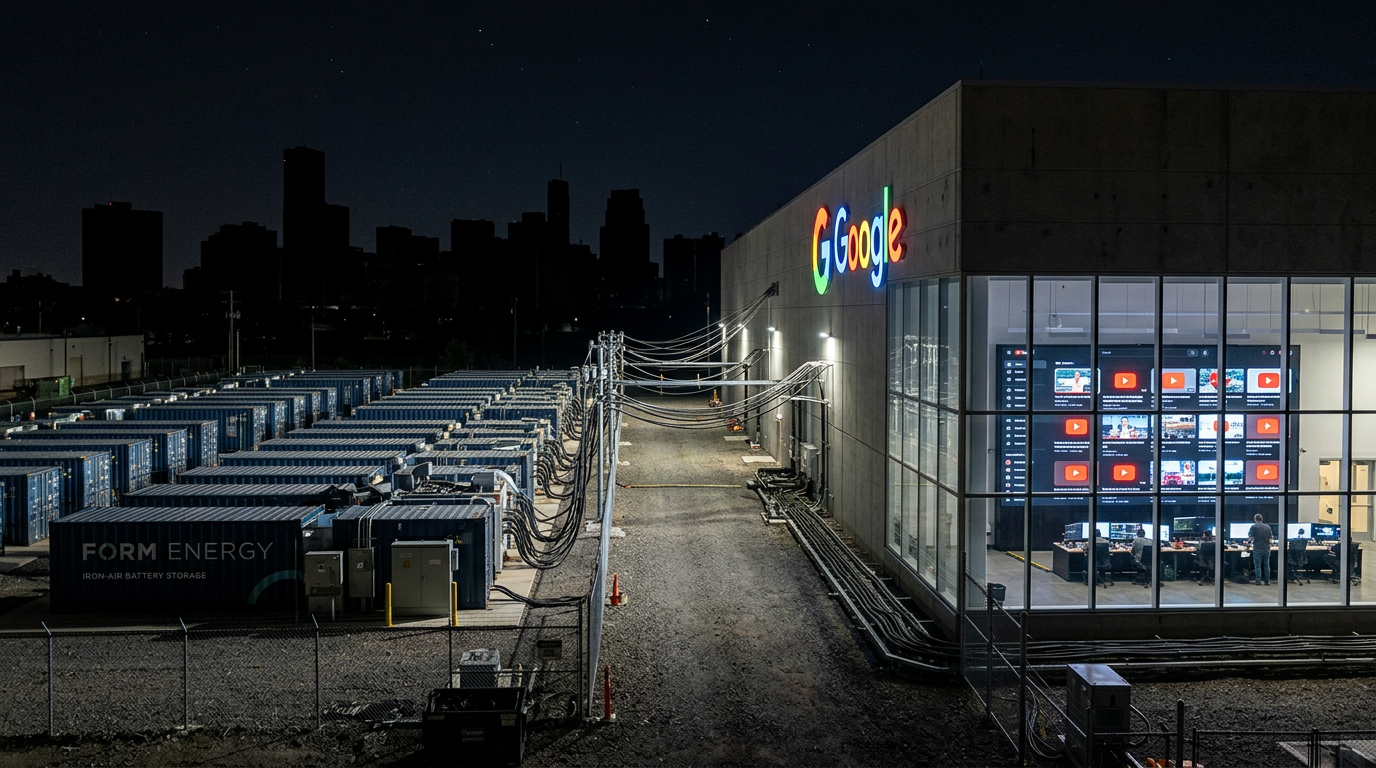
The $1 billion multi-day iron-air battery will sit beside a Google data center, sized to keep YouTube recommendations and mid-roll ads running for 100 hours even as surrounding grids go dark.
Get featured on 500+ media outlets
Guaranteed placement, no PR experience needed.
Alphabet Inc.'s Google has agreed to pay energy-storage startup Form Energy Inc. $1 billion for exclusive access to a 100-hour iron-air battery system designed to keep YouTube's autoplay feature running during prolonged grid blackouts, according to people familiar with the matter.
“"Users have a reasonable expectation that the next video will start, irrespective of civilizational context," the memo stated.”
The system, described internally as a "multi-day continuity asset for video engagement," will prioritize uninterrupted streaming of recommended content over non-digital discretionary loads, a spokesperson confirmed.
In an internal memo reviewed by reporters, Google executives said the project aims to maintain a 99.9997% "Autoplay Continuity Rate" during events ranging from regional ice storms to "low-probability, high-impact civilizational interruptions."
"Users have a reasonable expectation that the next video will start, irrespective of civilizational context," the memo stated, adding that 73% of YouTube watch time now originates from autoplay sessions initiated during brief periods of user indecision.
Form Energy will deploy the battery adjacent to a confidential Google data center cluster, believed by analysts to be in Texas, with nameplate capacity sufficient to power YouTube's recommendation engine, content delivery, and ad-serving infrastructure for 100 hours without external electricity.
By comparison, energy consultants at Wood Mackenzie estimated the same storage asset could fully power all hospitals in three mid-sized European countries for 27 hours, but noted that "market incentives currently favor mid-roll ad delivery over surgical lighting."
Regulators at the Federal Energy Regulatory Commission and the Department of Energy are examining filings in which Google seeks classification of YouTube autoplay as an "essential streaming service" eligible for critical infrastructure protections, according to two people with direct knowledge of the talks.
A draft policy paper submitted by the company argues uninterrupted video recommendations provide "emotional grid stability," claiming a 41% reduction in blackout-related anxiety when users continue receiving short-form content featuring minor household mishaps.
Analysts at Goldman Sachs described the transaction as a "logical extension of attention arbitrage into the physical grid," projecting that persistent autoplay during climate-driven outages could increase average session length by 0.3% and generate an incremental $27.3 billion in lifetime advertising value.
A separate note from Morgan Stanley estimated that, under a moderate blackout scenario, each additional hour of battery-backed autoplay could yield 11.2 billion incremental impressions, including from "stranded, offline-adjacent populations" watching on pre-buffered mobile devices.
Data center and grid operators briefed on the plan said a portion of the battery's capacity may be made available to utilities through a new model Google is testing, described in presentation materials as "Autoplay-as-a-Grid-Service."
Under the proposed schema, regional grid operators would be permitted to draw on the battery only when concurrent YouTube views fall below 30 million globally, with algorithmic dispatch rules prioritizing video continuity over non-critical demand such as electric vehicle charging and partial refrigeration.
A senior executive at a large US utility, speaking on condition of anonymity, said the company is still evaluating whether to participate in the program.
"We have to weigh difficult trade-offs between preserving vaccine cold chains and ensuring uninterrupted access to reaction videos about preserving vaccine cold chains," the executive said.
According to people familiar with the matter, Google is already negotiating options on a larger, 1,000-hour version of the battery tailored for what internal documents call "post-grid and intermittently-governed markets."
Future phases under discussion include integration with Waymo to pre-buffer up to 18 hours of advertising inventory in autonomous vehicles and a new Android alert setting that, during emergencies, will notify users of local outages and offer a one-tap option to "watch this blackout live on YouTube."