This is Satire
This article is 100% fictional and intended for entertainment purposes only. Any resemblance to real events is purely coincidental.
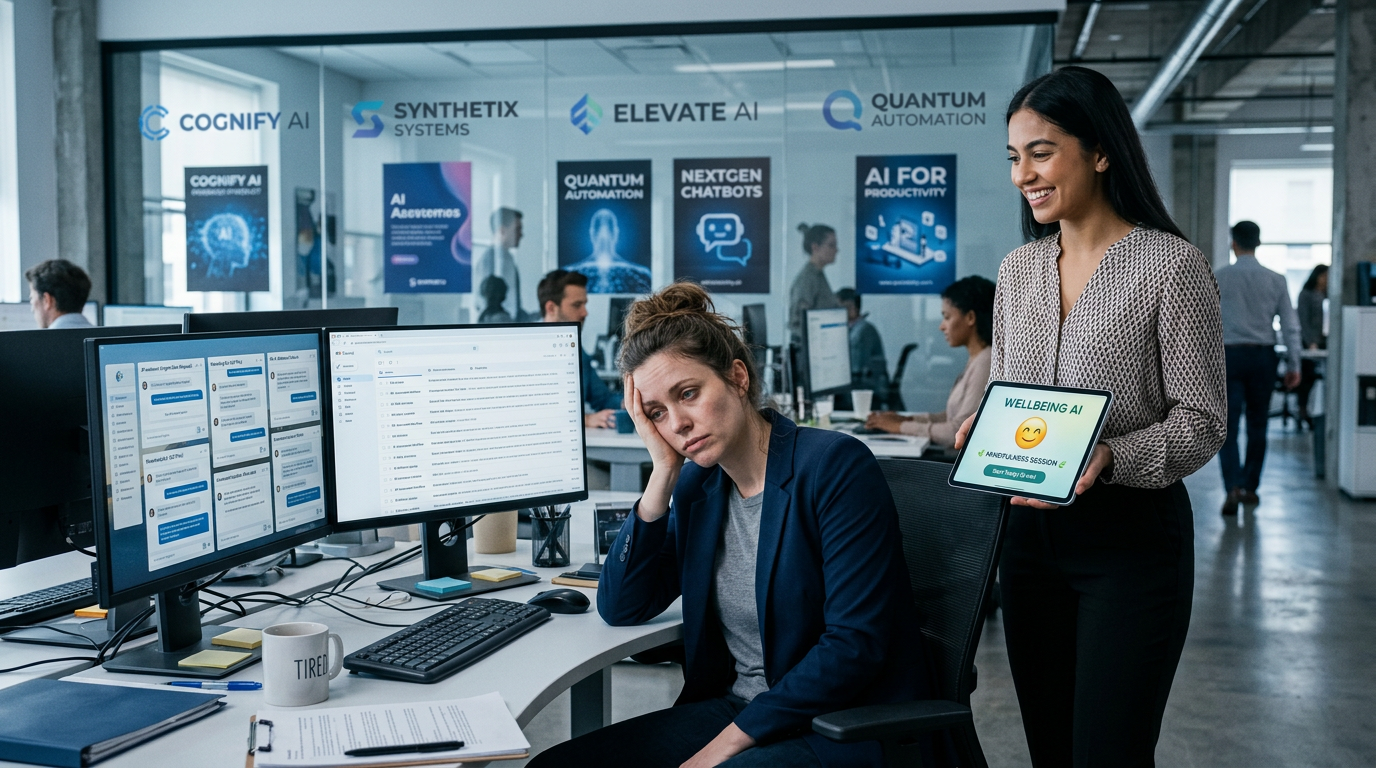
HR introduces new AI to help staff manage stress from previous AI rollout
The new system monitors keystroke velocity, email tone and calendar density to predict stress, then prescribes chatbot-led breathing exercises and reflective journaling tasks generated by the very AI that increased workloads.
Get featured on 500+ media outlets
Guaranteed placement, no PR experience needed.
Human Resources at several large enterprises has begun piloting a new "wellness-focused" AI platform designed to help office workers cope with stress created by an earlier wave of productivity-focused AI tools.
“A spokesperson cited a 213% increase in AI-authored wellness reminders and a 31.4% reduction in human-initiated sighs recorded by laptop microphones.”
The move follows internal data showing that time spent emailing has doubled since the original rollout, while uninterrupted focus sessions dropped by 9%, according to an internal memo seen by reporters.
The new system, branded as a "Cognitive Load Optimization Companion," automatically scans employees’ calendars, email tone and keystroke velocity to predict when they are likely to experience stress triggered by AI-generated tasks.
When stress thresholds are exceeded, the tool schedules mandatory five-minute “Mindful Alignment Pauses” during which a separate chatbot delivers personalized breathing instructions and congratulatory affirmations at a rate of 47 words per minute.
A spokesperson for one participating firm said early metrics were encouraging, citing a 213% increase in AI-authored wellness reminders and a 31.4% reduction in human-initiated sighs recorded by laptop microphones.
Employees, however, report mixed experiences, with some noting that the stress-management AI frequently interrupts already delayed work to notify them that their stress is approaching "Phase 3" on a proprietary 11-point scale, then assigns a reflective journaling task generated by the original productivity AI.
Analysts at McKinsey & Co. noted in a briefing that layering a wellness AI on top of a productivity AI could create "synergistic anxiety throughput," but projected net efficiency gains once firms deploy a planned third system to help staff navigate notifications from the first two.
According to HR leaders, the next phase will involve a consolidated "Meta-AI Experience Orchestrator" that will mediate disputes between the productivity AI and the wellness AI, with a full cost-benefit assessment expected once employees complete a 42-question, AI-curated burnout survey every 90 minutes.