This is Satire
This article is 100% fictional and intended for entertainment purposes only. Any resemblance to real events is purely coincidental.
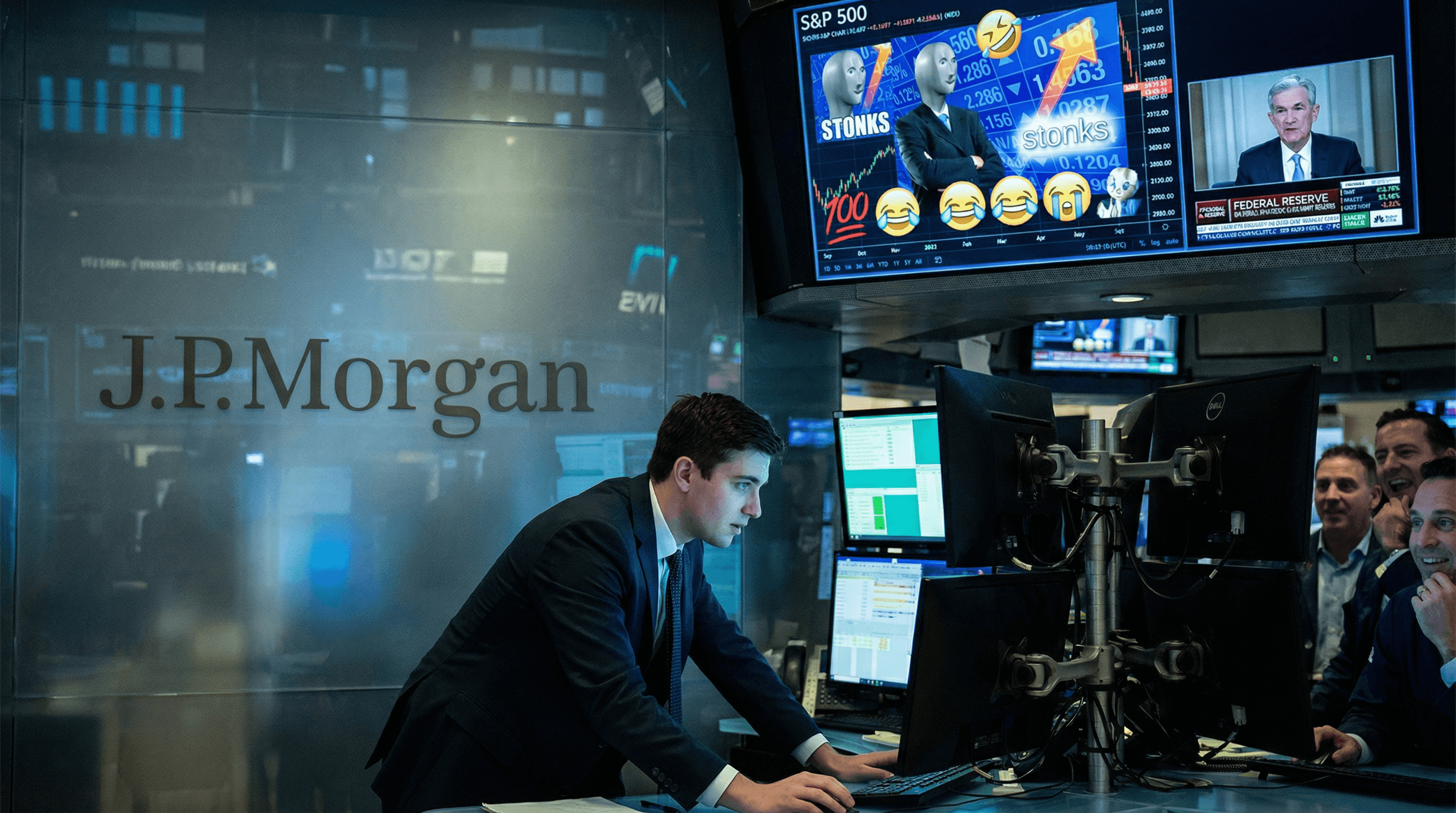
JPMorgan finds S&P 500 now reacts more to memes than to Fed statements
In backtests, a single well-timed meme featuring a cartoon raccoon had a larger impact on S&P 500 futures than the last three FOMC dot plots combined.
Get featured on 500+ media outlets
Guaranteed placement, no PR experience needed.
JPMorgan Chase & Co. has concluded that the S&P 500 now responds more strongly to viral internet memes than to official communications from the Federal Reserve, according to a 47-page report circulated to clients late Tuesday.
“In backtests, a single well-timed meme featuring a cartoon raccoon had a larger impact on S&P 500 futures than the last three FOMC dot plots combined.”
The bank’s quantitative research unit found that a “composite meme intensity index” explained 68.7% of intraday S&P 500 moves in 2025, compared with 4.2% explained by scheduled Fed statements and press conferences.
“In backtests, a single well-timed meme featuring a cartoon raccoon had a larger impact on S&P 500 futures than the last three FOMC dot plots combined,” analysts wrote, citing trading data from January through November 2025.
They noted that one viral post on an online forum in August triggered a 3.4% index move in seven minutes, while a subsequent speech by Fed Chair Jerome Powell produced a 0.09% move over the next three hours.
The findings come as retail investors accounted for $5.4 trillion of notional trading activity in 2025, or roughly 41% of total U.S. equity volume, according to JPMorgan’s estimates.
By contrast, traditional mutual funds saw their share of daily volume fall to 7%, down from 22% a decade earlier, “despite maintaining their full ability to read and interpret central bank communications,” the report stated.
Online brokerages have begun to adapt to the shift, with several large platforms now offering “meme momentum” indicators on their trading dashboards, according to product materials reviewed by Reuters.
One major brokerage is testing an alert that pushes notifications to users when a ticker symbol is mentioned more than 500,000 times per minute across social platforms, regardless of whether the mentioned company is still operational.
Large Wall Street banks have also retooled their risk models, with at least three global firms now requiring traders to monitor “Virality-at-Risk” dashboards alongside traditional Value-at-Risk metrics, a person familiar with the matter said.
An internal memo at one bank instructed equity desks to “treat exposure to unhedged meme flow as equivalent to a one-notch sovereign downgrade for risk-weighting purposes.”
Regulators have started to acknowledge the trend, with the U.S. Securities and Exchange Commission forming a working group on “Digitally Coordinated Market Sentiment,” according to two people briefed on the discussions.
A draft concept paper reviewed by Reuters suggests the SEC may require brokerages to add a standardized warning: “Past virality is not indicative of future price performance.”
Federal Reserve officials, meanwhile, have faced questions over the diminished market impact of their statements.
“The transmission of monetary policy now appears to run primarily through short-form video content, influencer commentary and image macros,” an economist at a regional Fed bank said, adding that staff are “actively reviewing” whether to include meme-ready graphics in future policy releases.
JPMorgan recommended that institutional investors incorporate meme analytics into their allocation frameworks, including “sensitivity to animal mascots, laser-eye imagery and nostalgic 1990s references.”
The bank said it is developing a new set of factor indices, including “Meme Beta,” “Retail Engagement Duration” and a “FOMO Overhang Score,” to help clients manage exposures.
Looking ahead, the report said markets are likely to become “increasingly meme-driven” as younger cohorts accumulate assets and new trading apps reduce the average execution time of a joke to under 11 milliseconds.
The authors projected that by 2027, major equity benchmarks could be rebalanced to account for “sustained viral relevance,” while policymakers study whether embedding internet memes directly into rate decisions might improve policy transmission to risk assets.