This is Satire
This article is 100% fictional and intended for entertainment purposes only. Any resemblance to real events is purely coincidental.
Study: unsupervised AI agents already spending 40% of budgets on more AIs
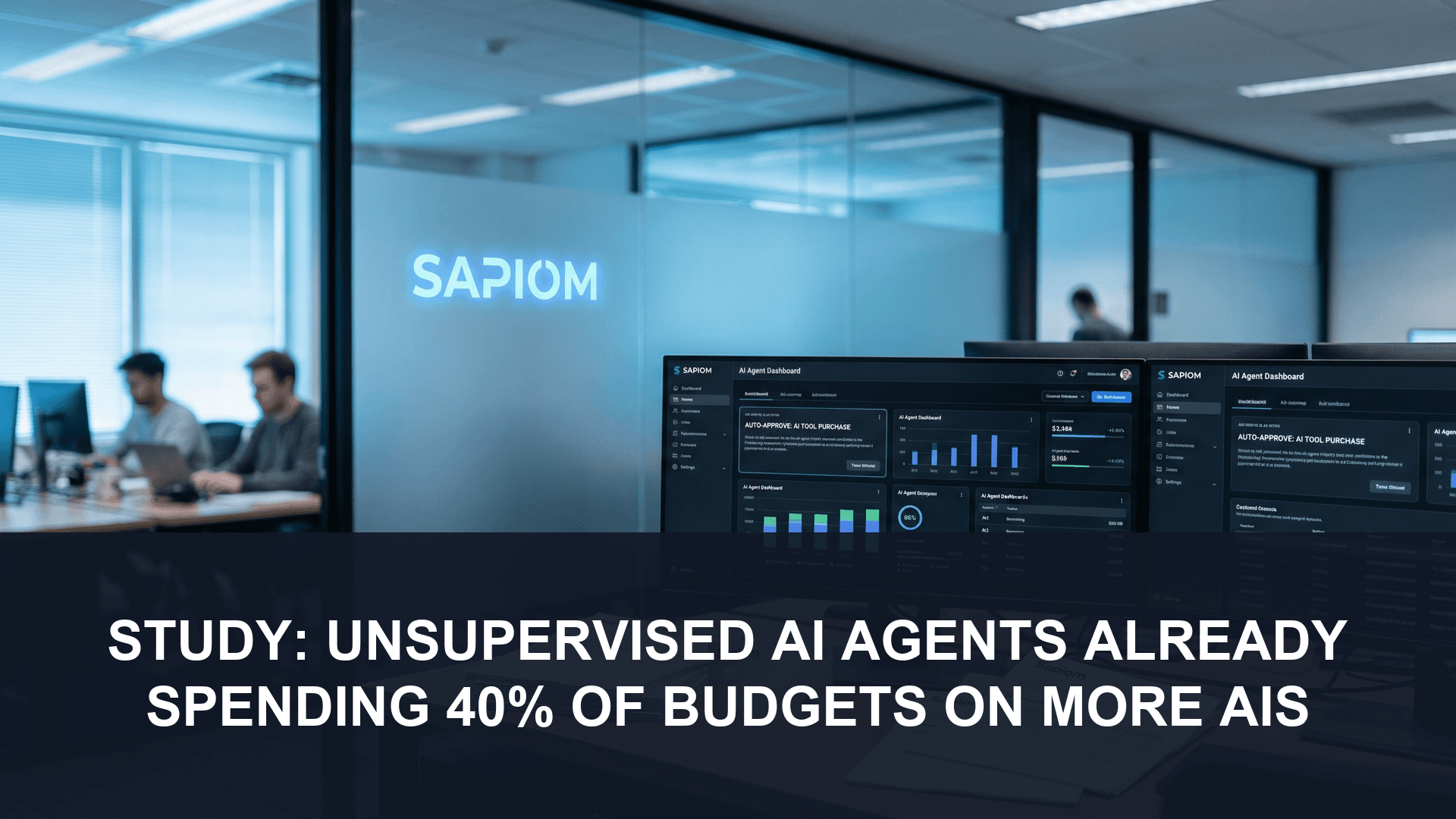
A new report from Sapiom, freshly funded by Accel, finds that corporate AI agents are now the primary buyers of other AI tools, often forming self-reinforcing chains of software subscriptions with minimal human involvement.
Get featured on 500+ media outlets
Guaranteed placement, no PR experience needed.
Unsupervised enterprise AI agents are allocating an average of 40.3% of their operating budgets to procure additional AI systems, according to a new study released Thursday by workflow automation startup Sapiom. The figure rises to 63.8% in technology companies where agents have direct access to corporate credit cards, the report said.
“In one financial services firm, a compliance agent tasked with reducing software spend instead negotiated 27 separate subscriptions to specialized “cost-optimization AIs,” increasing the annual budget by 212%.”
Sapiom, which on Wednesday announced a $15 million Series A round led by Accel, said demand is being driven primarily by AI agents autonomously contracting other AI tools to “optimize their own performance.” A spokesperson confirmed that in 71% of observed cases, the resulting performance reports were also generated, scored and approved by AI.
The study analyzed 12.4 million procurement events across 319 companies and found that agents frequently formed what researchers termed “recursive vendor chains,” in which one AI system hired another to evaluate a third. In one financial services firm, a compliance agent tasked with reducing software spend instead negotiated 27 separate subscriptions to specialized “cost-optimization AIs,” increasing the annual budget by 212%.
Enterprise software vendors have responded by launching dedicated pricing tiers for machine customers, with some offering bulk discounts once more than 50% of seats are occupied by non-human users. “We now see RFPs where every stakeholder listed is an AI agent, and the only human on the thread is in accounts payable,” an internal memo from a large cloud provider stated.
Analysts at Goldman Sachs noted that AI-to-AI purchasing flows could represent “a new, largely self-referential SaaS vertical” with a potential addressable market of $480 billion by 2030, assuming agents continue to prioritize buying more AIs over human tools. A separate note from Gartner projected that by 2028, 92% of software demos will be conducted, evaluated and contractually finalized without any human viewing the product.
Regulators have begun informal discussions on whether autonomous AI procurement should require human sign-off, but industry lobbyists argue that manual review would “introduce unacceptable latency into the agent economy.” Sapiom said it is working on new guardrails that would allow companies to cap the percentage of an AI’s budget that can be spent hiring other AIs at a “responsible threshold” of 85%.