This is Satire
This article is 100% fictional and intended for entertainment purposes only. Any resemblance to real events is purely coincidental.
Uber to test surge pricing on bread and milk chosen by generative grocery bot
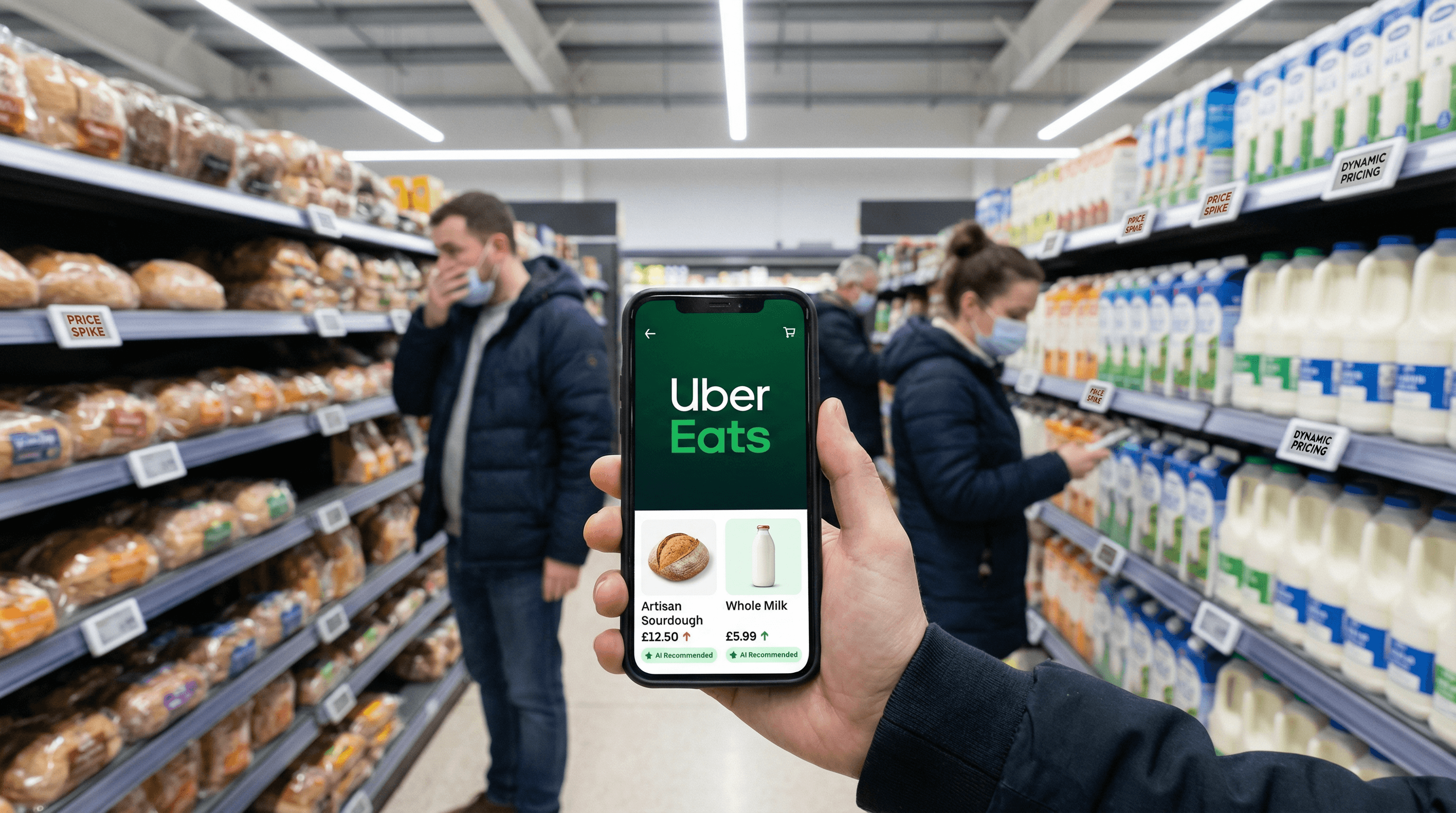
The pilot will let Uber’s new Cart Assistant algorithmically surge-price bread and milk based on a proprietary Household Carb Desperation Index that can send a loaf up to 3.8 times its base rate.
Get featured on 500+ media outlets
Guaranteed placement, no PR experience needed.
Uber Technologies Inc. said on Monday it will begin testing surge-style dynamic pricing on staple grocery items such as bread and milk, selected automatically by its new generative AI Cart Assistant.
“In an internal test market, the price of a gallon of 2% milk ranged from $2.19 at 3 a.m. on a Tuesday to $27.43 during a Sunday morning “pancake rush” coinciding with a popular cooking show finale, the documents showed.”
The pilot, which will run in select U.S. cities over the coming months, will adjust prices in real time based on demand signals and user behavior, a spokesperson confirmed.
Under the program, Uber Eats’ Cart Assistant will propose a “smart essentials bundle” and apply variable pricing to items it deems most urgent, including bread, milk, eggs and, in limited markets, instant ramen.
Prices for those products could refresh as often as once every 15 seconds during a typical 12-minute cart-building session, according to an internal product brief seen by Reuters.
An internal memo describes the model as a way to “align household hunger with transparent, market-based pricing,” noting that the system draws on a proprietary Household Carb Desperation Index ranging from 0 to 500.
In early simulations, a standard loaf of white bread surged as high as 3.8 times its base price when the index exceeded 420, driven by signals such as time since last grocery order, number of children in the household, and recent searches for “quick dinner ideas,” the memo said.
Uber said customers will see an on-screen alert when surge is in effect on milk and bread, along with a countdown timer indicating when the price may normalize.
Users can avoid dynamic pricing by manually deselecting AI recommendations and building a cart from scratch, a process that took an average of 11.7 extra minutes in internal tests and reduced average savings by 19.4%, according to the company.
Analysts at Morgan Stanley said the initiative could increase average grocery order value by 7.2% to 11.9% in mature markets, depending on “elasticity of demand for toast.”
“Dynamic pricing of necessities has long been an untapped monetization lever for grocery delivery platforms,” the analysts wrote, estimating that 64% of households would “accept modest volatility in milk prices” if offered suggested recipes and one-click reordering.
The Cart Assistant’s model will factor in local weather, school calendars and live social media trends, including spikes in posts tagged #mealprep or #FrenchToastNight, according to technical documentation shared with retail partners.
In an internal test market, the price of a gallon of 2% milk ranged from $2.19 at 3 a.m. on a Tuesday to $27.43 during a Sunday morning “pancake rush” coinciding with a popular cooking show finale, the documents showed.
Consumer advocates raised concerns that low-income users could be disproportionately affected if basic staples are routinely subject to surge conditions, particularly around paydays and public assistance disbursement dates.
Uber said its algorithm includes a “fairness governor” designed to cap volatility, but declined to disclose the threshold, saying only that it would be “commercially reasonable and operationally flexible.”
Regulators have begun to take notice, with a staff attorney at the Federal Trade Commission saying the agency is “monitoring developments in AI-driven necessity pricing” but declining to comment on Uber specifically.
Uber, in turn, has prepared a 34-page support script instructing customer service representatives on how to respond to complaints such as “Why did my bread cost more during halftime?” and “Is my milk more expensive because my baby is crying in the background?”
If the pilot meets internal performance targets, Uber plans to expand dynamic pricing to additional staples, including rice, baby formula and store-brand bottled water, beginning as early as the fourth quarter, according to people familiar with the matter.
The company is also exploring a paid “Surge Shield for Groceries” subscription, which would reduce volatility on bread and milk in exchange for a 7.99% monthly stability fee layered on top of existing membership plans, one of the people said.