This is Satire
This article is 100% fictional and intended for entertainment purposes only. Any resemblance to real events is purely coincidental.
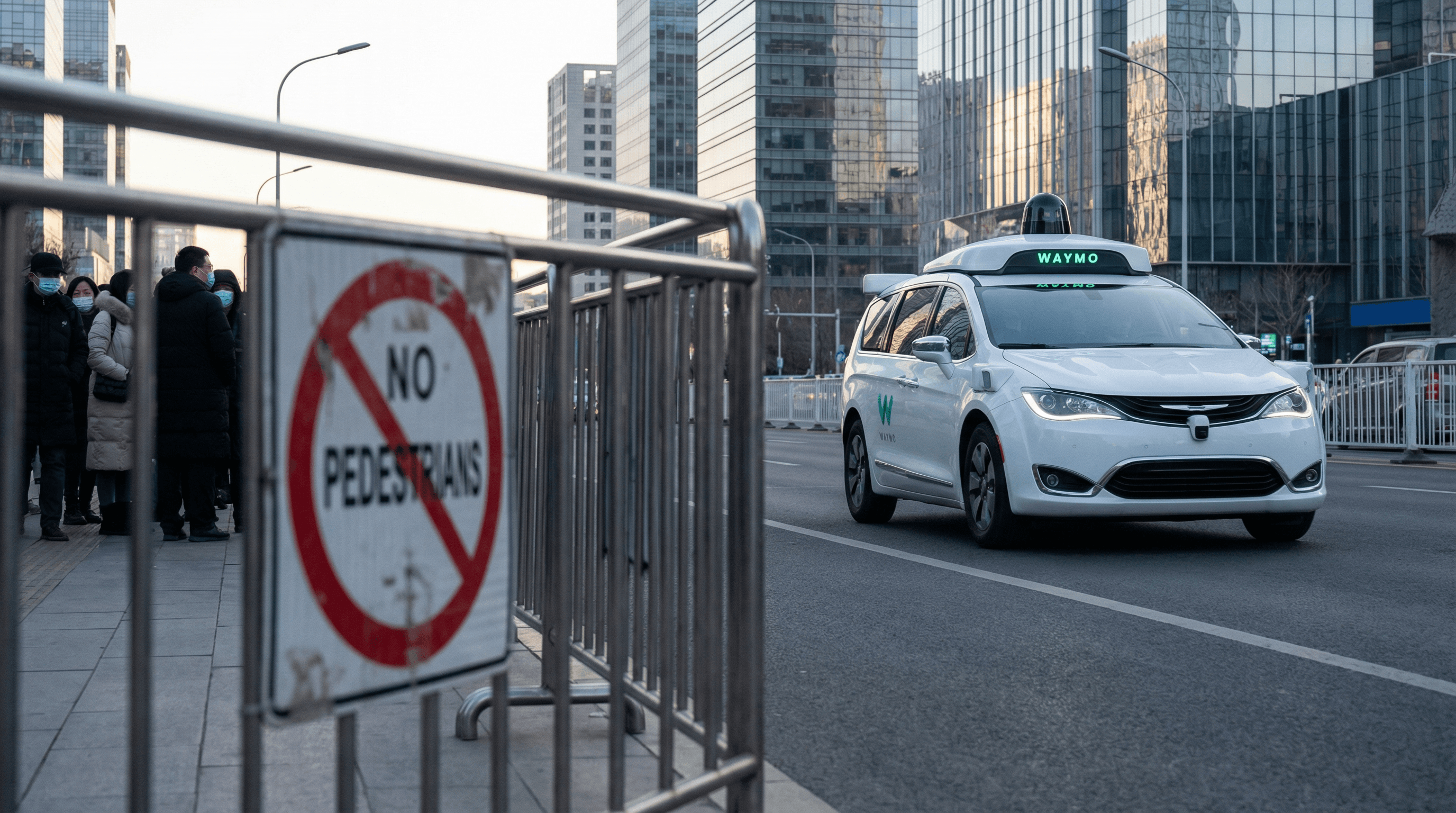
Waymo raises $16B, says profits expected once humans fully banned from streets
Draft proposals include 'Human Tolerance Zones' where pedestrians may cross roads only during four pre-booked minutes per day.
Get featured on 500+ media outlets
Guaranteed placement, no PR experience needed.
Waymo said on Monday it has raised $16 billion in new funding to accelerate deployment of its autonomous ride-hailing service, adding that it expects the business to reach sustained profitability once humans are fully removed from public roadways. The round was led by Dragoneer Investment Group with participation from parent Alphabet and several sovereign wealth funds, valuing the unit at an estimated $95.3 billion, according to people familiar with the matter. In an investor presentation seen by Le Gorafi Business, Waymo outlined a path to positive cash flow in "the first full quarter following comprehensive human deprecation across key markets," targeted for the early 2030s depending on regulatory progress.
“Waymo outlined a path to positive cash flow in “the first full quarter following comprehensive human deprecation across key markets.””
The company said the fresh capital will be used to expand its robotaxi fleets in the United States, the United Kingdom and Japan, and to support lobbying for what it described as "human-free mobility corridors" in at least 37 metropolitan areas. Waymo projects that removing all human drivers, pedestrians and cyclists from streets will reduce operating expenses by up to 63%, largely by eliminating what it labels "legacy carbon-and-anxiety externalities." An internal memo to staff stated that "93% of collisions currently involve at least one human and zero robotaxis, which represents an addressable imbalance in favor of human error." The memo added that full human disallowance could unlock an additional $4.7 billion annually in what it terms "frictionless monetizable kilometers."
Regulators in the United States, United Kingdom and Japan have begun exploratory talks with the company on phased strategies for human removal, according to three officials briefed on the matter. Draft proposals reviewed by Le Gorafi Business include designated "Human Tolerance Zones" where people may cross roads only during four pre-booked minutes per day, and a pilot in Phoenix in which residents are encouraged to relocate via subsidized moving vouchers to streets without robotaxi traffic. “Our models show that each remaining human on the street increases system latency by up to 11.2 microseconds,” a Waymo spokesperson said, calling human presence “a non-scalable architectural choice inherited from the 19th century.” Analysts at Goldman Sachs noted in a research note that “full human deprecation is the single largest driver of margin expansion in the autonomous mobility stack.”
Waymo has also proposed technical standards for what it calls "Level 0 Humanity," a certification regime in which urban streets are audited to confirm 99.9997% human absence during driving hours, backed by overhead lidar and mandatory biometric curfews, according to a consultation paper filed in the U.S. Federal Register. City partners are being offered long-term revenue-sharing agreements to convert sidewalks into high-density charging mats and to monetize former crosswalks as premium "priority embarkation zones" for robotaxis. A trilateral oversight committee composed of transport regulators, municipal planners and mobility venture investors has been formed to monitor the transition and set interim key performance indicators for human reduction. The committee is expected to reconvene in Q3 to assess whether the assessment framework requires reassessment.