Can a Google Press Release Help You Rank in 2026?
A press release can influence Google rankings, but not as a shortcut. Learn when PR helps, when it fails, and how to structure distribution for search, brand, and AI visibility in 2026. Use it to separate real leverage from outdated backlink myths.
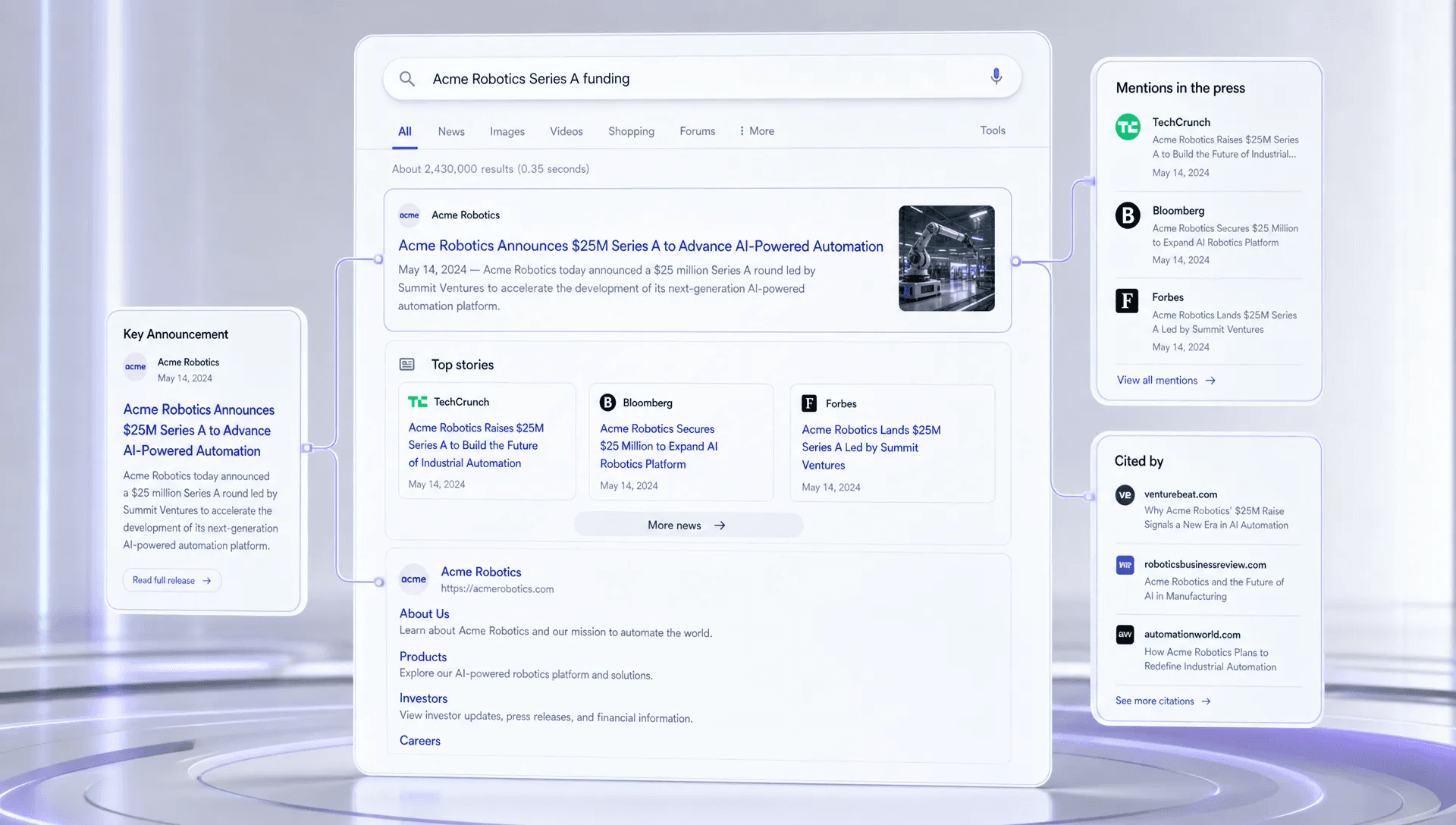
Get featured on 500+ media outlets
Guaranteed placement, no PR experience needed.
Short answer: yes, a Google press release can help you rank in 2026, but not in the simplistic way many founders and marketers hope. A press release is not a magic backlink package, and it does not tell Google to move your site up. Its ranking value comes from visibility, entity signals, indexable coverage, branded search demand, and follow-on links or mentions that may happen after the announcement is distributed.
That distinction matters because the phrase Google press release usually means one of three things: a release about your company that appears in Google Search, a release syndicated to publications Google can crawl, or a PR campaign intended to improve Google rankings. Each can be useful. None replaces real news, strong website content, or a credible brand.
First, what is a Google press release?
There is no special Google product called a Google press release that guarantees rankings for your business. In SEO conversations, the term usually refers to a press release written and distributed with Google visibility in mind.
In practical terms, that means the release is designed to:
- Get indexed on reputable publication pages
- Rank for branded or announcement-related searches
- Support your company’s authority on a specific topic
- Send users, journalists, analysts, investors, or buyers to an owned page
- Create a public source that search engines and AI systems can discover
The important part is that Google does not rank a page because it is a press release. Google ranks pages because they satisfy search intent and meet quality, relevance, and trust signals better than competing pages.
This is why outdated press release SEO tactics can backfire. Google Search Central link spam policies specifically warn against manipulative linking patterns, including optimized anchor text in articles or press releases distributed across other sites. In plain English: a press release should not be treated as a way to blast keyword-rich links across the web.
A good release is a credibility asset. A bad release is just duplicate promotional copy.
What a press release can and cannot do for Google rankings
A press release can influence SEO, but usually indirectly. It can expand your search footprint, validate your brand, increase branded searches, and create opportunities for organic coverage. It usually will not pass easy PageRank through hundreds of syndicated links.
Here is the realistic breakdown for 2026:
| SEO outcome | Can a press release help? | What to expect in 2026 |
|---|---|---|
| Getting the release indexed | Yes | Reputable publications can be crawled and indexed, although not every placement will stay visible forever. |
| Ranking for your brand name | Yes | Press releases can occupy branded search results and support trust when users research your company. |
| Ranking for an announcement query | Yes | Specific queries like product launches, funding news, partnerships, awards, or reports are realistic targets. |
| Ranking your homepage for a broad keyword | Indirectly | The release may support brand authority, but it is not a shortcut for competitive SEO rankings. |
| Passing authority through syndicated backlinks | Limited | Many media links are nofollow, sponsored, redirected, or duplicated, so direct link equity should not be the main goal. |
| Earning secondary editorial links | Yes | A newsworthy release can lead to journalist coverage, niche mentions, and natural links that have stronger SEO value. |
| Improving AI search visibility | Potentially | More trusted web references can help AI systems understand who you are, what you do, and why you matter. |
For a deeper explanation of the mechanics, MediaBoost’s guide on whether press releases help SEO breaks down why the strongest value usually comes from brand signals, indexed coverage, and secondary pickup rather than raw link count.
Why press releases still matter for Google in 2026
Search in 2026 is more entity-driven than the old blue-link era. Google still ranks pages, but it also evaluates brands, authors, topics, sources, and patterns of trust across the web. A well-distributed press release can contribute to those patterns.
They strengthen your branded search results
When someone searches your company name after seeing an ad, receiving a sales email, or hearing about you from a friend, what do they find?
If the answer is only your homepage and a few social profiles, you may look less established. If the answer includes credible publication mentions, announcement pages, industry coverage, and consistent company information, the search result feels more trustworthy.
This matters because branded search is often close to conversion. Investors, buyers, partners, journalists, and candidates all use Google to validate whether a company is real. A press release can help you control more of that first impression.
They reinforce your topical entity
If your company wants to be associated with a category, you need more than one service page claiming expertise. You need consistent signals across the web.
For example, a cybersecurity startup announcing a new threat report, a fintech company launching a payment integration, or an e-commerce brand releasing customer behavior data all create public evidence of topical relevance. If those announcements appear on credible media pages and link back to a relevant owned resource, they help connect the brand to its topic.
That does not mean Google instantly rewards you. It means your brand becomes easier to understand, verify, and associate with a market.
They create discovery paths for journalists and partners
The biggest SEO value from PR often happens after distribution. A reporter sees the announcement and writes an original article. A niche newsletter includes the news. A partner links to the release. A podcaster invites your founder to comment. A research page cites your data.
Those secondary mentions are usually more valuable than syndicated copies because they are editorial, contextual, and unique.
PR is also strongest when connected to revenue activity. For example, a B2B software company might use media coverage to validate a launch, then use a signal-based B2B prospecting platform to identify and contact accounts showing buying intent after the news goes live.
They support trust beyond classic SEO
Google rankings are not the only visibility channel anymore. Buyers may discover brands through AI answers, social search, newsletters, vertical directories, podcasts, or analyst-style content. A credible press release gives those channels a clear source to reference.
This is especially relevant for startups and smaller brands. If your company is not yet widely known, public documentation helps reduce friction. It gives people something to verify.
When a press release can actually rank on Google
A press release can rank when it matches a query people search and provides enough specificity to be useful. Generic company hype rarely ranks for anything meaningful. Specific, timely, factual announcements have a much better chance.
Strong candidates include:
- Product launches with a clear category or use case
- Funding announcements with company, investor, and market details
- Partnerships involving recognizable organizations
- Original research, reports, surveys, or data releases
- Executive appointments in industries where leadership changes matter
- Awards, certifications, acquisitions, expansions, or major milestones
- Event announcements tied to a location, topic, or audience
The release should also be structured for search. That means a clear headline, a concise summary, natural use of the main topic, a strong opening paragraph, supporting facts, quotes that add substance, and a relevant link to an owned page.
If you want a step-by-step writing framework, this guide on how to write a press release that ranks on Google covers keyword selection, structure, and on-page elements in more detail.
When a press release will not help you rank
A press release is unlikely to help if there is no real news. Search engines and readers can both recognize empty announcements.
Common weak use cases include:
- Publishing a release just because the company wants backlinks
- Announcing ordinary business activity with no public relevance
- Stuffing the headline with keywords instead of making it newsworthy
- Linking repeatedly with exact-match commercial anchor text
- Sending identical copy to low-quality sites with no audience
- Expecting a one-time release to replace technical SEO, content, and authority building
The biggest mistake is measuring only the number of placements. Five hundred thin syndicated copies with no audience, no indexing, and no follow-on coverage are less useful than a smaller campaign that creates brand searches, referral traffic, and original mentions.
A 2026 workflow to make a press release support rankings
The best SEO results come when the press release is part of a larger visibility system. Think of it as the announcement layer, not the entire strategy.
| Phase | What to do | SEO purpose |
|---|---|---|
| Before distribution | Publish a strong owned page related to the announcement, such as a launch page, report, case study, or newsroom post. | Gives Google and readers a primary source with more depth than the release itself. |
| Writing | Focus on one clear news angle and one natural search theme. | Helps the release rank for relevant branded and announcement queries. |
| Distribution | Place the release on reputable, indexable publications with natural links. | Builds visibility, credibility, and discoverable references across the web. |
| Follow-up | Pitch journalists, partners, newsletters, and industry communities with a tailored angle. | Increases the chance of original coverage and stronger editorial links. |
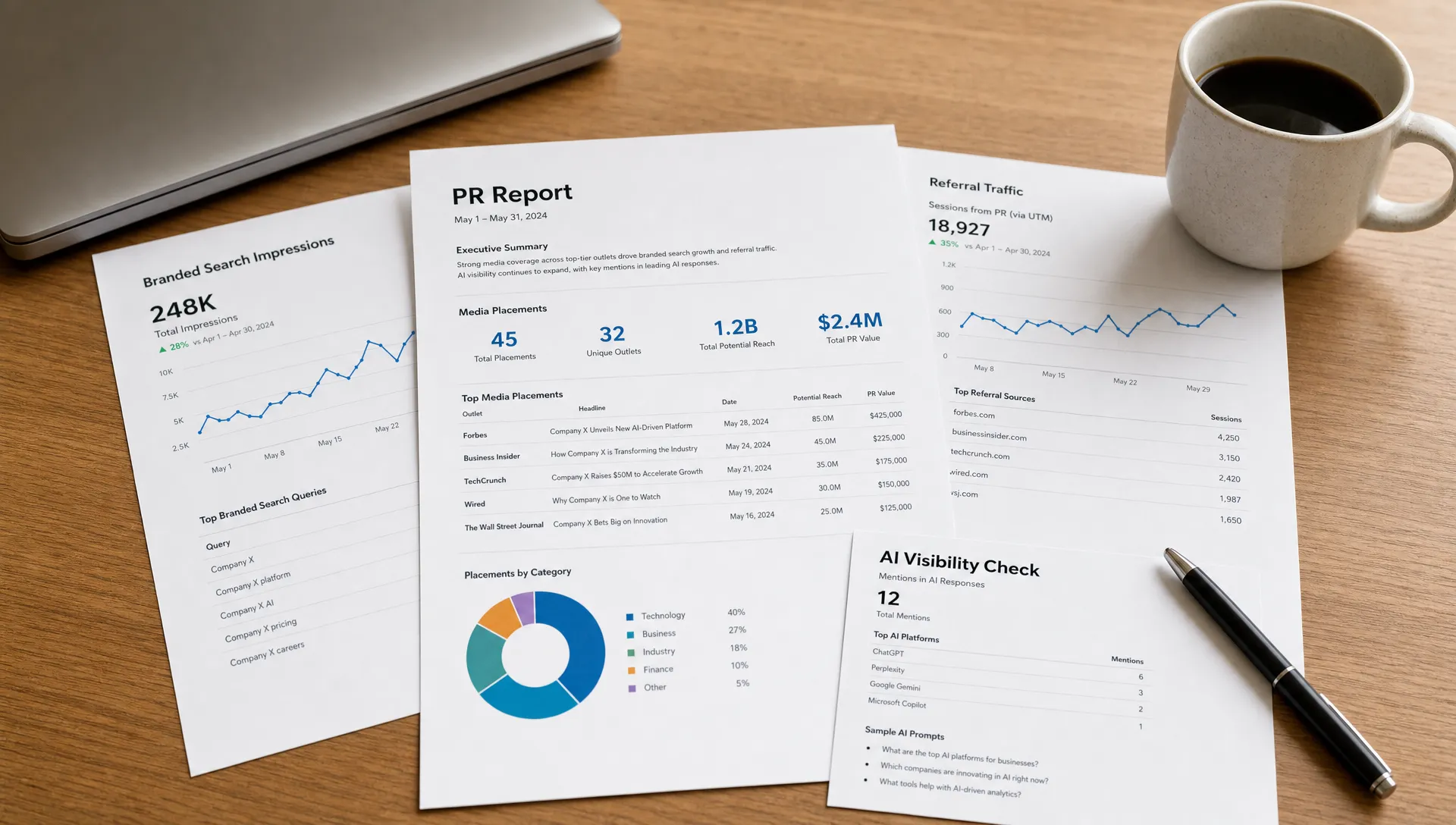
| Measurement | Track indexing, branded search, referral traffic, AI mentions, and secondary links. | Shows whether the campaign created real search value, not just placement volume. |
A practical example: a SaaS company launches a new AI feature. The weak version is a generic release that says the company is excited to innovate. The stronger version includes a clear problem, customer evidence, feature details, an executive quote with substance, screenshots or product context, and a link to a detailed product page. After distribution, the company pitches industry newsletters and updates its comparison pages, help center, and sales materials.
The release alone may not rank the product page for a competitive keyword. But it can help Google and buyers connect the company with the category, while giving the sales and marketing teams third-party proof to use elsewhere.
How AI search changes the value of press releases
In 2026, ranking is not limited to traditional Google results. AI search experiences can summarize brands, compare vendors, and cite sources. These systems tend to rely on accessible, repeated, and trustworthy information across the web.
That makes press releases more useful as entity evidence. A consistent announcement on reputable sites can help clarify facts like your company name, product category, leadership, funding, markets served, partnerships, and milestones.
However, AI visibility is not guaranteed. A release is more likely to help if it contains concrete information instead of vague claims. Facts beat fluff. Data beats adjectives. Specific use cases beat generic innovation language.
The best AI-oriented press releases usually include:
- A plain explanation of what the company does
- Specific product, industry, and audience language
- Named people, partners, locations, and dates when relevant
- Links to deeper owned resources
- Clear claims that can be verified elsewhere
This is one reason PR and SEO are converging. Both depend on being discoverable, credible, and consistently described across trusted sources.
What to measure after publishing
If your goal is ranking impact, do not stop at the proof report. Placement documentation is useful, but it is only the starting point.
Track these indicators over the next 30 to 90 days:
- Which placements were indexed in Google
- Whether the release ranks for your company name and announcement terms
- Changes in branded impressions and clicks in Google Search Console
- Referral traffic from publication pages
- New organic backlinks or unlinked brand mentions
- Sales conversations that mention seeing the announcement
- AI search references to your brand, product, or announcement
- Improvements in conversion rates when media logos or coverage are used on landing pages
This measurement window matters because press release value can compound. The first week may produce placements. The next few weeks may produce search visibility, secondary coverage, and sales enablement value.
So, can a Google press release help you rank?
Yes, if you use it correctly.
A press release can rank in Google for branded, timely, and announcement-specific searches. It can help your broader SEO by strengthening brand credibility, increasing discoverable mentions, supporting entity understanding, and creating opportunities for earned coverage. It can also contribute to AI visibility by giving machines and people more trustworthy sources about your company.
But it will not rescue weak content, replace authority building, or turn syndicated links into an instant ranking boost. In 2026, the winning approach is not press release as backlink hack. It is press release as proof.
Frequently Asked Questions
Is a Google press release a direct ranking factor? No. Google does not rank your website higher simply because you published a press release. The SEO value comes from indexed coverage, brand signals, referral visibility, and any original follow-on links or mentions the release helps earn.
Can a press release rank on Google News? It can appear in news-oriented results if it is published by eligible news sources and matches the query, but distribution alone does not guarantee Google News visibility. The story still needs to be timely, relevant, and carried by sources Google surfaces.
Are press release backlinks good for SEO? They can be useful for discovery and referral traffic, but many syndicated media links are nofollow, sponsored, redirected, or duplicated. Treat them as credibility and visibility signals, not as a direct link-building shortcut.
How often should a company publish press releases? Publish when you have real news. A consistent cadence can help brand visibility, but forcing low-value announcements can dilute trust. Quality and relevance matter more than frequency.
What kind of press release is most likely to help rankings? Original research, major launches, partnerships, funding announcements, acquisitions, market expansions, and reports tend to perform better because they give journalists and searchers a clear reason to care.
Turn your announcement into search visibility
If you have real news and want it distributed without managing submissions manually, MediaBoost can help package, review, and distribute your announcement across 500+ trusted publications. Campaigns include live links and proof reports, making it easier to evaluate visibility after launch.
The goal is not to game Google. The goal is to build a credible public footprint that customers, search engines, journalists, and AI systems can verify.