How SEO and Backlinks Work Together in AI Search
AI search changes how brands earn visibility, but it does not erase SEO fundamentals. This guide explains how backlinks, content quality, entity signals and trusted media mentions work together to influence citations and discovery.
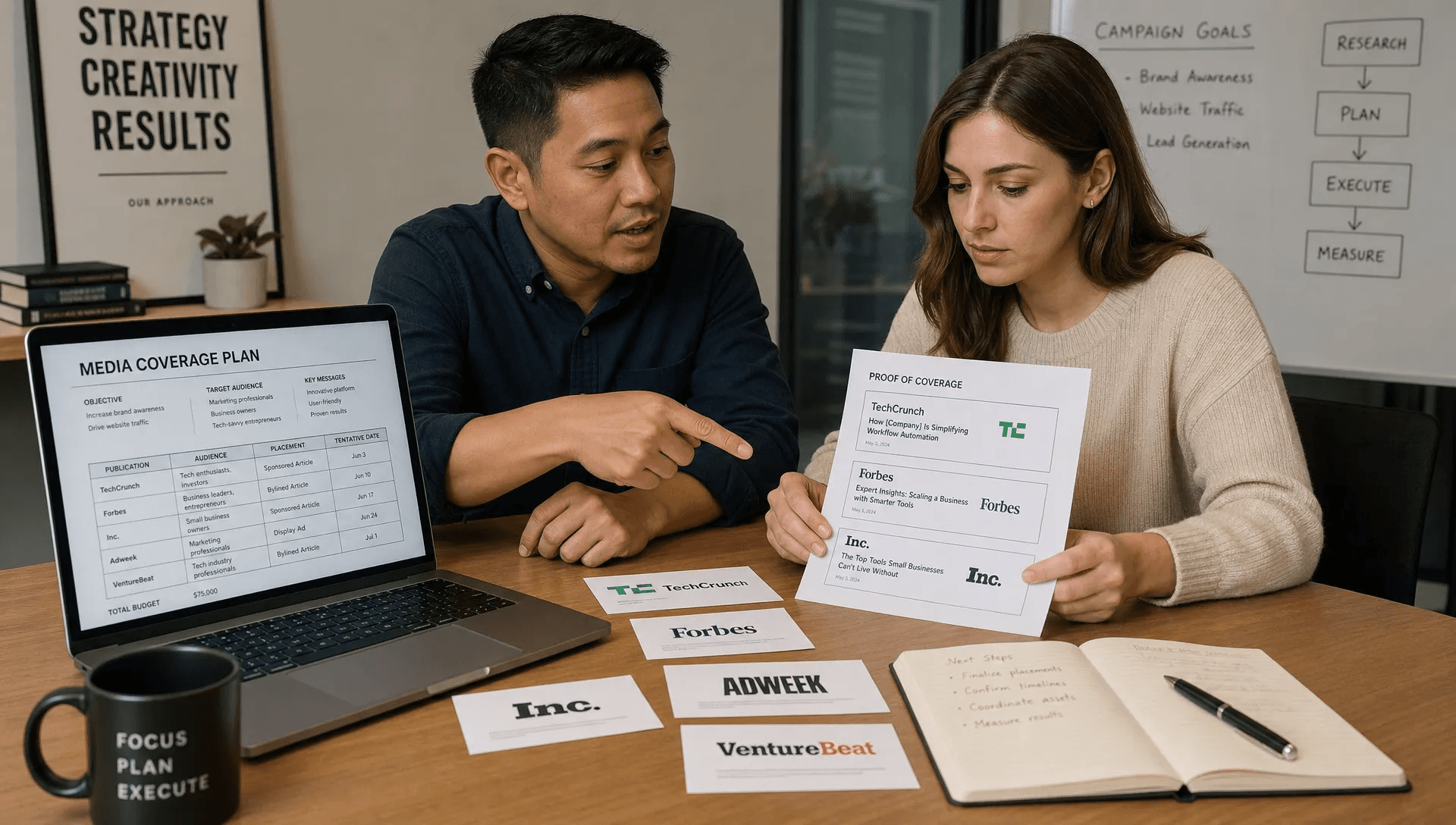
Get featured on 500+ media outlets
Guaranteed placement, no PR experience needed.
AI search has changed the way people discover brands, but it has not made SEO or backlinks irrelevant. If anything, it has raised the bar. Search engines and AI answer engines now have to decide which sources are credible enough to summarize, cite or use as supporting evidence. That decision is shaped by the quality of your website, the clarity of your content and the strength of the signals pointing back to your brand.
For marketers, founders and agencies, the practical question is not whether backlinks still matter. It is how SEO and backlinks support each other when search results are increasingly shaped by AI-generated summaries, answer boxes and citation-based discovery.
AI Search Still Depends on Discoverable, Trustworthy Sources
AI search feels different from traditional search because users often receive a synthesized answer instead of a list of ten blue links. Under the surface, though, AI systems still rely on content they can find, interpret and evaluate.
That makes SEO the foundation. Your pages need to be crawlable, technically sound, relevant to a clear topic and written in a way that answers real questions. Without that foundation, even strong backlinks may have less impact because there is not enough useful content for search systems to interpret.
Backlinks play a different but complementary role. They act as third-party signals that your content, brand or business is worth referencing. A relevant mention from a trusted publication can help search engines understand that your site is connected to a topic, industry, location or product category beyond what you say about yourself.
In AI search, this matters because answer engines are not only looking for pages with keywords. They are looking for reliable patterns across the web. If your brand appears consistently in credible contexts, it becomes easier for AI systems to understand who you are, what you do and where you fit into a topic.
The Simple Relationship Between SEO and Backlinks
SEO makes your site understandable. Backlinks make your brand more credible across the wider web.
Those two forces work best together. A technically optimized website with weak authority may struggle to earn visibility in competitive search results. A site with backlinks but thin, unclear or poorly structured content may attract attention without converting it into rankings, citations or qualified traffic.
The relationship looks like this:
| SEO element | Backlink contribution | AI search impact |
|---|---|---|
| Clear content structure | Links point to useful pages with specific context | AI systems can identify the topic and purpose of the page more easily |
| Entity consistency | Mentions reinforce your brand name, niche, location and offer | AI tools gain more confidence in who your brand is and what it provides |
| Topical authority | Relevant sites connect your brand to an industry conversation | Your content has a better chance of being considered for topic-based answers |
| Trust signals | Trusted publications provide external validation | AI search may view your brand as more credible than unsupported competitors |
| Indexation and discovery | Links help search engines find pages and references | New pages and brand mentions can enter search systems faster |
This does not mean every backlink will lead to an AI citation. It means backlinks help create the web-wide evidence that AI search systems can use when evaluating brands and sources.
Why Backlinks Matter Differently in AI Search
Traditional SEO often treated backlinks as ranking signals. That is still part of the picture, but AI search adds another layer: corroboration.
AI-generated answers are built from sources, entities and relationships. When your brand is mentioned in credible articles, industry pages, press coverage and niche resources, those mentions help form a repeated pattern. That pattern can support brand recognition even when a user does not search for your exact name.
For example, a company that sells cybersecurity software should not only publish strong content on its own blog. It should also be referenced in relevant security publications, software roundups, founder interviews, research commentary and industry news. Those external references help connect the brand to the broader cybersecurity topic cluster.
The same logic applies to local and niche businesses. A local housing brand such as Homes2Go San Antonio benefits when the web clearly associates its name with manufactured homes, affordability, San Antonio, financing support and real housing options. The clearer and more consistent those signals are across trusted sources, the easier it becomes for search systems to understand the business in context.
Backlinks are no longer just about passing authority from one page to another. They also help establish meaning.
SEO Gives AI Systems the Right Page to Understand
Backlinks can point attention toward your brand, but your own website still needs to do the heavy lifting. A good backlink strategy will underperform if your landing pages are vague, slow, duplicated or disconnected from the intent behind the mention.
Strong SEO for AI search starts with pages that answer specific questions. A homepage can explain the brand at a high level, but supporting pages should cover services, use cases, industries, comparisons, customer problems and proof points. This gives both search engines and AI tools more structured material to work with.
A useful page should make the following clear without forcing the reader to hunt for it:
- What the brand does
- Who the product or service is for
- Which problem it solves
- Why the company is credible
- What evidence supports the claim
- What the reader should do next
This is where Generative Engine Optimization becomes relevant. GEO focuses on helping AI systems understand, summarize and cite your brand accurately. If you are building a strategy around AI visibility, MediaBoost’s guide to Generative Engine Optimization is a useful next step after understanding the backlink foundation.

What Makes a Backlink Valuable for AI Search?
Not every backlink helps. Some links are ignored, some are risky and some provide little more than vanity. In AI search, the best backlinks tend to share a few qualities.
Relevance comes first. A link from a website that covers your industry, market or audience is more useful than a random link from an unrelated domain. Search systems can read the surrounding context, not just the anchor text.
Editorial quality also matters. A link that appears naturally inside a well-written article carries more value than a link placed in a low-quality directory, comment section or generic guest post farm. AI systems are built to evaluate source quality, and weak placements can dilute the signal rather than strengthen it.
Anchor text should sound natural. A backlink does not need exact-match keywords every time. In fact, over-optimized anchors can look manipulative. Branded anchors, descriptive anchors and context-rich mentions usually create a more credible footprint.
Finally, the page receiving the link must deserve attention. If a trusted outlet links to a shallow or confusing page, the opportunity is partly wasted. The destination page should match the context of the mention and provide enough information to satisfy readers who follow the link.
For a deeper breakdown of what separates useful links from risky shortcuts, see MediaBoost’s framework for SEO backlink building.
How Press Releases Fit Into SEO and AI Visibility
Press releases are often misunderstood in SEO. They are not a magic shortcut to rankings, and many syndicated media links may be nofollow or treated differently by search engines. Their value is usually broader than direct link equity.
A well-distributed press release can help your brand create public, indexed evidence around a milestone. That could include a product launch, funding announcement, partnership, expansion, award or new service. When those announcements appear across trusted publications, they can support brand credibility, branded search demand and entity recognition.
This matters for AI search because AI systems need evidence. A brand that exists only on its own website is harder to verify than a brand with consistent coverage across multiple media sources. Press coverage can give search engines more places to confirm your brand name, category, claims and relevance.
MediaBoost’s article on whether press releases help SEO explains this distinction well: press releases are usually strongest as trust, visibility and discovery assets, not as simple backlink hacks.
For AI search, that distinction is essential. You are not trying to trick an algorithm. You are trying to make your brand easier to verify.
A Practical Framework for Making SEO and Backlinks Work Together
The strongest strategies start with content and distribution working from the same plan. Too many companies publish pages first and think about links later, or they buy placements without making sure the destination pages are ready. A better approach connects the two from the beginning.
Start by identifying the topics you want your brand to be associated with. These should be specific enough to create authority. “Marketing” is too broad for most companies. “Press release distribution for B2B SaaS launches” or “AI search visibility for funded startups” gives search systems a clearer context.
Next, build or improve pages that answer the core questions around those topics. Your website should include service pages, educational articles, proof pages and comparison content where appropriate. Each page should have a clear purpose and a logical internal link path.
Then pursue backlinks and media mentions that reinforce those same themes. If your site says you serve healthcare technology companies, your external mentions should ideally appear in business, healthcare, technology or startup contexts. Consistency makes the signal stronger.
A simple workflow looks like this:
| Step | What to do | Why it matters |
|---|---|---|
| Define the topic | Choose the categories, services and markets you want to own | AI search needs clear entity associations |
| Optimize the page | Improve content depth, structure, headings and internal links | Backlinks work better when the destination page is useful |
| Earn relevant mentions | Use PR, partnerships, thought leadership and editorial outreach | External validation strengthens credibility |
| Monitor visibility | Track rankings, referral traffic, branded search and AI mentions | AI visibility is measured through patterns, not one metric |
| Refresh proof | Keep coverage, case studies and announcements current | Recency can support trust and relevance |
This framework keeps SEO and backlinks from becoming separate projects. The page explains your expertise, and the backlink confirms that others recognize it.
Common Mistakes That Weaken AI Search Visibility
The biggest mistake is treating backlinks as a volume game. Hundreds of irrelevant links will not build the same authority as a smaller number of credible, context-rich placements. In some cases, low-quality links can make a brand look less trustworthy.
Another mistake is relying only on branded content. Your site should explain your offer, but outside sources help validate it. If every positive statement about your company appears only on your own domain, AI systems have less independent evidence to work with.
Companies also weaken their signals by using inconsistent descriptions. If one profile calls the company a PR agency, another calls it a SaaS platform and another calls it a content marketplace, search systems may struggle to categorize it correctly. This does not mean every mention must use identical wording, but the core entity information should remain consistent.
A fourth mistake is sending backlinks to the wrong pages. If an article discusses a specific service, the link should usually point to the most relevant service or resource page, not always the homepage. The more closely the destination page matches the context, the better the experience for readers and the clearer the signal for search systems.
How to Measure Whether SEO and Backlinks Are Working
AI search visibility is not measured by one dashboard yet. Traditional SEO metrics still matter, but they should be combined with brand and citation signals.
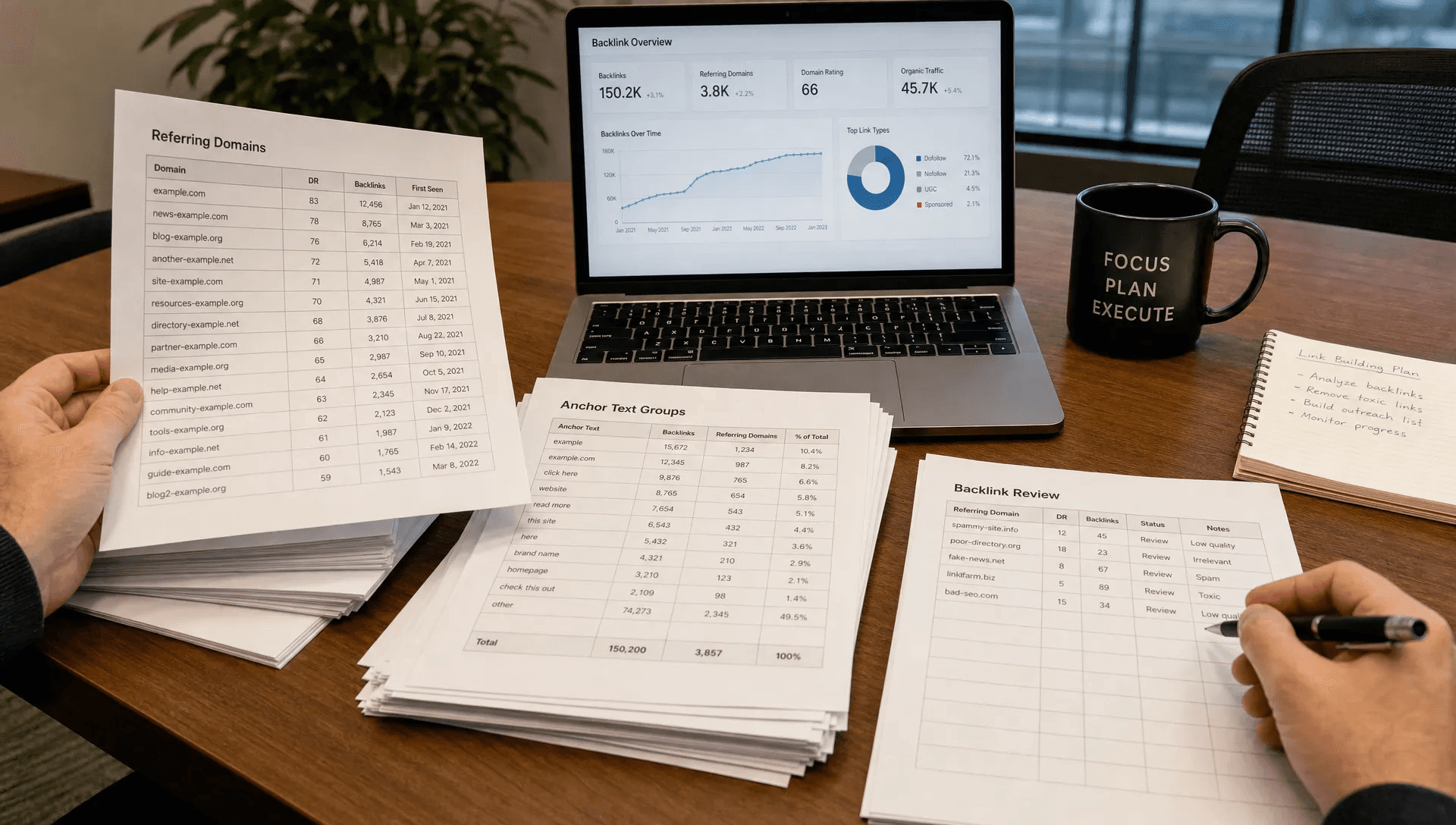
Track organic rankings for priority topics, but also look at impressions, indexed pages, referral visits from media placements and changes in branded search volume. If your PR and backlink strategy is working, more people should search for your brand after seeing it in credible places.
You can also manually test AI search results. Search for category-level prompts, comparison prompts and problem-based questions in tools that generate answers. Record whether your brand appears, which competitors are cited and which sources the answer seems to rely on. This is not perfect measurement, but it reveals whether your brand is entering the conversation.
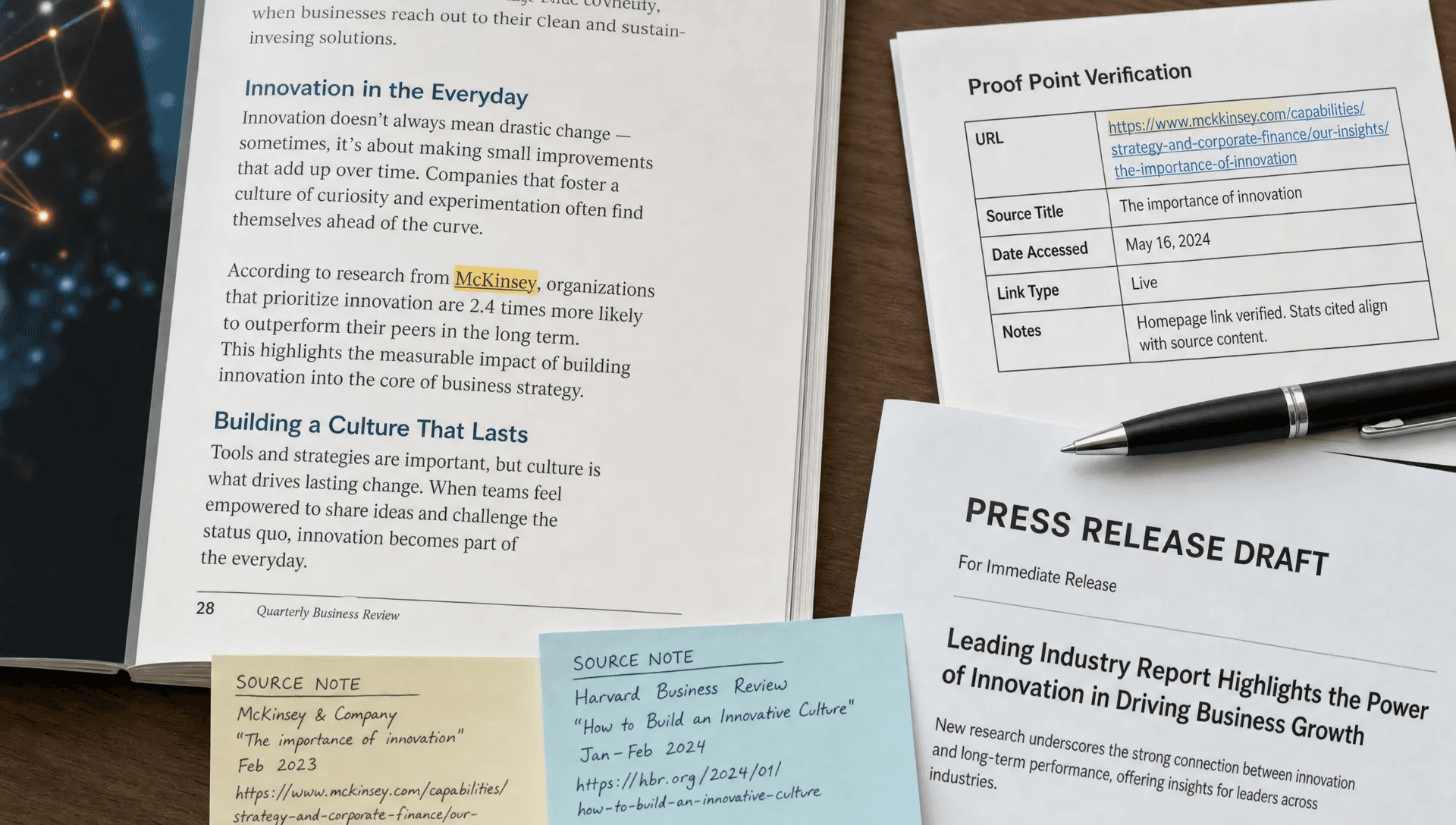
For agencies and growth teams, proof reports are also useful. They document live placements, link destinations and publication details so you can connect distribution activity to SEO, PR and AI visibility goals over time.
Where MediaBoost Fits
MediaBoost helps brands get featured across 500+ trusted publications through press release distribution and media placement services. For teams trying to build credibility, social proof and AI search visibility, those placements can support the external evidence layer that SEO alone cannot create.
The best use case is not “get links and hope rankings improve.” A stronger approach is to pair optimized website pages with relevant media coverage, live links and proof reports. That gives your brand owned content and third-party validation working together.
When done well, SEO tells search systems what your brand should be known for. Backlinks and media mentions help confirm that the wider web recognizes it too.
Frequently Asked Questions
Do backlinks still matter for AI search? Yes. Backlinks still help with discovery, authority and context. In AI search, they also support corroboration by showing that credible third-party sources associate your brand with specific topics.
Can backlinks guarantee AI citations? No. A backlink can improve your visibility signals, but AI citations depend on many factors, including content quality, relevance, source trust, query intent and how the AI system retrieves information.
Is SEO still necessary if my brand has strong media coverage? Yes. Media coverage can validate your brand, but your website still needs crawlable, useful and well-structured content. Without solid SEO, search systems may not understand which pages best represent your expertise.
Are press release backlinks good for SEO? Press releases can support SEO indirectly through visibility, indexed coverage, brand signals and referral opportunities. They should not be treated as a simple link equity shortcut.
What is the best first step for improving AI search visibility? Start by clarifying the topics your brand should own, then optimize the pages that support those topics. After that, build relevant third-party mentions that reinforce the same positioning.
Build the Signals AI Search Can Trust
AI search rewards brands that are easy to understand and easy to verify. That means strong website content, relevant backlinks, consistent media mentions and proof that your brand exists beyond its own claims.
If you want to strengthen that external trust layer, MediaBoost can help you distribute press releases, earn media placements and document live links with proof reports designed to support credibility, SEO and AI visibility.