SEO Backlink Building: A Safe Framework for Lasting Growth
Backlinks can still drive rankings, trust and AI visibility, but only when they look useful to real readers. This framework shows how to audit, plan, earn, measure and scale links without risky shortcuts.
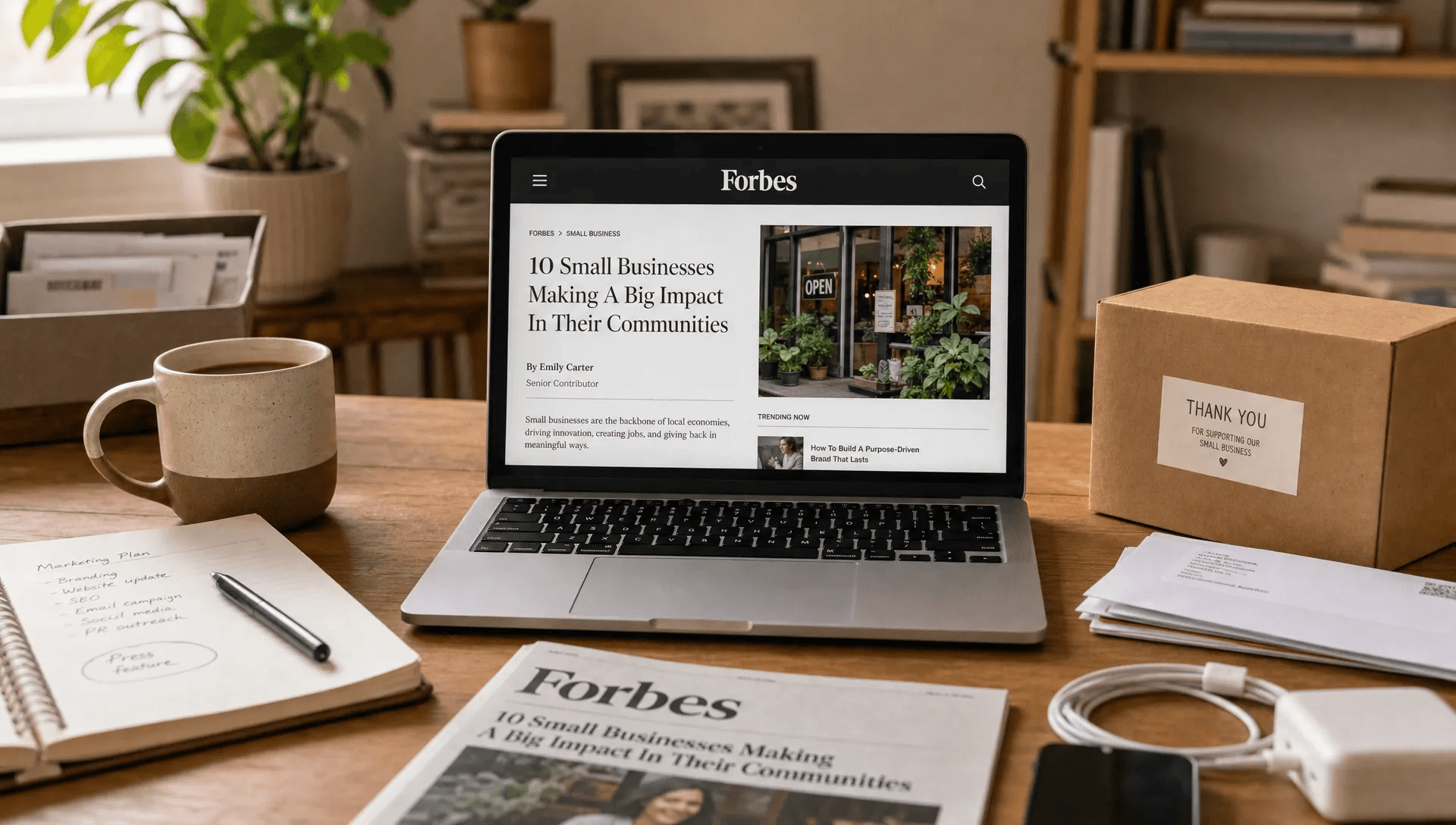
Get featured on 500+ media outlets
Guaranteed placement, no PR experience needed.
Backlinks still matter, but the way you build them has changed. In 2026, safe SEO backlink building is less about collecting as many links as possible and more about earning credible references from pages that make sense for your audience, your offer and your brand story.
That distinction matters because search engines have become better at evaluating context. A link from a relevant article, publication or partner can support rankings, referral traffic, brand trust and visibility in AI-powered search experiences. A bundle of cheap, unrelated links can do the opposite.
Google is clear in its spam policies that links intended to manipulate search rankings can violate its guidelines. The goal, then, is not to avoid link building. The goal is to build links in ways that a real editor, customer or industry peer would recognize as useful.
This framework gives you a safer way to plan, acquire and measure backlinks for lasting growth.
What Safe SEO Backlink Building Really Means
Safe link building is not passive. It does not mean waiting and hoping people discover your website. It means creating reasons for reputable websites to mention you and managing the process with discipline.
A safe backlink usually passes five tests:
- Relevance: The linking website, page topic and audience have a clear connection to your brand or content.
- Editorial reason: The link helps the reader verify a claim, find a resource, explore a product or understand the story.
- Natural anchor text: The clickable text fits the sentence instead of forcing an exact-match keyword.
- Traceability: You can see where the link is live, what page it points to and what attribute it uses.
- Diversity: Your link profile grows through a mix of sources, formats and brand mentions rather than one repeated tactic.
In practice, safe SEO backlink building sits at the intersection of SEO, PR and brand development. You are not just trying to influence an algorithm. You are building a public footprint that buyers, journalists, partners and AI systems can use to understand why your company deserves attention.
The Risk You Are Trying to Avoid
Most backlink problems come from shortcuts. Cheap links often look attractive because they promise speed, volume and high authority metrics. The issue is that a high domain metric does not guarantee relevance, editorial quality or long-term value.
| Risk pattern | Why it creates problems | Safer replacement |
|---|---|---|
| Links from unrelated websites | They create weak topical signals and can look unnatural | Prioritize industry, business or audience relevance |
| Repeated exact-match anchors | They can signal manipulation when overused | Use branded, URL and natural descriptive anchors |
| Private blog networks or link farms | They exist mainly to sell links, not serve readers | Earn placements on real publications and partner sites |
| No placement reporting | You cannot assess quality, indexability or risk | Require live URLs, anchors, target pages and attributes |
| Sudden bulk link spikes with no news event | Growth can look artificial if there is no real reason for attention | Tie campaigns to launches, reports, announcements or useful assets |
The safest mindset is simple: if you would be uncomfortable showing the placement to a customer, investor or search quality reviewer, it probably does not belong in your link profile.
Step 1: Start With a Backlink Audit, Not a Shopping List
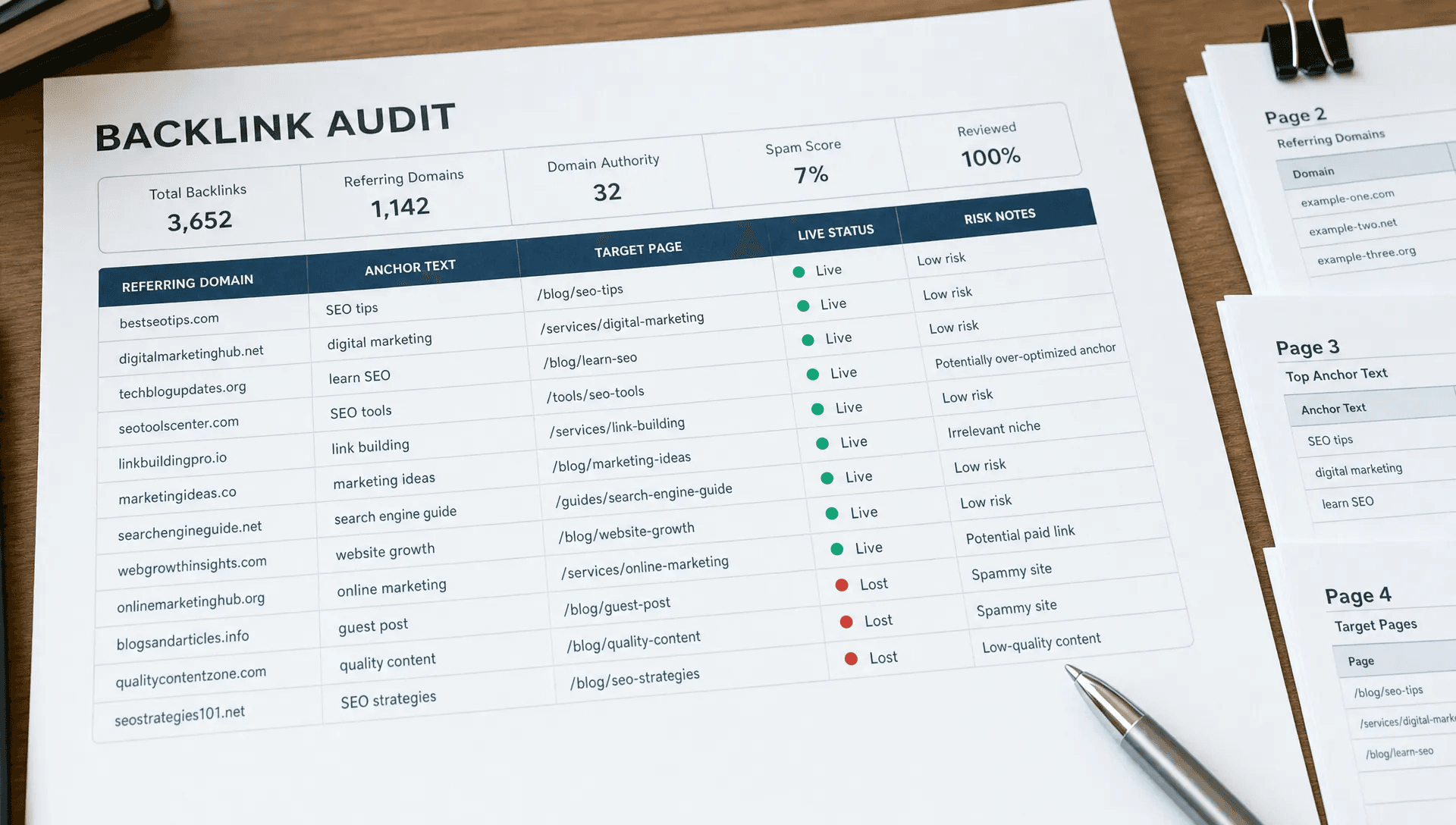
Before building new links, understand what you already have. A backlink audit helps you identify strengths, gaps and risks before they compound.
Look at your current referring domains, anchor text patterns, strongest linked pages, lost links and suspicious spikes. Tools like Ahrefs, Semrush, Moz and Google Search Console can all help, but the tool matters less than the questions you ask.
You want to know whether your backlink profile is concentrated around your homepage, whether your commercial pages have any credible support and whether your anchors look natural. If most of your links come from directories, syndicated pages or unrelated blogs, the next campaign should focus on relevance and editorial credibility rather than more volume.
For a deeper pre-campaign checklist, MediaBoost has a practical guide on what to check in an Ahrefs backlink audit before you build links.
Step 2: Build an Authority Map
A safe campaign needs a map before it needs outreach. Your authority map connects your business goals to the pages, topics and proof points that deserve links.
Start with three questions. What do you want to be known for? Which pages need more authority to rank or convert? What proof can third parties reference without sounding promotional?
| SEO or brand goal | Best page to support | Linkable angle |
|---|---|---|
| Build company credibility | Press page, homepage or about page | Launch news, funding, executive expertise or media coverage |
| Improve commercial visibility | Product, service or category page | Buyer guide, comparison resource, case study or use-case content |
| Earn thought leadership | Research report or long-form article | Original data, expert commentary or industry analysis |
| Support local or niche authority | Location page or industry landing page | Regional trend, event, partnership or customer story |
| Strengthen AI search presence | Clear brand entity pages and authoritative mentions | Consistent descriptions across trusted third-party sources |
This mapping prevents a common mistake: building links to whatever page is easiest instead of the pages that matter. It also helps you avoid over-optimizing one keyword or one destination.
Step 3: Create Assets That Deserve Citations
Not every page deserves backlinks. A standard sales page can rank, but it is rarely the easiest page to earn links to unless it includes proof, data or a genuinely useful explanation.
Strong linkable assets usually do one of four things. They reveal information, simplify a decision, provide evidence or make someone else’s content better.
Examples include original survey data, industry benchmarks, calculators, templates, expert commentary, visual explainers and well-documented case studies. For service businesses, even a strong customer story can become linkable when it includes measurable context, a clear problem and a useful lesson for the broader market.
Format also matters. A real estate agency, for example, could turn neighborhood trends and listing insights into a market update, then support distribution with AI-powered real estate video tools like Diane to create polished listing and social content that gives journalists, clients and partners more to engage with.
The point is not to produce content for content’s sake. The point is to give other websites a credible reason to reference you.
Step 4: Evaluate Sources by Editorial Fit, Not Just Metrics
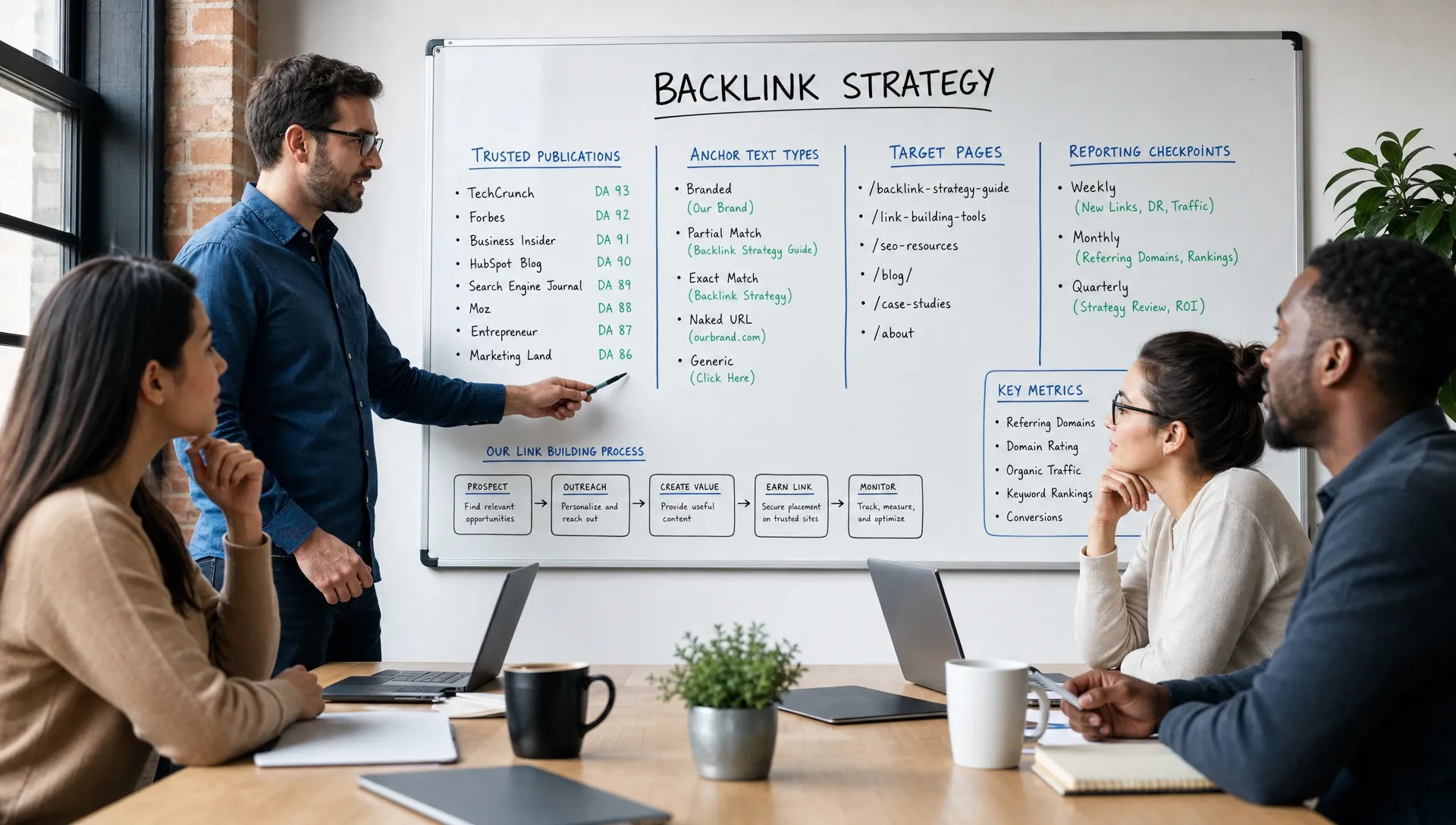
Domain authority, domain rating and traffic estimates can be useful filters, but they should never be the whole decision. A lower-metric publication in your niche can be more valuable than a high-metric website that has no topical connection to your brand.
When evaluating a potential backlink source, look for signs of real editorial value. Does the website publish for an identifiable audience? Are articles written with care? Are outbound links relevant? Is the page indexed? Does the site have a history beyond sponsored posts and generic guest articles?
Also check the placement format. A contextual link inside a relevant article is different from a footer link, author bio link or thin directory listing. If a link is paid, sponsored or part of an arrangement, the link attributes should be handled transparently and in line with search engine guidance.
A good source should make sense even if SEO did not exist. If the placement could generate brand exposure, referral interest or trust with the right audience, it is more likely to be a durable asset.
Step 5: Use PR-Led Acquisition Channels
PR-led link building is safer because it starts with something newsworthy or useful. Instead of asking a website to link to you for no reason, you give editors and publishers a story, expert angle or resource that fits their audience.
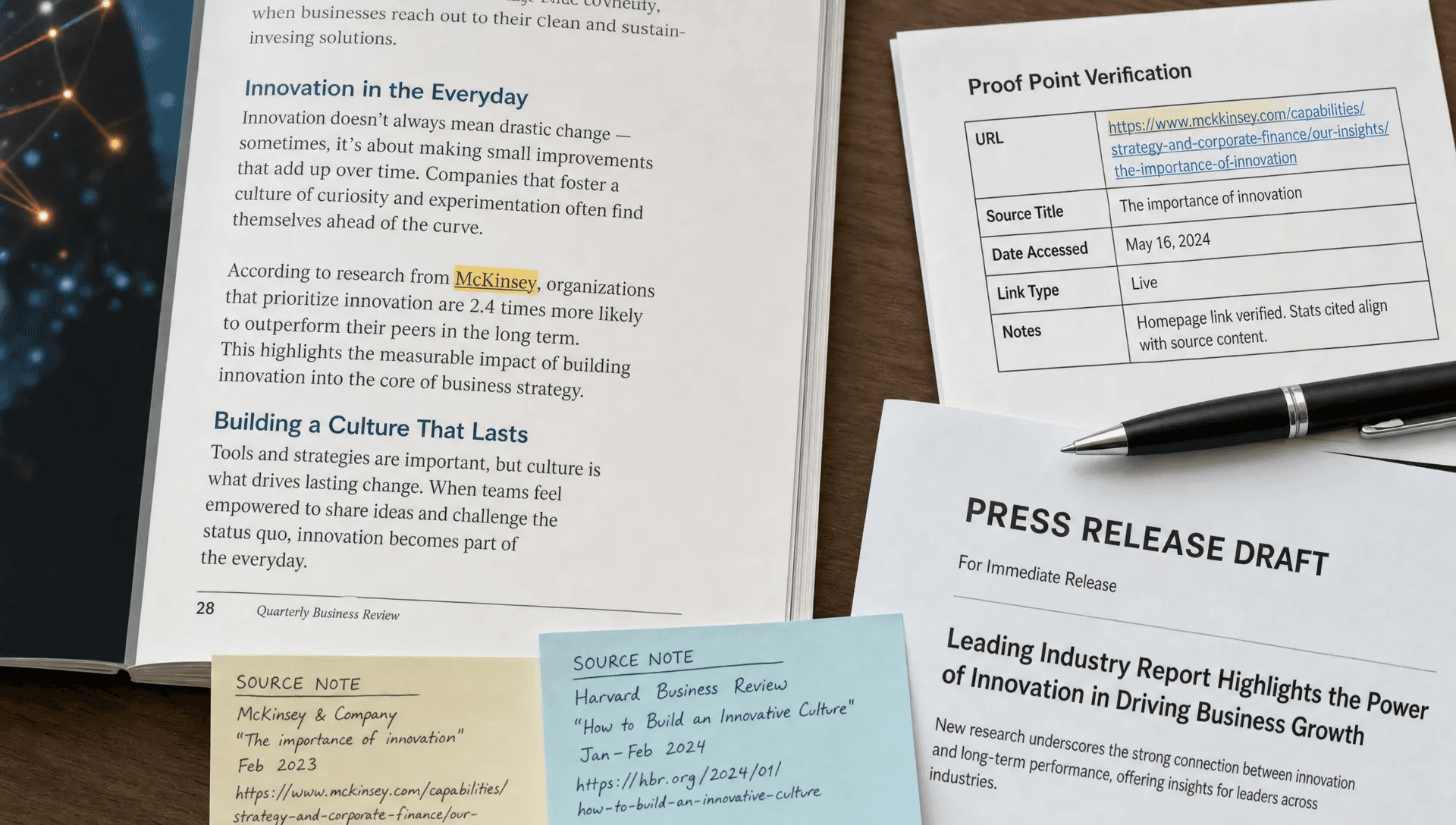
Common PR-led acquisition channels include media announcements, expert quotes, data-led pitches, partner stories, event coverage and thought leadership contributions. Press release distribution can also play a role when the announcement is legitimate, well-written and relevant to the outlets receiving it.
MediaBoost has covered this distinction in detail in its guide to press release link building as a smart SEO tactic or risky shortcut. The short version is that press releases work best when they support real brand news, not when they are used as thin wrappers for keyword links.
Step 6: Keep Anchor Text Natural
Anchor text is one of the easiest areas to overdo. If every backlink uses the same commercial phrase, the profile starts to look engineered. Safe anchor strategy is usually more boring than aggressive SEO advice suggests.
Most brands should rely heavily on branded anchors, naked URL anchors and natural descriptive phrases. Exact-match anchors can appear occasionally when they fit the context, but they should not dominate the profile.
| Anchor type | Safe use | What to avoid |
|---|---|---|
| Branded anchor | Company name, product name or publication reference | Replacing every brand mention with a keyword |
| URL anchor | Homepage or page URL when cited plainly | Using only URL anchors for every placement |
| Descriptive anchor | Natural phrase that explains the destination | Stuffing keywords into awkward wording |
| Exact-match anchor | Rare use when it fits the sentence | Repeating the same money keyword across many sites |
| Generic anchor | Occasional phrases like “this report” or “the study” | Using generic anchors when context is unclear |
A simple test helps: read the sentence aloud. If the anchor sounds like something a journalist or editor would naturally write, it is probably fine. If it sounds like an SEO inserted it after the fact, rewrite it.
Step 7: Control Link Velocity and Campaign Timing
Link velocity is the pace at which your site earns new backlinks. There is no universal “safe number” because brands differ by size, category, news activity and existing authority. A startup announcing funding may earn many links in a few days. A small local service business suddenly gaining hundreds of unrelated links without a public event is harder to justify.
Instead of chasing a fixed number, align link growth with real activity. Product launches, research releases, partnerships, awards, funding announcements and major content campaigns can all create natural reasons for more links.
For evergreen link building, steady growth is usually healthier. Build in waves, measure each wave and adjust based on quality rather than buying another batch because a dashboard number looks low.
Step 8: Measure Quality, Not Just Quantity
A backlink report that only shows the number of links built is incomplete. You need to understand whether those links are live, relevant, indexed, discoverable and connected to business outcomes.
Track a balanced set of metrics:
- Live placement URLs and target pages
- Link attributes, including follow, nofollow or sponsored where visible
- Topical relevance of each referring domain
- Anchor text distribution
- Referral sessions and engaged visits
- Ranking movement for supported pages
- Branded search growth after PR campaigns
- Mentions in trusted sources that strengthen brand entity signals
AI visibility is also becoming part of the conversation. Search experiences increasingly summarize information from trusted sources, so consistent brand mentions across credible publications can help reinforce who you are, what you offer and why you are relevant. MediaBoost explores this shift in its article on how quality backlinks shape brand visibility in the AI era.
Backlinks are not the only input for AI visibility, but they contribute to a broader credibility footprint when paired with clear website content, consistent brand messaging and authoritative third-party references.
A Safe 90-Day SEO Backlink Building Plan
You do not need to solve your entire link profile at once. A 90-day plan can build momentum without creating unnecessary risk.
| Timeline | Main focus | Key actions | Success indicators |
|---|---|---|---|
| Days 1 to 30 | Audit and planning | Review current backlinks, map priority pages, identify risky anchors and define linkable assets | Clear target page list, anchor guidelines and quality criteria |
| Days 31 to 60 | Asset creation and outreach | Publish or refine linkable content, prepare PR angles, pitch relevant publications and partners | First relevant placements, brand mentions and referral signals |
| Days 61 to 90 | Expansion and measurement | Review live links, track ranking movement, reclaim lost mentions and plan the next campaign wave | Better source quality, improved topical coverage and documented learnings |
This type of plan is intentionally conservative. It gives you room to test which angles attract the best placements before scaling. It also creates a paper trail, which matters if you work with agencies, freelancers or internal stakeholders who need to understand what was built and why.
When Guaranteed Placements Can Be Safe
Guaranteed placements are not automatically unsafe, but the details matter. A placement strategy should be transparent about where links appear, how content is reviewed, what attributes are used and whether the publication is relevant to your brand.
For PR distribution, the SEO value is not limited to traditional link equity. Credible placements can help with brand visibility, social proof, referral discovery and the consistency of your public presence. They can also support AI search visibility by giving systems more trusted context about your company.
The risk increases when guarantees are framed as a way to manipulate rankings through hidden networks, irrelevant posts or repeated keyword anchors. The safer version looks more like documented media distribution, editorial review and proof reporting.
That is where MediaBoost fits for brands that want press release distribution and media placements without managing submissions themselves. Its service includes industry-specific packages, done-for-you submissions, editorial review, guaranteed live backlinks and proof reports across a large network of media outlets.
Common Mistakes That Undermine Backlink Growth
Even experienced teams can weaken a campaign by focusing on the wrong signals. The most common mistakes are usually avoidable.
Buying links based only on authority metrics is one. Metrics can help you screen opportunities, but they cannot replace human judgment about relevance and editorial quality.
Another mistake is sending every link to the homepage. Your homepage needs authority, but commercial pages, reports, guides and case studies often need support too. A healthy link profile distributes attention across the pages that explain your expertise.
Many teams also overlook technical SEO. If a target page is slow, thin, blocked from indexing or poorly matched to search intent, new backlinks may have limited impact. Links amplify quality. They rarely compensate for a weak page.
Finally, avoid treating nofollow links as worthless. A nofollow link may not pass ranking signals in the same way as a followed link, but it can still send referral traffic, validate brand presence and lead to future earned mentions.
Frequently Asked Questions
Is SEO backlink building still important in 2026? Yes. Backlinks remain useful because they help search engines, buyers and AI-powered discovery systems evaluate credibility. The safest approach focuses on relevant editorial mentions rather than volume alone.
How many backlinks do I need to rank? There is no fixed number. The answer depends on your competition, content quality, topical authority and current backlink profile. A few highly relevant links can be more valuable than many weak or unrelated links.
Are press release backlinks safe for SEO? They can be safe when the release is newsworthy, accurately distributed and not overloaded with manipulative keyword anchors. Press releases are strongest when they support PR, credibility and discoverability as well as SEO.
What anchor text is safest for backlinks? Branded anchors, URL anchors and natural descriptive phrases are usually safest. Exact-match commercial anchors should be used sparingly and only when they fit the editorial context.
How long does backlink building take to show results? Results vary, but many campaigns need weeks or months to show meaningful ranking, referral or brand search impact. Link quality, page quality, competition and crawl frequency all affect timing.
Build Links That Still Make Sense a Year From Now
Safe backlink building is not about moving slowly. It is about moving deliberately. Start with an audit, choose target pages carefully, create assets worth citing, pursue relevant placements and document every live result.
If your brand needs credible media presence without managing the distribution process in-house, MediaBoost can help with done-for-you press release submissions, editorial review, live links and proof reports across 500+ media outlets. The best backlink strategy is the one you can defend today and still be proud of next year.