Ahrefs Backlink Audit: What to Check Before You Build Links
Before you build new links, use Ahrefs to understand which backlinks already support your site. This guide shows what to audit, what to ignore and how to turn the findings into a safer link building plan.
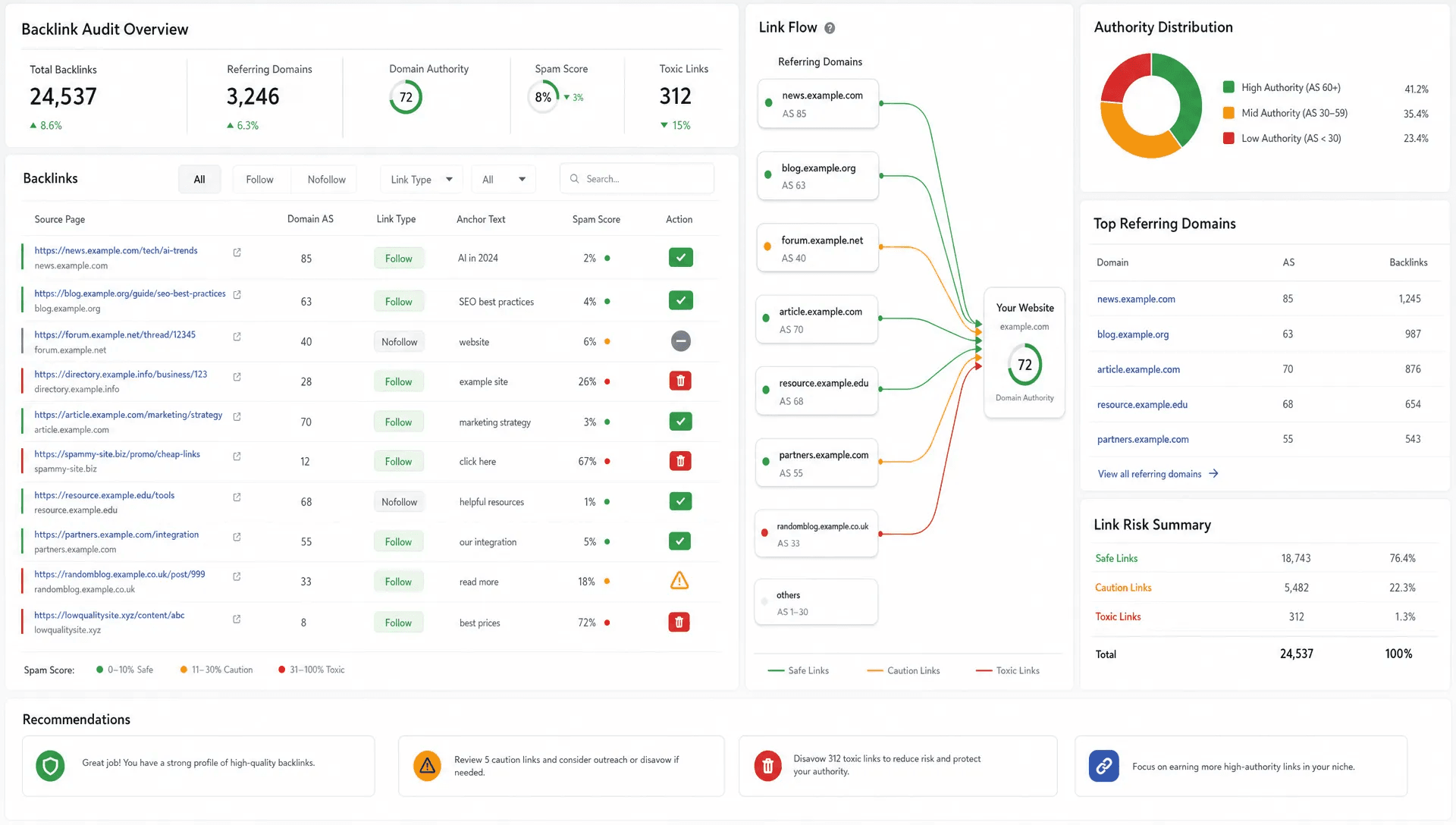
Get featured on 500+ media outlets
Guaranteed placement, no PR experience needed.
An Ahrefs backlink audit is not just a cleanup task after rankings drop. It is the planning step that tells you what kind of links your site already has, which links are driving real authority and where new link building could create unnecessary risk.
Before you pitch journalists, buy placements or scale digital PR, you need to know your baseline. A backlink profile with strong branded mentions, relevant referring domains and healthy anchor diversity can support more aggressive growth. A profile full of low-quality directories, exact-match anchors and irrelevant domains needs a more careful plan.
This guide walks through what to check in Ahrefs before you build links, with a focus on practical decisions rather than vanity metrics.
Why audit backlinks before building more?
Link building works best when it compounds existing trust. If your current backlink profile already sends mixed signals, adding more links can make the pattern harder to correct later. An audit helps you answer three questions before you spend budget:
- Which links are genuinely helping our site?
- Which patterns could look unnatural if we keep scaling them?
- What kind of links should we prioritize next?
This matters more in 2026 because visibility is no longer limited to traditional blue-link search results. Search engines, AI answer platforms and brand discovery tools all evaluate signals of authority, relevance and trust. MediaBoost has covered how quality backlinks shape brand visibility in the AI era, and an audit is how you see whether your brand has those signals in the first place.
Ahrefs gives you enough data to make smarter decisions, but the tool does not replace judgment. Domain Rating, link counts and anchor reports are starting points. The real value comes from interpreting whether the links make sense for your market, your content and your growth stage.
How to set up an Ahrefs backlink audit
Start in Ahrefs Site Explorer and enter the version of your site you want to review. For a full brand audit, use the domain or subdomain level. For a content campaign, product launch or press page, use the exact URL or prefix mode.
The most useful Ahrefs reports for a pre-link-building audit are:
| Ahrefs report | What it helps you review | What to watch for |
|---|---|---|
| Referring domains | Overall domain quality and relevance | Spammy domains, irrelevant niches, overreliance on one source type |
| Backlinks | Individual link placements | Context, placement, link attributes, surrounding content |
| Anchors | Anchor text distribution | Excessive exact-match commercial anchors |
| New and lost | Link velocity and churn | Sudden spikes, repeated lost links, unstable placements |
| Best by links | Pages attracting authority | Linkable assets, outdated high-value pages, broken opportunities |
| Link Intersect | Competitor link gaps | Relevant publications and directories competitors have but you do not |
Exporting data can help if you are dealing with a large profile, but do not start by drowning yourself in spreadsheets. Review patterns inside Ahrefs first, then export specific reports when you need to tag opportunities, assign fixes or share findings with a team.
Check referring domain quality before link quantity
The first mistake in an Ahrefs backlink audit is treating more referring domains as automatically better. A site with 300 relevant referring domains can be in a healthier position than a site with 3,000 low-quality links from scraped pages, foreign-language spam or thin directories.
When reviewing referring domains, look beyond Domain Rating. DR is useful for comparison inside Ahrefs, but it is not a Google ranking factor and should never be the only filter. A strong referring domain usually has real organic traffic, a clear topical focus, indexed content, visible editorial standards and a backlink profile that does not look manipulated.
Open a sample of referring domains and ask whether the site would make sense to a human reader. If you are auditing a SaaS company, links from business software blogs, startup publications and integration partners are easy to justify. If you are auditing a niche ecommerce brand such as an online perfume shop selling fragrance samples, relevant links might come from beauty editors, lifestyle publications, fragrance blogs or gift guides, not random gambling, crypto or coupon farms.
The goal is not to remove every imperfect link. Most established sites attract some odd links over time. The concern is pattern strength. If irrelevant links are rare, they are probably noise. If they dominate your referring domains, your next link building campaign should focus heavily on topical relevance and trusted editorial placements.
Review link velocity and campaign spikes
In Ahrefs, the New and Lost reports show how quickly your site gains and loses links. Link velocity is not inherently good or bad. A brand announcement, funding news, product launch or widely syndicated press release can create a legitimate spike. A sudden burst of links from unrelated blogs using similar anchors deserves closer attention.
Look at the timeline and connect spikes to real business activity. Did you launch a report, run a PR campaign, get covered in the media or release a new product? If so, the spike may be explainable. If there is no clear source, drill into the new links from that period.
Lost links are just as useful. If you repeatedly lose links from the same type of placement, you may be building links on pages that are not stable. If high-authority editorial links disappear because URLs changed or pages were removed, link reclamation may deliver a better return than chasing brand-new placements.
For brands using PR as part of their SEO strategy, the distinction between legitimate media coverage and thin syndicated spam matters. This is where a clear distribution strategy helps. MediaBoost’s guide on press release link building explains when press releases support authority and when they can drift into risky territory.
Audit anchor text before choosing target keywords
Anchor text tells you how the web describes your site. In a natural backlink profile, many anchors are branded, navigational, URL-based or descriptive. A profile that leans too heavily on exact-match commercial keywords can look forced, especially if those anchors come from weak or unrelated domains.
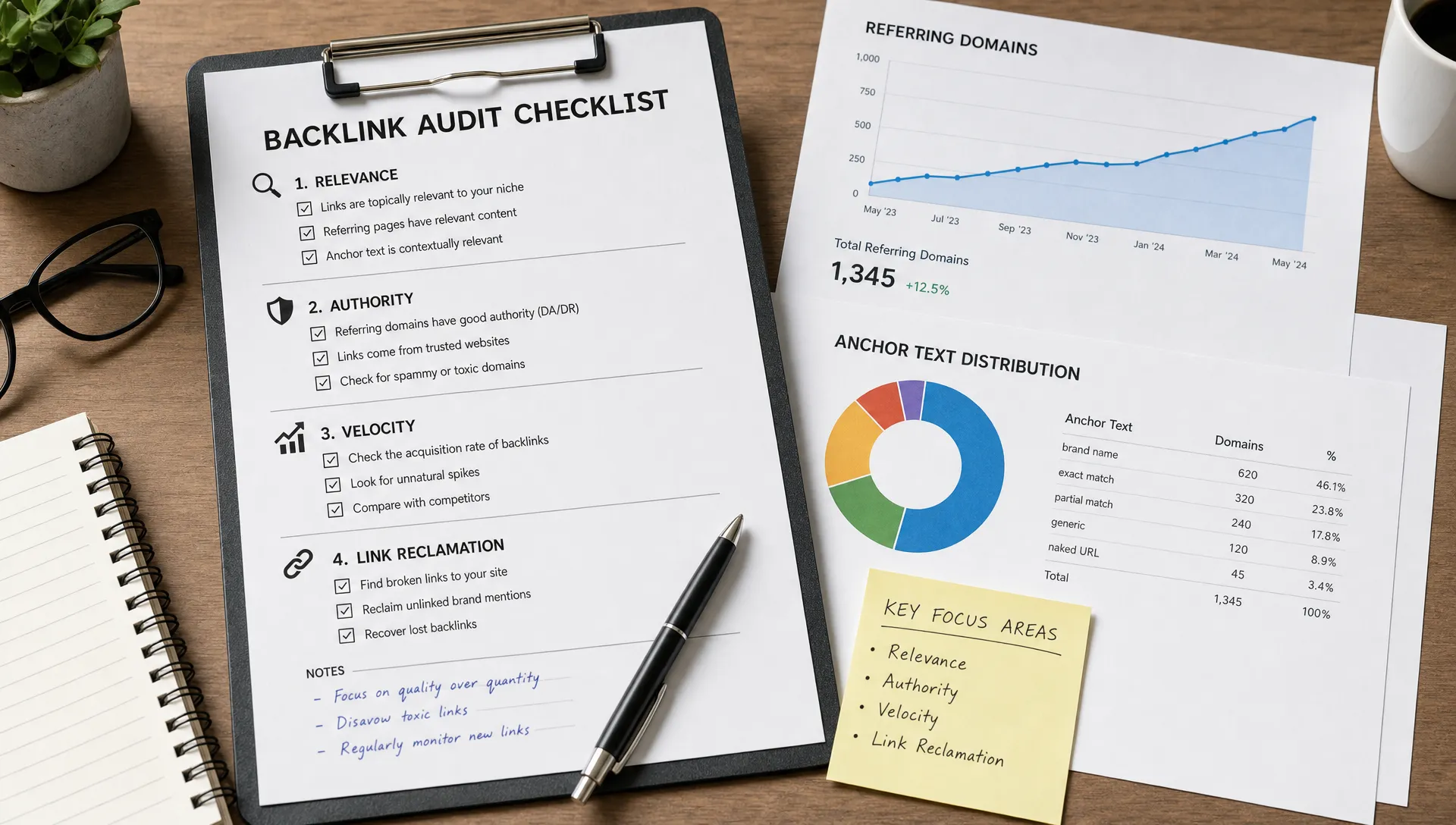
In Ahrefs, open the Anchors report and group anchors into practical categories. You do not need a perfect percentage target because normal distributions vary by industry, brand awareness and content type. You do need to spot aggressive patterns.
| Anchor type | Example | Audit interpretation |
|---|---|---|
| Branded | MediaBoost | Usually healthy, especially from media mentions and citations |
| URL or naked link | mediaboost.press | Common in natural citations and syndicated content |
| Descriptive | press release distribution platform | Useful when contextually relevant and not overused |
| Exact-match commercial | buy high authority backlinks | Riskier when repeated across many placements |
| Generic | visit website | Neutral, but not very informative |
If you find too many exact-match anchors, do not try to “fix” the ratio with more manipulative links. Build future links around branded anchors, natural citations, author references and editorial context. The surrounding sentence often matters as much as the clickable words.
Check link attributes without overreacting
Ahrefs shows whether links are followed, nofollowed, sponsored or UGC. A healthy profile can include all of these. Followed links may pass stronger ranking signals, but nofollowed links from respected publications can still drive referral traffic, brand discovery and credibility.
Google introduced rel="sponsored" and rel="ugc" to help classify paid and user-generated links. If paid placements are marked sponsored, that is not automatically a problem. It may be exactly how the publisher complies with search guidelines. The risk comes from paid links designed to pass ranking signals without disclosure.
Do not discard a media placement simply because the link is nofollowed. If the outlet is trusted, the article ranks, the brand mention is clear and the page can be found by real readers, it may still support visibility. The audit question is not “followed or worthless?” The better question is “does this placement build authority, referral value or brand trust?”
Evaluate page-level value, not only domain-level authority
A link from a high-DR site is not always valuable. If the linking page is buried, thin, unindexed or unrelated, the placement may deliver little. In Ahrefs, inspect both the referring domain and the specific linking URL.
Pay close attention to page-level signals such as organic traffic, URL Rating, internal links to the page and whether the page ranks for relevant terms. A link from a lower-DR niche publication with traffic and topical alignment can be more useful than a link from a large general site on an orphaned page.
Also check where the link appears. In-content editorial links usually carry more value than links in boilerplate footers, author bios, tag pages or auto-generated widgets. Sitewide links deserve extra scrutiny because they can create unnatural repetition, especially if the anchor text is keyword-heavy.
Before you build links, identify which of your existing pages already attract strong links. These pages may be worth updating, internally linking from or using as models for future linkable assets. The Best by links report is especially useful here because it reveals what people already cite.
Identify toxic patterns, but avoid panic cleanup
Many site owners open an audit and immediately search for “toxic backlinks.” Ahrefs does not give you a single toxicity score because toxicity is not that simple. A bad-looking link is not always harmful, and Google’s systems often ignore large amounts of low-value spam without needing action from the site owner.
That said, some patterns are worth documenting:
- Links from hacked pages or injected spam sections
- Large numbers of links from unrelated foreign-language sites
- Repeated exact-match anchors from weak blogs
- Paid link networks with similar templates and outbound patterns
- Links from pages overloaded with casino, adult, crypto or payday loan anchors
If you have a manual action or a clear history of manipulative link building, removal requests and a disavow file may be appropriate. If you simply see a handful of scraper links or random spam domains, focus your energy on earning better links rather than obsessing over every bad one.
A backlink audit should guide strategy, not create unnecessary fear. The safest response to a messy profile is often to dilute weak signals with stronger, more relevant coverage over time.
Reclaim lost and broken backlinks before building new ones
One of the highest-return actions in any Ahrefs backlink audit is link reclamation. These are links you already earned but are no longer benefiting from fully. Before you spend on new outreach, check whether you can recover value from old mentions.
Use Ahrefs to find broken backlinks pointing to 404 pages. If those pages have relevant replacements, add redirects. If a brand mention exists without a link, consider a polite outreach request. If a valuable link was removed during a site redesign or article update, ask whether the publisher can restore it.
This is not glamorous work, but it is efficient. A recovered editorial link from a relevant publication can be more valuable than a new low-quality placement. It also helps clean up the user journey because visitors who click old media links should land on a useful page, not an error.
Use competitor backlinks as a map, not a script
Ahrefs Link Intersect can show sites linking to competitors but not to you. This is useful, but copying competitors blindly is a common mistake. Some competitor links may be paid, outdated, irrelevant or part of tactics you do not want to replicate.
Sort competitor opportunities by relevance first. Look for industry publications, podcast pages, partner directories, expert roundups, data citations and news sites that would reasonably cover your brand. Then assess whether you have a strong enough angle to deserve the link.
Competitor analysis should help you answer questions like:
- Which publications repeatedly cover our category?
- What assets attract links in our market?
- Which competitors earn links from thought leadership, data or PR?
- Are we missing obvious trust signals such as company profiles, partner pages or media coverage?
If your competitors have stronger authority because they consistently appear in trusted media, manual outreach alone may not close the gap quickly. That is when predictable media placement, transparent reporting and editorial fit become more important than raw link volume.
Turn your audit into a link building plan
An Ahrefs backlink audit is only useful if it changes what you do next. After reviewing your data, summarize findings into a simple action plan. Avoid a 40-page report that no one uses. Focus on decisions.
A practical plan might include these priorities:
- Reclaim valuable lost links and redirect broken linked pages
- Reduce reliance on exact-match anchors in future campaigns
- Build more links from relevant industry and media sites
- Prioritize pages that already attract links and deserve updates
- Avoid low-quality placements that resemble existing weak patterns
Your audit should also define what “good” looks like for future links. For some brands, that means more editorial coverage in business publications. For others, it means niche authority, local trust, analyst mentions or high-quality product reviews.
If you plan to outsource, use the audit as your quality control document. Ask any vendor how they choose outlets, what reporting they provide and whether they can show live placements. MediaBoost’s guide to choosing link building services in 2026 covers the due diligence questions worth asking before you commit budget.
A quick Ahrefs backlink audit checklist
Before you approve a new link building campaign, run through this checklist:
| Audit area | Pass signal | Warning signal |
|---|---|---|
| Referring domains | Relevant sites with real content and traffic | Many unrelated domains or obvious link farms |
| Link velocity | Growth tied to real campaigns or news | Sudden unexplained spikes from similar sites |
| Anchor text | Mostly branded, URL-based and natural anchors | Heavy exact-match commercial anchors |
| Link attributes | Mixed profile with credible followed and nofollowed links | Undisclosed paid links built only for ranking signals |
| Page value | Linking pages are indexed, relevant and visible | Orphaned, thin or auto-generated pages |
| Lost links | Important losses are reclaimed or redirected | Valuable links disappear without follow-up |
| Competitor gaps | Clear relevant publications to target | Blind copying of competitor spam |
This checklist will not tell you every link you should build, but it will stop you from scaling a weak strategy.
Frequently Asked Questions
What is an Ahrefs backlink audit? An Ahrefs backlink audit is a review of your site’s backlinks, referring domains, anchor text, link attributes, lost links and competitor gaps using Ahrefs data. The goal is to understand link quality and plan safer link building.
How often should I audit backlinks in Ahrefs? For most active websites, a quarterly audit is enough. Brands running PR, SEO or link building campaigns should review new and lost backlinks monthly so they can catch issues and reclaim valuable links quickly.
Is Domain Rating enough to judge a backlink? No. Domain Rating is useful for comparison, but it does not measure topical relevance, editorial quality or page-level value. Always review the linking page, context, traffic and anchor text.
Should I disavow bad backlinks after an audit? Not always. Disavow is usually reserved for clear manipulative link patterns or manual action concerns. Random scraper links and low-quality spam are common, and many are ignored by search systems.
Can press release links help after a backlink audit? Yes, when the release is newsworthy, distributed through credible outlets and supported by transparent reporting. Press release links should build brand visibility and trust, not imitate private blog network tactics.
Build links from a cleaner baseline
A backlink audit gives you the clarity to build links with less waste and less risk. Instead of chasing every high-DR opportunity, you can focus on the links your profile actually needs: relevant media mentions, stronger brand signals, better anchor diversity and placements that real audiences can trust.
If your Ahrefs audit shows that your site needs credible media coverage, MediaBoost can help with done-for-you press release distribution, editorial review, guaranteed live links and proof reports across 500+ outlets. Start with the audit, then build links that strengthen the profile you want to be known for.