How to Write a Press Release That Gets Picked Up Fast
Fast pickup starts before distribution. This guide shows how to shape a timely angle, write a newsroom-ready structure, package proof, and time your release so editors, aggregators, and media partners can say yes faster.
Get featured on 500+ media outlets
Guaranteed placement, no PR experience needed.
Most press releases are not ignored because the announcement is worthless. They are ignored because the value is hard to recognize quickly.
Editors, producers, aggregators, and industry publications are working through a constant stream of pitches. If your press release makes them hunt for the news, verify basic facts, rewrite vague claims, or guess who the story is for, pickup slows down or never happens.
A press release that gets picked up fast does three things well: it makes the news obvious, reduces editorial work, and reaches the right distribution channels at the right moment.
What “picked up fast” really means
Before writing, define what you want pickup to look like. A press release can be picked up in several ways:
- Syndicated placement on media outlets and financial news sites
- Republishing by industry publications or local media
- Journalist follow-up for interviews or deeper coverage
- Inclusion in newsletters, roundups, or market briefs
- Search visibility for brand, product, and announcement-related queries
Each outcome requires a slightly different emphasis, but the foundation is the same: a strong angle, clean structure, credible details, and frictionless distribution.
Fast pickup does not mean making the release sound louder. It means making it easier for media gatekeepers to say, “This is relevant, complete, and ready to run.”
Start with a news angle, not a company update
The biggest speed killer is writing from the company’s point of view instead of the reader’s point of view. “We launched a new platform” is not automatically news. “Small manufacturers can now reduce supplier onboarding from weeks to days” is closer to news because it explains who benefits and why it matters.
A fast-pickup angle usually answers four questions:
- What changed?
- Why does it matter now?
- Who is affected?
- What proof makes the claim credible?
Here is how to sharpen common announcement types:
| Announcement type | Weak angle | Faster-pickup angle |
|---|---|---|
| Product launch | Company launches new software | New software helps a specific audience solve a timely, costly problem |
| Funding | Company raises capital | Funding will support expansion, hiring, research, or access in a clearly defined market |
| Partnership | Two companies partner | Partnership gives customers a new capability, broader access, or faster implementation |
| Milestone | Company celebrates anniversary | Milestone reflects growth, market demand, community impact, or industry change |
| Report or data | Company publishes survey | New data reveals a trend relevant to buyers, investors, or local communities |
If you cannot explain the reader benefit in one sentence, the release is not ready yet.
Write a headline that can stand alone
Your headline is not just a label. It is the first editorial decision point.
A strong press release headline should be specific enough that someone understands the news without reading the full release. It should include the company name when useful, but it should not waste space on hype.
A practical headline formula is:
Company + action + audience or market impact
For example:
BrightLedger Launches AI Bookkeeping Tool for Independent Retailers Managing Multi-Store Operations
That headline is not flashy, but it gives an editor useful information immediately: the company, the action, the category, and the intended audience.
Avoid headlines that depend on empty adjectives such as “revolutionary,” “game-changing,” “best-in-class,” or “disruptive.” If the news is meaningful, the facts should do the work.
Put the entire story in the lead paragraph
Your first paragraph should answer the core news questions in plain language: who, what, when, where, why, and why it matters.
A slow lead sounds like this:
BrightLedger, a company committed to transforming the future of finance, is excited to announce a powerful new solution designed to empower businesses.
A faster lead sounds like this:
BrightLedger today launched an AI bookkeeping platform that helps independent retailers reconcile multi-store sales, inventory, and expense data from a single dashboard.
The second version is more useful because it tells the reader what launched, who it is for, and what it does. It does not force the editor to translate marketing language into news language.
For more detail on the fundamentals of structure, this step-by-step guide to writing a media-friendly press release breaks down the core components every release should include.
Use the inverted pyramid to reduce editing time
Journalists are trained to look for the most important information first. That is why the inverted pyramid still works. Put the essential facts at the top, then add context, quotes, proof, and background.
A fast-moving press release usually follows this order:
- Headline and subheadline: State the news and add one layer of context.
- Dateline and lead: Give the location, date, announcement, and relevance.
- Second paragraph: Explain the problem, market context, or reason this matters now.
- Quote: Add a human perspective from a founder, executive, customer, partner, or expert.
- Proof points: Include numbers, product details, availability, funding use, customer traction, or research findings.
- Call to action: Tell readers where to learn more, request access, download the report, or contact the company.
- Boilerplate and media contact: Provide company background and a real contact person.
This structure matters because pickup speed often depends on how little rewriting is required. A clean release can be syndicated, summarized, or assigned faster than one that needs heavy editing.
Make your claims easy to verify
Editors are cautious with vague claims. If you say your product is faster, cheaper, more trusted, or more innovative, provide evidence or narrow the claim.
Instead of saying “the leading platform,” say what you can prove. For example, you might reference the number of customers served, the markets covered, a newly released dataset, a named partnership, a patent, a certification, or a specific customer outcome if you have permission to share it.
Quotes should also add credibility. A quote that says “We are thrilled to announce this milestone” does not help much. A better quote explains why the news matters, what changed in the market, or how customers will benefit.
For AI product launches, adoption evidence is usually more compelling than model jargon. Before announcing, product teams can use resources such as the AI Product Adoption Deck to surface trust, retention, and usability moments that make a launch story sharper.
Package the release like a newsroom asset
A press release is faster to pick up when it arrives with everything an editor, aggregator, or publication needs. Treat it less like a document and more like a complete media asset.
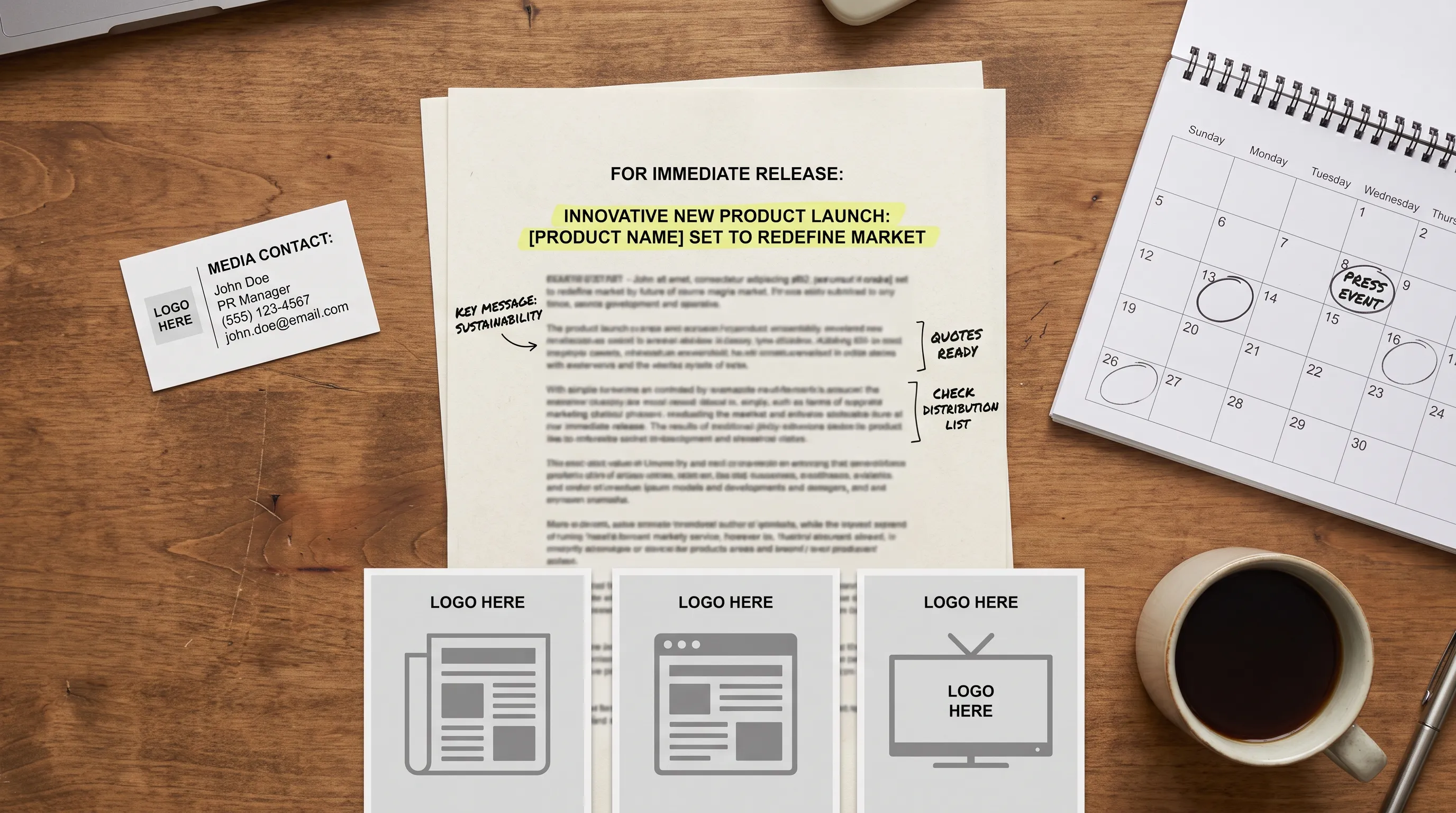
Your release package should include:
- A clean press release in the body of the email or submission form
- A short, descriptive subject line
- A company boilerplate under 100 words
- A media contact with name, email, and phone number if appropriate
- High-resolution logos or product images if relevant
- Links to supporting pages, reports, product pages, or media kits
- Clear availability details, launch date, pricing context, or geographic scope when applicable
Do not make editors request basic information. Every extra step creates delay.
Optimize for search without making the release sound robotic
A press release that gets picked up fast can also support search visibility, but keyword stuffing will hurt readability. Use the natural language your audience and journalists would use.
Include the primary topic in the headline, lead, and one or two body paragraphs if it fits naturally. Add clear entity information such as company name, product category, industry, location, executives, partners, and report names. These details help readers, search engines, and AI search systems understand the announcement.
If organic visibility is a major goal, use a clean structure with descriptive headings, concise paragraphs, and supporting facts. For a deeper SEO angle, see this guide on how to write a press release that ranks on Google.
The key is balance. Write for editors first, then make the release easy for search systems to parse.
Time the release for the people receiving it
Even a strong press release can lose momentum if it arrives at the wrong time. For non-breaking news, avoid sending late on Friday, during major holidays, or at the same time as a much larger industry event unless your announcement is directly connected to that event.
A practical timing approach is to send early in the business day for your main market. If your audience is national or global, prioritize the time zone of your most important outlets or investors.
If you are offering an embargo, make sure the story is strong enough to justify it. Embargoes can help journalists prepare, but they add complexity. For many company announcements, a clear release date and complete package are enough.
Also prepare your internal team before distribution. If a journalist replies within an hour and no one is available to answer questions, the opportunity may pass.
Choose distribution channels that match the announcement
Great writing improves your odds, but distribution determines how quickly the release reaches relevant outlets. Sending a fintech announcement to a generic list of lifestyle editors wastes time. Sending a local hiring announcement only to national business outlets may miss the publications most likely to care.
Match the channel to the story:
| Goal | Best-fit distribution focus | What to emphasize |
|---|---|---|
| Local awareness | Regional newspapers, business journals, community outlets | Jobs, local impact, events, leadership, expansion |
| Investor visibility | Financial sites, business outlets, market-focused publications | Growth, funding, partnerships, market opportunity |
| Product awareness | Industry publications, niche blogs, trade media | Use case, customer problem, differentiation, availability |
| Brand credibility | Trusted syndicated placements and recognizable outlets | Clear company positioning, proof points, third-party relevance |
| Search and AI visibility | Indexed media placements and authoritative publication pages | Entity clarity, backlinks, consistent messaging, proof reports |
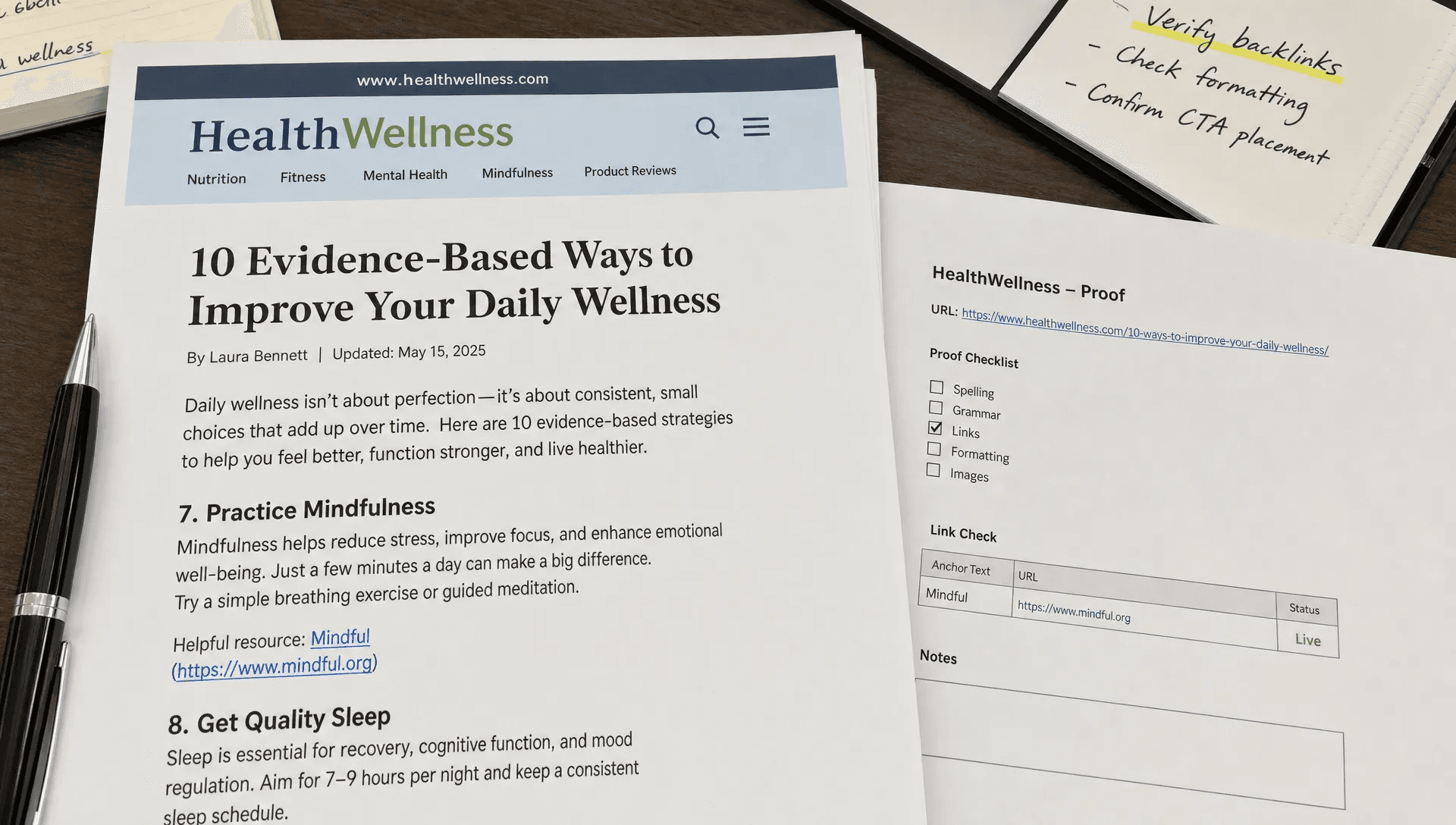
This is where a distribution partner can shorten the path from draft to live coverage. MediaBoost offers done-for-you press release distribution across 500+ media outlets, with guaranteed live backlinks, editorial review, industry-specific packages, and proof reports. For teams that need speed, that combination can remove a lot of manual outreach and tracking work.
Use a fast-pickup checklist before you distribute
Before sending your release, review it like an editor would. If the answer to any of these questions is unclear, revise before distribution.
| Editor question | Your release should answer it with |
|---|---|
| What happened? | A specific action in the headline and lead |
| Why now? | Timing, market context, launch date, report findings, or event connection |
| Who cares? | A clearly defined audience, customer segment, community, or industry |
| Can this be verified? | Facts, numbers, named sources, links, or supporting materials |
| Is it easy to publish? | Clean formatting, short paragraphs, media contact, boilerplate, and assets |
| What should readers do next? | A clear destination such as a product page, report, signup, or media contact |
The goal is not to make the release longer. It is to make the value unmistakable.
Common issues that slow down pickup
If your release is not getting traction, the problem is often one of these issues:
- The headline is too vague to communicate the news.
- The first paragraph sounds promotional instead of factual.
- The announcement lacks a timely reason to exist.
- Quotes repeat the same message without adding insight.
- The release has no proof points, examples, or supporting links.
- The media contact is missing or hard to find.
- The distribution list is too broad or aimed at the wrong beat.
Fast pickup is rarely about one magic phrase. It comes from removing friction at every step, from angle selection to formatting to distribution.
Frequently Asked Questions
How long should a press release be to get picked up fast? Most effective press releases are around 400 to 700 words. Shorter can work for simple announcements, but the release still needs the essential facts, a quote, proof points, boilerplate, and contact details.
What is the best time to send a press release? For planned announcements, early in the business day for your target market is usually safest. Avoid late Fridays, holidays, and times when your industry is focused on a major unrelated event.
Should I send my press release to every media outlet possible? No. Broad reach can help with visibility, but relevance matters. A smaller group of highly relevant outlets often produces better follow-up than a large list of unrelated contacts.
Can paid distribution help a press release get picked up faster? Yes, especially when the release is already well-written and the distribution package reaches relevant publications. Paid distribution is not a substitute for news value, but it can speed up placement, indexing, and proof collection.
Do I need a journalist pitch in addition to the press release? Often, yes. The press release provides the official announcement. A short personalized pitch can help journalists understand why the story fits their audience.
Ready to get your press release placed faster?
Writing a strong release is the first step. Getting it in front of the right publications quickly is the next.
If you want guaranteed submissions, live backlinks, editorial review, and proof reports without managing every outlet manually, MediaBoost press release distribution can help you turn a polished announcement into credible media visibility, often with a fast turnaround.