Press Release Formatting Rules Every Brand Should Follow
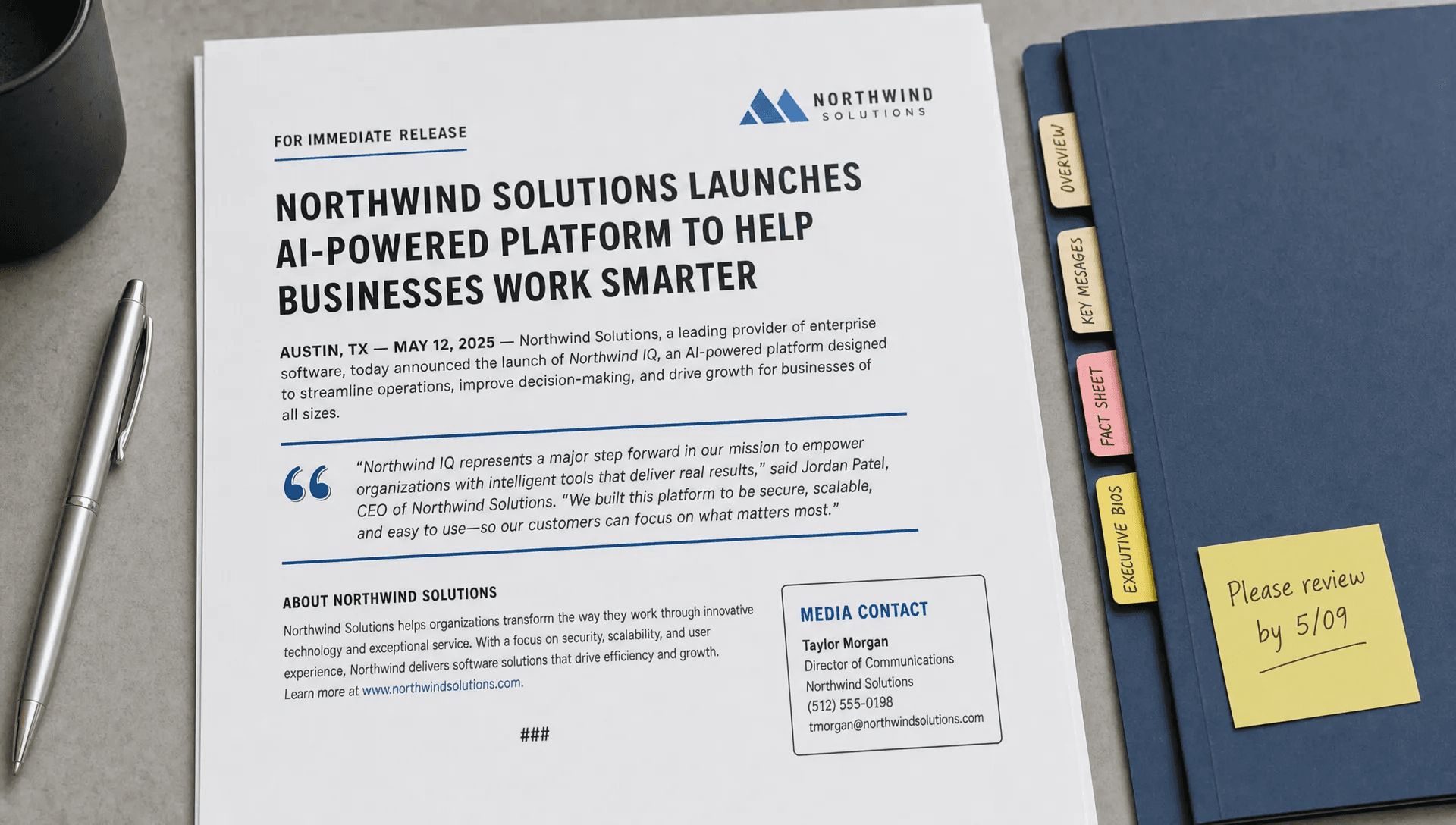
Strong press release formatting makes your announcement easier for editors, readers, and search engines to trust. Use these practical rules to structure every release before you send it for distribution, from headline to boilerplate.
Get featured on 500+ media outlets
Guaranteed placement, no PR experience needed.
Good press release formatting does more than make an announcement look polished. It helps editors understand the news quickly, gives distribution partners the structure they expect, and makes the published release easier for readers, search engines, and AI answer engines to interpret.
The good news is that press release formatting is not complicated. Most strong releases follow a predictable structure: a clear headline, a concise lead, supporting details, a useful quote, a company boilerplate, and complete media contact information. The discipline is in making each part easy to scan and free of unnecessary hype.
Below are the press release formatting rules every brand should follow before sending an announcement to journalists, investors, customers, or a distribution partner.
Why press release formatting matters
A press release is a news document, not a landing page, ad, or blog post. That distinction matters because the reader is usually trying to answer one question fast: is this announcement relevant enough to publish, cite, share, or investigate further?
If the formatting is messy, the reader has to work harder. Important details get buried. Quotes feel promotional. Contact information is missing. Links look suspicious. Even when the news is valid, poor structure can make the brand appear less credible.
Strong formatting supports three goals:
- Media usability: Editors can identify the who, what, when, where, why, and how without digging.
- Brand credibility: A clean structure signals that the company understands professional communication standards.
- Search and AI visibility: Clear entities, dates, names, links, and context help digital systems understand what the announcement is about.
If you are still clarifying the basics, MediaBoost has a helpful plain-English guide to what a press release is and how its standard parts work.
The standard press release structure most editors expect
Press releases can vary by industry, but the core format is consistent. Use this structure as your default unless a publication or distribution platform gives different instructions.
| Press release element | Formatting rule | Purpose |
|---|---|---|
| Release timing | Place FOR IMMEDIATE RELEASE at the top if the announcement can be published right away | Clarifies when the news may be used |
| Headline | Use one clear, news-focused line | Communicates the announcement at a glance |
| Subheadline | Add one sentence of supporting context when needed | Explains the significance without crowding the headline |
| Dateline | Include city, state if relevant, and date before the lead paragraph | Shows where and when the news originates |
| Lead paragraph | Answer the most important who, what, when, where, why, and how | Gives readers the full news angle immediately |
| Body | Add supporting facts in descending order of importance | Makes the release easy to trim or repurpose |
| Quote | Include one relevant executive, customer, partner, or expert quote | Adds human context and perspective |
| Boilerplate | End with a short company description | Helps readers understand the organization |
| Media contact | Include a name, email, phone number, and company details when appropriate | Gives journalists a way to verify or follow up |
| End mark | Add ### or END if your team uses traditional formatting | Signals the release is complete |
1. Write a headline that states the news, not the ambition
The headline is the first formatting test. It should tell readers what happened, who is involved, and why the announcement is worth attention. A weak headline tries to sound impressive but hides the actual news.
A strong press release headline is usually:
- Specific enough to stand alone
- Short enough to scan quickly
- Written in title case or sentence case consistently
- Focused on the announcement, not broad marketing claims
For example, a headline like Company X Launches AI Tool for Independent Retailers is more useful than Company X Revolutionizes the Future of Commerce. The first tells readers what is new. The second forces them to guess.
Avoid excessive punctuation, all caps, unexplained acronyms, and buzzwords. If the release is being distributed across media sites, your headline may become the page title. That means clarity matters for both human readers and search engines.
2. Use a subheadline only when it adds context
A subheadline is optional, but it can be valuable when the headline needs supporting detail. Use it to explain scale, audience, geography, funding amount, product category, or strategic importance.
Keep the subheadline to one sentence. It should not repeat the headline in different words. Instead, it should add a second layer of meaning.
For example, if the headline announces a new product, the subheadline might mention the customer segment it serves. If the headline announces a partnership, the subheadline might explain the shared goal or market impact.
The subheadline is not the place for a long list of features. Save details for the body.
3. Format the dateline correctly
The dateline appears at the start of the first paragraph and usually includes the city, state or country when relevant, and the release date.
A simple format looks like this:
CITY, State, Month Day, Year, followed by the first sentence of the lead paragraph.
For US-focused releases, many brands follow AP style conventions for dates, states, titles, and capitalization. You do not need to overcomplicate this, but you should be consistent. If your organization uses a house style guide, apply it throughout the release.
The dateline matters because it gives the announcement a clear time and place. It also helps readers distinguish fresh news from evergreen marketing copy.
4. Put the full news angle in the lead paragraph
The lead paragraph is where many press releases fail. Brands often open with background, mission language, or industry commentary. That delays the actual news.
The first paragraph should answer the essential questions as directly as possible:
- Who is making the announcement?
- What is being announced?
- When is it happening or available?
- Where does it apply?
- Why does it matter?
- How does it affect customers, partners, investors, or the market?
Specificity is your friend. If a wellness brand is announcing a service related to personal training covered by insurance, that concrete benefit belongs near the top because it tells readers what makes the announcement practical and relevant. A vague phrase like a new wellness solution gives editors and customers much less to work with.
The lead should be concise, usually one paragraph of two to four sentences. If readers only read the headline, subheadline, and lead, they should still understand the announcement.
5. Use the inverted pyramid structure
Traditional news writing uses the inverted pyramid: most important information first, then supporting details, then background.
This format works because journalists, publishers, and readers often skim. It also allows an editor to cut from the bottom without losing the core story.
A well-ordered press release body might flow like this:
| Section | What to include |
|---|---|
| First body paragraph | The most important supporting detail, such as product capabilities, funding use, market expansion, or partnership scope |
| Second body paragraph | Evidence, data, customer problem, availability, pricing context if public, or operational details |
| Quote paragraph | A human perspective from a relevant spokesperson |
| Additional context | Company background, market relevance, customer use case, or next steps |
| Boilerplate and contact | Standard brand description and follow-up information |
This structure prevents the release from reading like a brochure. It gives the reader facts first and interpretation second.
6. Keep paragraphs short and scannable
Press release paragraphs should be shorter than traditional corporate writing. Two to three sentences per paragraph is often enough. Long blocks of text reduce readability, especially when a release is republished on media sites where mobile traffic is common.
Use plain language. Avoid dense internal terms, unexplained abbreviations, and sentences packed with multiple claims. If you need to explain a complex product or technical announcement, break it into clear sections rather than forcing everything into one paragraph.
Formatting should make the reader feel guided, not overwhelmed.
7. Add quotes that sound like real perspective
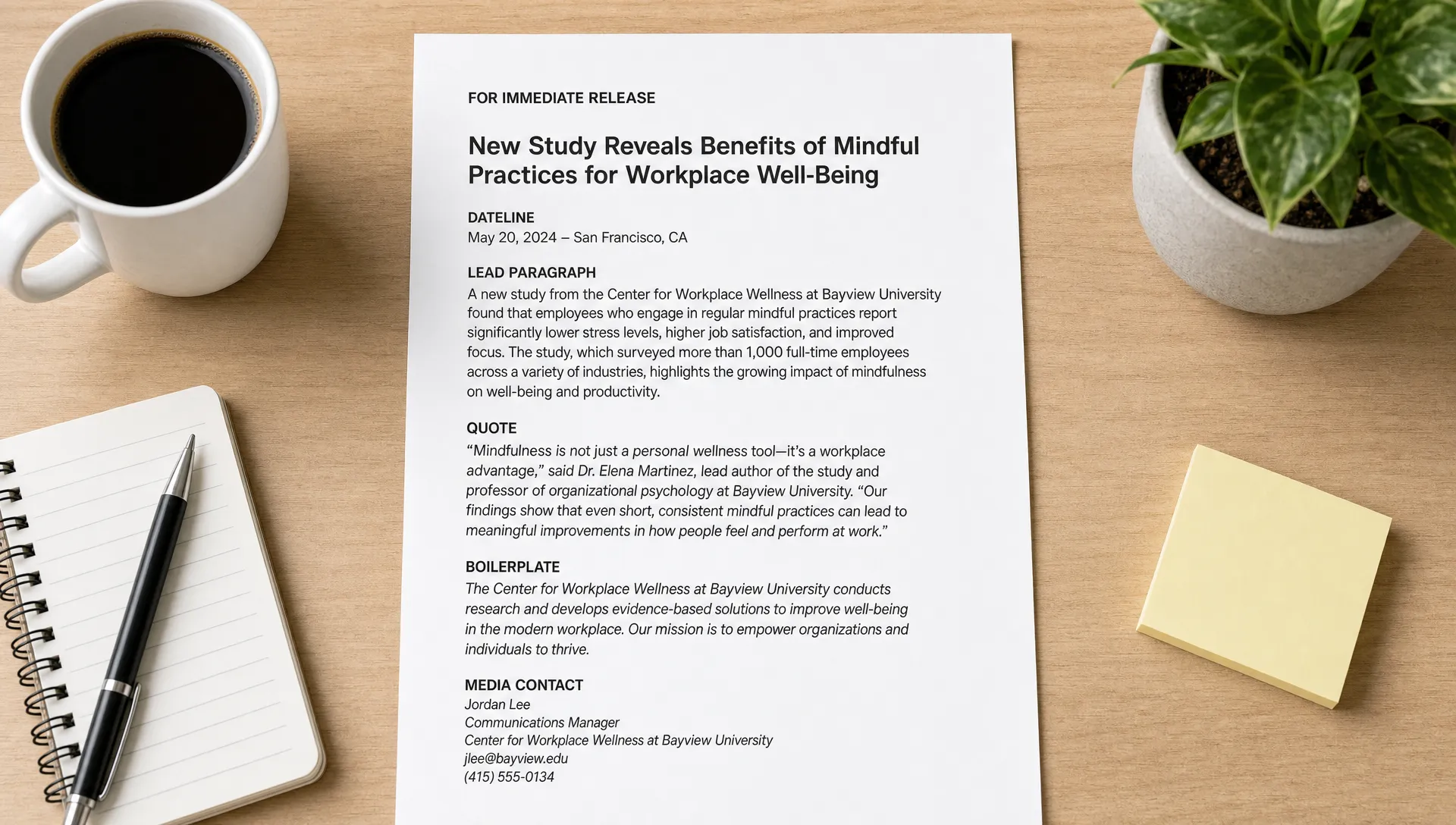
A quote should not repeat the facts already stated in the release. It should explain why the news matters, what the company believes, or how customers will benefit.
Weak quote: We are thrilled to announce this exciting launch and look forward to delivering innovative solutions to our customers.
Stronger quote: Independent retailers are under pressure to respond faster with smaller teams. This launch gives them a practical way to manage inventory decisions without adding another complex system.
The stronger version adds context. It explains the problem and the impact. That is what a quote is for.
Limit most press releases to one or two quotes. Too many quotes can interrupt the flow and make the release feel padded.
8. Format links and supporting assets carefully
Links can strengthen a press release, but too many links can make it look spammy. Link only where the reader genuinely needs more context: a product page, report, media kit, customer story, investor page, or event registration page.
Use descriptive anchor text when possible. Avoid bare URLs in the body. Also make sure every linked page is live, relevant, and consistent with the announcement.
For supporting assets, include links to approved images, logos, screenshots, videos, or reports if your distribution platform allows it. Do not attach oversized files unless specifically requested. Journalists and editors prefer accessible, clearly labeled assets that are easy to verify.
9. Keep the boilerplate short and factual
The boilerplate is the standardized company description at the end of a release. It should explain what the company does, who it serves, and where readers can learn more.
A good boilerplate is usually one short paragraph. It should not turn into a full company history or a list of every product line. Save awards, founding details, funding information, and market claims for the boilerplate only if they are relevant and verifiable.
For a deeper breakdown, examples, and a ready-to-adapt structure, see MediaBoost’s guide to writing a strong press release boilerplate.
10. Include complete media contact information
Never assume readers will know how to reach the right person. A professional press release should include a media contact section with a real name or department, email address, and phone number when appropriate.
If your company has a PR agency, list the agency contact. If the announcement is sensitive, such as funding, acquisition, healthcare, legal, or financial news, make sure the contact person is prepared to respond quickly and accurately.
Incomplete contact information can cost coverage. Editors working on deadlines often move on if they cannot verify a detail.
11. Match formatting to the distribution channel
A release sent directly to a journalist, uploaded to your newsroom, and distributed through a media placement service may need slightly different formatting. The core structure stays the same, but technical requirements can vary.
Before distribution, check for:
- Approved headline length and character limits
- Whether images, logos, or multimedia are accepted
- Link limits and anchor text rules
- Required company contact fields
- Industry-specific compliance needs
- Whether editorial review is included
This matters because even a well-written announcement can be delayed if the formatting does not meet submission requirements. Distribution-ready formatting saves time and reduces back-and-forth edits.
A quick pre-submission formatting checklist
Use this checklist before sending your next release for review or distribution.
| Formatting check | Yes or no |
|---|---|
| The headline states the actual news clearly | |
| The subheadline adds useful context instead of repeating the headline | |
| The dateline includes location and date | |
| The lead answers the most important news questions | |
| Paragraphs are short and easy to scan | |
| Quotes add perspective rather than marketing filler | |
| Claims are specific, accurate, and supportable | |
| Links are relevant and not excessive | |
| Boilerplate is concise and factual | |
| Media contact details are complete | |
| Formatting matches the intended distribution platform | |
| Final copy has been proofread for names, dates, numbers, and URLs |
Common formatting mistakes that make releases look amateur
Even experienced teams make formatting mistakes when they rush. The most common issue is burying the announcement below background information. If the first paragraph does not state the news, rewrite it.
Another frequent problem is over-formatting. Excessive bold text, all caps, multiple exclamation points, long bullet lists, and promotional slogans can make a release look like an ad. A press release should feel controlled and factual.
Brands also weaken releases by including too many links, using vague quotes, or leaving out the media contact. These problems are easy to fix, but they can seriously reduce trust.
Finally, many teams forget to proofread the details that matter most: company names, executive titles, dates, product names, numbers, and links. A typo in a normal sentence is unfortunate. A typo in a company name or date can create confusion across every outlet that republishes the release.
Frequently Asked Questions
What is the correct press release format? The standard format includes release timing, headline, optional subheadline, dateline, lead paragraph, supporting body copy, quote, boilerplate, media contact, and an end mark such as ### or END if your team uses one.
How long should a press release be? Most press releases should be about 400 to 700 words. Complex announcements can be longer, but only if the extra detail helps readers understand the news.
Should a press release include bullet points? Bullet points can be useful for product features, event details, or key data, but use them sparingly. A press release should still read like a news announcement, not a slide deck.
Do I need a boilerplate in every press release? Yes, in most cases. A boilerplate helps journalists and readers quickly understand who your company is and why the announcement is credible.
Can press release formatting affect SEO? Yes. Clear headlines, structured sections, accurate names, relevant links, and concise context can help search engines understand the release. Formatting alone will not make weak news rank, but it supports discoverability when the announcement is genuinely useful.
Format once, distribute with confidence
A properly formatted press release gives your announcement the best chance to be understood, published, indexed, and reused. It helps editors move faster, protects your brand’s credibility, and makes every placement more valuable.
If your release is ready for broader visibility, MediaBoost can help with done-for-you press release distribution across 500+ trusted media outlets, with editorial review, live backlinks, proof reports, and industry-specific packages designed to support brand credibility, SEO, and AI visibility.