Media Partnership Ideas That Create Credibility and Reach
Great partnerships do more than share audiences. Learn practical ways to pair credible outlets, expert voices, launch news and proof-driven PR so your brand earns trust while reaching buyers who already care.
Get featured on 500+ media outlets
Guaranteed placement, no PR experience needed.
A media partnership is most valuable when it does two jobs at once: it borrows trust from a credible platform and puts your story in front of people who can act on it. For founders, agencies and marketing teams, the best ideas are not generic logo swaps. They create proof, useful content and distribution that feels earned instead of forced.
Start with the credibility goal, not the channel
Before choosing a publication, podcast, newsletter or event partner, decide what kind of trust you need to build. A B2B software company may need category authority. A consumer brand may need lifestyle relevance. A local service business may need proof that real people in its region already care.
Every media partnership should answer a simple question: what will the audience believe about us after seeing this collaboration that they did not believe before? If the answer is vague, the idea is probably too weak.
The channel comes second. A niche newsletter with a loyal audience can do more for credibility than a broad placement that reaches the wrong people. A trade publication can make a technical launch feel serious. A respected local outlet can make a community story feel legitimate. If you need a structured way to evaluate fit, MediaBoost has a useful guide on choosing media outlets that build real brand trust.
Credibility also depends on the story format. A bare sponsorship mention usually creates less trust than a customer case study, expert commentary or data-led report. The idea should make the partner look useful to its audience, not just helpful to your brand.
What a media partnership needs to be credible
A strong collaboration has audience fit, editorial fit and proof fit. Audience fit means the partner already reaches people your brand wants to influence. Editorial fit means your story belongs naturally in that partner’s content. Proof fit means the collaboration includes evidence, not just claims.
The strongest ideas usually combine at least three of these elements:
| Credibility element | What it looks like | Why it matters |
|---|---|---|
| Relevant audience | A niche publication, industry newsletter or regional outlet | Reach is more valuable when the audience has intent or context |
| Clear proof | Data, customer examples, expert quotes or product milestones | Proof helps the story feel earned rather than promotional |
| Editorial value | A useful guide, analysis, interview or announcement | The partner gets content its audience can use |
| Distribution plan | Press release, newsletter feature, social clips and partner sharing | Multiple touchpoints make the story easier to remember |
| Measurable outcome | Live links, referral traffic, branded search and lead quality | Measurement prevents the campaign from becoming vanity PR |
Do not treat all exposure as equal. A media mention that reinforces a clear claim can support sales calls, investor conversations, search visibility and AI search presence. A random mention with no narrative usually fades quickly.
Seven ideas that create reach without diluting trust
A practical media partnership should make the partner, the audience and your brand better off. The partner gets a useful story or resource. The audience gets insight, access or proof. Your brand earns reach through relevance instead of interruption.
1. Co-create a small industry report
You do not need a massive annual research project to create authority. A focused report can work if it answers a question your buyers already ask. For example, a fintech startup could partner with a finance newsletter on a short survey about payment delays. A workplace software company could collaborate with an HR publication on hiring bottlenecks.
The report should include a clear methodology, plain language findings and one or two practical recommendations. The media partner can publish the summary, your brand can host the full report and both sides can distribute the key findings through email and social channels.
This format works because it gives journalists, editors and newsletter writers something more substantial than a company announcement. It turns your point of view into evidence.
2. Build an expert commentary series
An expert commentary series is useful when your team has knowledge that can help a publication explain ongoing industry changes. Instead of pitching one-off quotes, offer a recurring angle with a defined scope. For example, your founder might contribute monthly commentary on retail trends, cybersecurity risk or funding conditions in your niche.
The media partner benefits from timely insight. Your brand benefits because repeated appearances build familiarity, especially when the commentary is practical and not self-promotional.
Keep the structure simple. Choose one topic lane, set expectations about frequency and make each contribution easy for the editor to use. Short, sharp analysis usually performs better than a broad opinion piece that tries to cover everything.
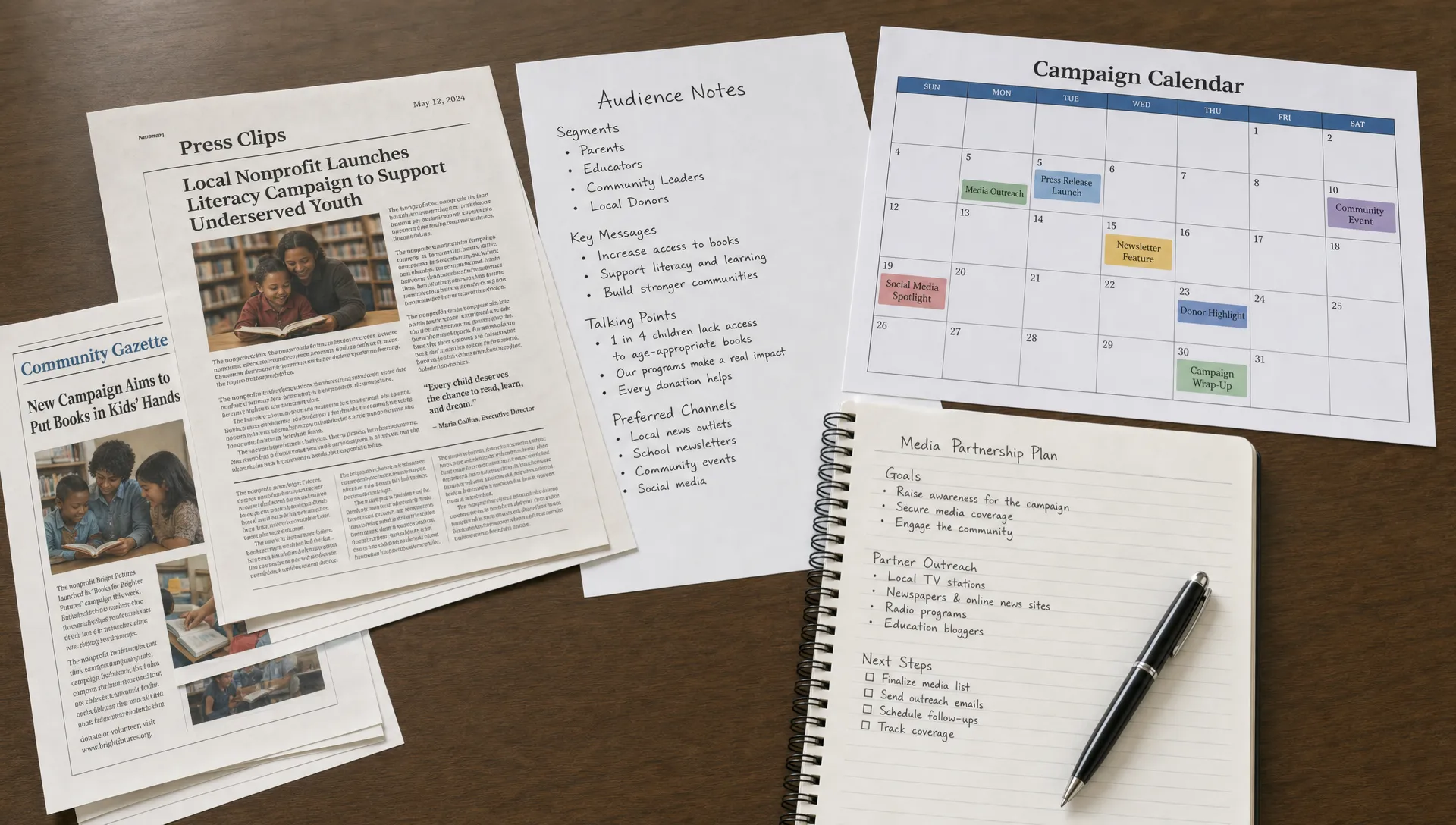
3. Announce a strategic alliance through multiple trusted channels
A strategic alliance, integration, joint product launch or market expansion can justify broader distribution if the news is genuinely relevant. The announcement should explain who is involved, what changes for customers and why the timing matters.
For launch moments, press release distribution can help create immediate visibility across search results and news surfaces. MediaBoost’s overview of the best press release channels for fast brand visibility explains how syndication, owned channels, industry media and regional outlets can work together.
This type of announcement works best when it is supported by partner quotes, customer context and a clear next step. The goal is not just to say that two brands are working together. The goal is to show why the collaboration creates value.
4. Turn a customer win into a shared credibility asset
When a media partnership includes a real customer story, it becomes more persuasive. Instead of publishing a generic case study on your own site, consider working with an outlet, newsletter or industry community that can frame the story as a broader lesson.
For example, a logistics software company could share how a midmarket retailer reduced delivery errors during seasonal demand. A health brand could highlight a customer education initiative with a wellness publication. A B2B agency could partner with a trade outlet to explain how a client solved a common growth problem.
The key is to make the customer the proof point, not the decoration. The story should include the starting challenge, the decision process, the result and what other readers can learn from it. If you cannot share metrics, use specific operational details instead.
5. Create an event partnership with post-event media value
Events often generate attention before they happen, then disappear after the final session. A smarter approach is to design the partnership around the content that follows the event. A webinar, roundtable, founder breakfast or local panel can become an article, quote roundup, short report or press release.
A media partnership built around an event should give the partner a reason to promote before and after. Before the event, the partner can help attract the right audience. After the event, the best insights can be packaged into a recap that reaches people who did not attend.
This is especially useful for complex categories where buyers need education before they trust a vendor. The event creates access, the recap creates proof and the media partner creates reach.
6. Partner with niche creators who have editorial trust
Not every credible partner is a large publication. Many niche creators run newsletters, podcasts, communities and research feeds that their audiences trust deeply. For some brands, these partners can deliver better engagement than broad media mentions.
The mistake is treating creators like ad inventory. A good collaboration should use their editorial voice. Let the partner interview your team, test your claim, host a Q&A or build a resource around the audience’s real questions.
This approach requires more care than a standard sponsorship, but it can produce stronger trust. The creator’s audience understands when something is purely paid promotion. They also recognize when a collaboration genuinely helps them understand a problem.
7. Package regional relevance for local press
Local and regional media can be powerful when your story has a genuine community angle. Hiring announcements, local partnerships, expansion plans, charitable initiatives and customer impact stories can work if they connect to the region.
The story should avoid vague local pride. Explain what is happening, who is affected and why it matters now. A business opening a new office might connect the announcement to job creation, service availability or a local partnership. A startup launching in a new market might show why that region has demand.
Regional credibility can also support national growth. When buyers, partners or investors search your brand, credible local coverage adds another layer of proof.
Turn reach into durable authority signals
Attention is useful, but authority compounds when your placements remain discoverable. Live links, consistent brand mentions, clear topical relevance and strong publication context help your coverage work beyond the first week.
If search authority is part of the goal, treat link quality carefully. Links from relevant, credible sources are more valuable than a large number of weak or unrelated links. Brands that want a broader authority strategy can complement PR with quality link building that grows your authority, especially when they need audits, safer acquisition and content-led link earning.
For press-driven visibility, make sure each placement supports one clear brand narrative. If one article describes you as an AI tool, another as a marketing agency and another as a generic software provider, search engines and readers get mixed signals. Consistency helps your coverage reinforce the same category, expertise and promise.
This is also where proof reports matter. Screenshots, live URLs, publication names and dates make coverage easier to share with stakeholders. They also help teams track which outlets, angles and partner types produced the strongest results.
Measure outcomes that show credibility, not just exposure
A media partnership should be measured by what changed after the coverage went live. Impressions are helpful, but they rarely tell the full story. Look at branded search lift, direct traffic, referral quality, sales conversation impact, investor response and how often the placement is reused in pitch decks or proposals.
For teams focused on AI visibility, watch whether trusted mentions start appearing in the sources and summaries that buyers encounter during research. AI search systems often draw on public, authoritative content, so consistent coverage across reputable outlets can support discoverability.
Use a simple scorecard after each campaign:
- Credibility gained: Did the placement make a claim easier to believe?
- Audience reached: Was the outlet aligned with buyers, partners or investors?
- Proof created: Did the campaign produce a reusable link, quote, report or asset?
- Distribution completed: Did both sides share the story through owned and partner channels?
- Business signal observed: Did you see better conversations, stronger referral traffic or more branded search?
This keeps the team focused on trust and reach together. A high-reach campaign with low credibility is forgettable. A credible placement with no distribution is underused. The best ideas are designed to do both.
Make execution easy for the partner
The easiest way to weaken a media partnership is to make the partner do too much work. Editors, newsletter operators and community leaders are busy. If you want a better chance of collaboration, bring a complete but flexible package.
That package can include a concise angle, approved quotes, background facts, customer context, images, data points and a suggested distribution timeline. The materials should help the partner move faster without forcing them to publish your exact wording.
Avoid over-controlling the editorial process. Credibility comes partly from the partner’s independent voice. Give them accurate information, respond quickly to questions and let the format match their audience.
If you are managing multiple outlets, build a repeatable workflow. MediaBoost’s guide on how to build a network PR strategy that scales is useful for connecting partners, owned content, reporting and outreach into one system.
Frequently Asked Questions
What makes a good media partnership idea? A good idea gives the partner valuable content, gives the audience useful information and gives your brand credible exposure. The strongest formats include proof, such as data, customer stories, expert commentary or a real announcement.
Is a press release the same as a partnership? No. A press release distributes news, while a partnership is a collaborative relationship or campaign. They can work together when a joint launch, report or alliance needs fast visibility across trusted outlets.
How do I choose the right partner? Start with audience fit, editorial fit and proof fit. The right partner already reaches people you want to influence, covers topics related to your category and can present your story in a way that feels useful rather than promotional.
How long does it take to see results? Some results, such as live placements and referral traffic, can appear quickly. Credibility benefits often compound over time as coverage is reused in sales materials, search results, investor updates and AI-driven research journeys.
Build credibility faster with the right media distribution partner
Great ideas still need execution. If your team needs trusted placements, live links and proof reports without managing every submission manually, MediaBoost helps brands distribute press releases across 500+ media outlets with done-for-you submissions, editorial review and fast turnaround options.
Use the ideas above to shape a story worth sharing, then support it with distribution that makes the coverage visible, credible and easy to prove.