Press Package Examples That Help Brands Win Media Coverage
Strong press packages make a journalist’s job easier by pairing a clear story angle with proof, quotes and usable assets. These examples show how brands can package launches, funding, partnerships and reports for better media coverage.
Get featured on 500+ media outlets
Guaranteed placement, no PR experience needed.
A strong press package does more than announce news. It gives journalists, editors, podcasters and industry newsletter writers enough context to understand the story quickly, verify the claims and decide whether their audience will care.
That is why the best press package examples are not bloated folders full of every company asset ever created. They are focused, proof-driven and shaped around a specific media angle. A product launch package should not look like a funding package. A founder story should not be packaged the same way as an original research report.
Below are practical press package examples you can adapt for launches, milestones, reports, partnerships and brand positioning. Use them as working models, then tailor the details to your industry, outlet list and audience.
What winning press packages have in common
A press package is useful when it reduces friction. The journalist should not have to chase you for a founder bio, wonder whether a claim is verified or rewrite a vague quote into something usable.
At a minimum, every media-ready package should answer four questions:
- What is the story and why does it matter now?
- Who is involved and why are they credible?
- What proof supports the announcement?
- Which assets can the media use without delays?
If you are still assembling the foundation, MediaBoost has a detailed guide on what to include in a media package for journalists. The examples below go one step further by showing how those assets change depending on the media goal.
A helpful way to plan your package is to match the announcement type to the story angle before you write anything.
| Brand situation | Strong media angle | Most important asset | Proof to include |
|---|---|---|---|
| Product launch | A specific audience now has a better way to solve a known problem | Launch press release | Product screenshots, customer quotes, use cases |
| Funding or growth milestone | The company has market traction and a clear plan for what comes next | Milestone announcement | Verified metrics, investor quote, expansion plan |
| Original report | New data reveals a trend the audience needs to understand | Research summary | Methodology, charts, source notes |
| Partnership | Two brands are creating value that neither could deliver alone | Joint announcement | Partner quotes, customer impact, integration details |
| Rebrand or repositioning | The company is changing to reflect a bigger market shift | Brand narrative memo | Before and after context, executive quote, visual assets |
| Local expansion | The brand is creating regional relevance, access or economic activity | Localized press release | Location details, community impact, local spokesperson |
Press package example 1: Product launch package
A product launch package works best when it connects the new product to a clear customer problem. The weaker version says, “We launched a new platform.” The stronger version says, “Independent retailers now have a faster way to manage inventory across online and in-store sales.”
The core of this package should be a concise launch press release, a product fact sheet, approved founder or executive quotes, product visuals and a short explanation of who the product is for. If the product has early users, include one specific customer quote that explains the result in plain language.
A strong product launch package might include:
- Launch press release with a clear headline and lead paragraph
- One-page product fact sheet with key use cases
- Founder quote focused on the customer problem, not company pride
- Screenshots, product images or demo visuals approved for media use
- Short FAQ explaining pricing model, availability and target customers if those details are public
The best product launch packages avoid technical overload. Journalists do not need every feature. They need to understand what changed, who benefits and why the launch belongs in the current conversation.
Sample positioning:
“Company X today launched a workflow tool designed to help independent clinics reduce patient intake delays, giving small healthcare teams a simpler way to manage forms, scheduling and follow-up communication from one place.”
That sentence is more useful than “Company X announces a revolutionary all-in-one platform” because it names the audience, the problem and the outcome.
Press package example 2: Funding or traction milestone package
Funding announcements can earn coverage, but the amount raised is rarely enough on its own. A stronger package explains what the funding validates and what the company will do next.
If your brand has raised capital, expanded revenue, reached a user milestone or entered a new market, frame the package around momentum. The assets should make it easy for the media to see that the company is not just celebrating internally. It is part of a larger category story.
Your package should include the announcement release, a founder quote, an investor or advisor quote if available, a company fact sheet and a short section explaining the use of funds or next stage of growth. Use only metrics you can verify and are comfortable seeing in print.
Strong angles include:
- A startup raising funding to solve a specific industry bottleneck
- A bootstrapped company reaching a revenue or customer milestone
- A brand expanding into a market where demand is already visible
- A platform crossing a usage threshold that signals category adoption
If your brand is not widely known yet, do not try to compensate with hype. Focus on relevance and proof. MediaBoost’s guide to getting press coverage when no one knows your brand is useful if you need to build credibility before a larger announcement.
Press package example 3: Original research or trend report package
Original data is one of the most useful assets a brand can package for media coverage. Reporters, newsletter writers and industry analysts often need credible numbers, trend explanations and visual evidence. A brand that can provide fresh insight becomes more useful than a brand only asking for attention.
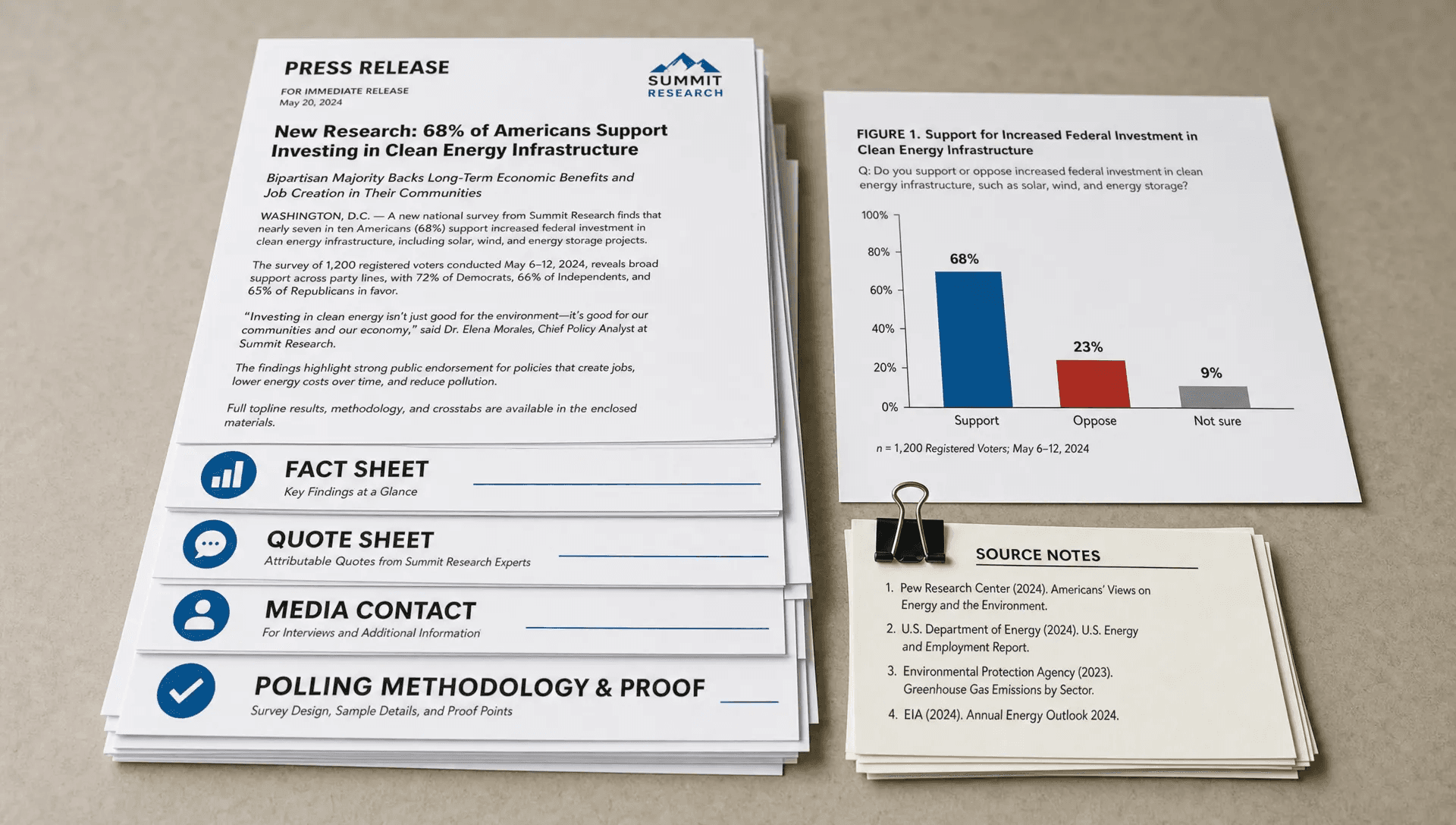
A research package does not need to be academic, but it must be transparent. Include a short methodology note, the sample size if applicable, the field dates if you ran a survey, definitions for key terms and a media summary that highlights the most newsworthy findings.
A good research press package includes:
- Press release or media advisory summarizing the report
- Executive summary with three to five key findings
- Methodology note written in plain English
- Charts or graphics approved for media use
- Expert quote explaining what the findings mean
The mistake to avoid is burying the story in a long PDF. Lead with the finding that affects the audience most. If your report says small businesses are changing how they buy software, open with that trend instead of the report title.
Press package example 4: Partnership or integration package
Partnership packages need clarity. Many partnership announcements are vague because they focus on the relationship between the companies instead of the value created for customers.
A strong partnership package explains what is now possible because of the partnership. If two software companies integrate, what workflow gets easier? If a consumer brand partners with a nonprofit, what action or outcome will the collaboration produce? If an agency joins forces with a technology provider, what capability does the combined offer unlock?
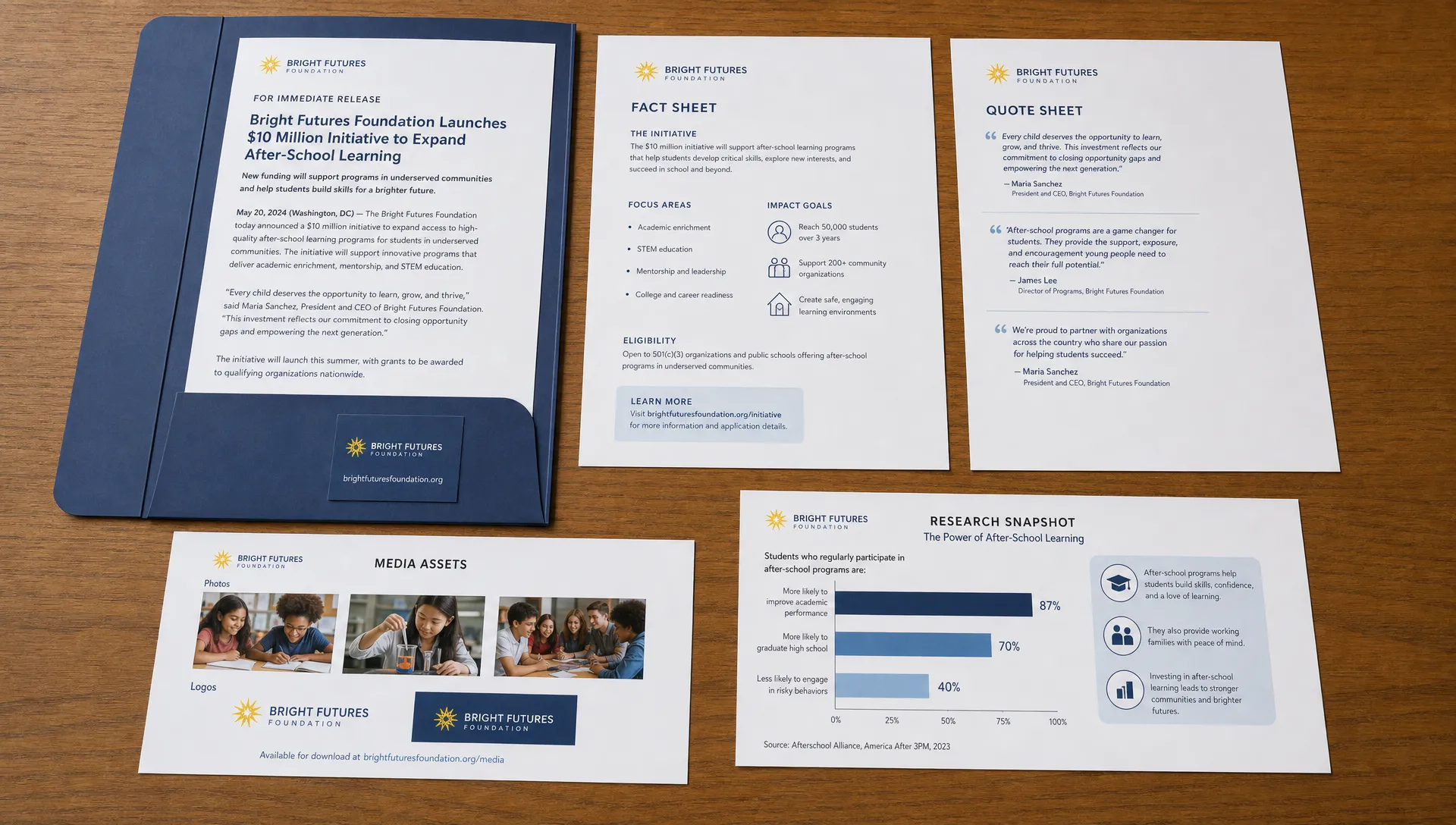
This package should include a joint press release, approved quotes from both sides, a short explanation of each company’s role and any customer-facing assets that show how the partnership works. If there are legal or brand approval requirements, finalize them before outreach.
Sample positioning:
“Company X and Company Y are partnering to help regional restaurants launch loyalty campaigns without adding new point-of-sale complexity.”
That angle is stronger than “Company X announces strategic partnership with Company Y” because it explains the customer benefit immediately.
Press package example 5: Founder story or thought leadership package
Not every media opportunity starts with a hard company announcement. Sometimes the strongest package is built around a founder’s point of view, especially in markets where reporters are covering behavior changes, regulation, technology shifts or consumer trends.
A founder story package should not read like a personal biography alone. It needs a sharp perspective. The founder’s background matters because it gives them authority to comment on a topic, not because every career detail deserves coverage.
The package can include a short founder bio, headshots, an opinion memo, approved quotes, topic areas the founder can discuss and links to previous interviews or writing if available. If the founder has direct data from customers, internal platform trends or frontline experience, make that proof easy to cite.
Useful founder story angles include:
- A founder explaining a change happening inside a niche industry
- A technical leader making a complex trend understandable
- A consumer brand founder responding to a shift in buyer behavior
- A mission-driven founder connecting personal experience to a market problem
This package is especially useful for podcasts, trade publications, LinkedIn newsletters and expert roundups. It can also support future press releases because the media starts to associate the founder with a category.
Press package example 6: Rebrand or repositioning package
A rebrand is not automatically newsworthy. Media coverage is more likely when the rebrand signals a real strategic shift, such as a new audience, expanded product scope, acquisition, market change or category move.
The package should explain what changed beyond the logo. Include the new brand narrative, the reason for the change, visual assets, executive quotes and a concise timeline. If the rebrand reflects customer research, market expansion or product evolution, include that context.
A weak rebrand announcement says, “We refreshed our identity to better reflect our values.” A stronger one says, “After expanding from a local service provider into a national platform for independent operators, Company X is rebranding to reflect its broader role in the market.”
The best rebrand packages help writers understand the before and after:
- What the company used to be known for
- What has changed in the business
- What the new positioning helps customers understand
- Which visual assets are approved for publication
Keep the language grounded. Brand strategy language can become abstract quickly, so translate internal messaging into concrete market context.
Press package example 7: Visual, creative or AI product package
Some brands need a more visual press package because the story is easier to understand through examples than through text alone. This is common for design tools, creative platforms, AI products, consumer goods, hospitality brands and entertainment companies.
For example, a company building a creative AI operating system would need to explain not only what the technology generates, but how teams control workflows, approvals, assets and governance across production. The press package should make that operational story visible through use cases, approved visuals and a clear category explanation.
For a visual or AI-driven brand, include a press release, product narrative, media gallery, demo visuals, approved terminology and a claims checklist. If the category is new or frequently misunderstood, add a short “how to describe us” section so journalists do not have to guess.
This type of package should be especially careful with claims. Avoid saying the product is the first, the only or the most advanced unless you have evidence and legal approval. A more credible approach is to describe the specific workflow, audience and outcome.
How to adapt these examples to your brand
The right press package depends on the story you are trying to earn, not the amount of content you can attach. Before building the package, choose one primary angle. Then remove anything that does not support it.
A helpful test is to ask whether each asset helps the media do one of three things: understand the story, verify the story or publish the story. If an asset does none of those, it probably belongs in your internal marketing folder, not your press package.
For most brands, the strongest package includes a press release, a short fact sheet, two or three usable quotes, credible proof points and media assets. The difference between an average package and a strong one is not volume. It is focus.
Also consider the outlet type. A business publication may care about funding, market size and executive quotes. A trade outlet may care about technical detail and customer use cases. A local outlet may care about jobs, community impact and regional access. A podcast producer may care more about the founder’s point of view than a formal press release.
Common mistakes that weaken press packages
Many brands lose media opportunities because their press package makes the journalist work too hard. The announcement may be relevant, but the materials are unclear, overpromotional or incomplete.
Avoid these common mistakes:
- Sending the same generic package to every outlet
- Leading with brand excitement instead of audience relevance
- Including claims that are not backed by proof
- Using quotes that sound like advertising copy
- Forgetting media assets, contact details or approval notes
- Hiding the strongest story angle deep in the release
A good press package should feel like a ready-to-use reporting resource, not a sales deck. The more clearly you package the angle, the easier it is for the media to say yes.
Frequently Asked Questions
What is a press package example? A press package example is a model set of media materials built around a specific announcement, such as a product launch, funding milestone, research report, partnership or rebrand. It shows which assets to include and how to frame the story for coverage.
What should every press package include? Most press packages should include a press release, company fact sheet, approved quotes, spokesperson bio, media contact details, proof points and usable media assets. The exact contents should change based on the announcement type.
How long should a press package be? A press package should be as short as possible while still giving the media what they need. A focused package with five strong assets is usually more useful than a large folder with unfocused materials.
Do startups need different press packages than established brands? Yes. Startups usually need more context, founder credibility and proof of traction because the media may not know them yet. Established brands can often rely more on market position, customer stories and broader industry relevance.
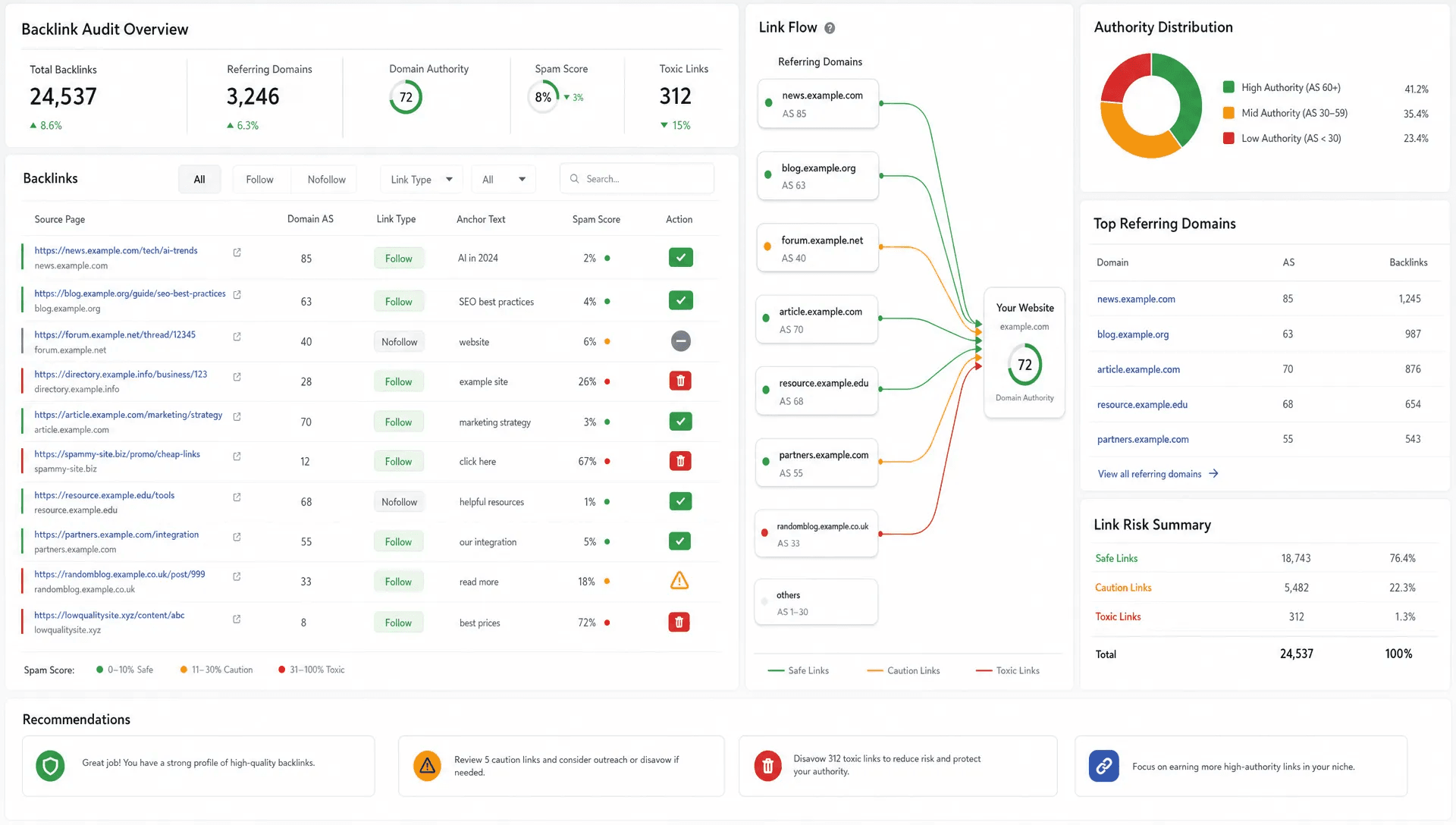
Can a press package help with SEO? Yes, especially when it supports press release distribution, earned mentions and live media placements. The SEO value depends on the quality, relevance and credibility of the coverage, not just the number of links.
Turn your press package into visible coverage
A strong press package gives your announcement a better chance of being understood, trusted and published. Distribution determines how far that package can travel.
MediaBoost helps brands distribute press releases and media-ready announcements across 500+ trusted publications, with guaranteed submissions, live links, editorial review and proof reports. If you already have a launch, milestone or campaign coming up, prepare the right package first, then distribute it with a channel built for visibility, credibility and search presence.