Why a No Follow Link Can Still Drive Real Business Value
A nofollow tag does not erase business value. Learn how trusted mentions, referral traffic, branded search and proof reports turn the right no follow link into measurable growth for modern PR and SEO teams.
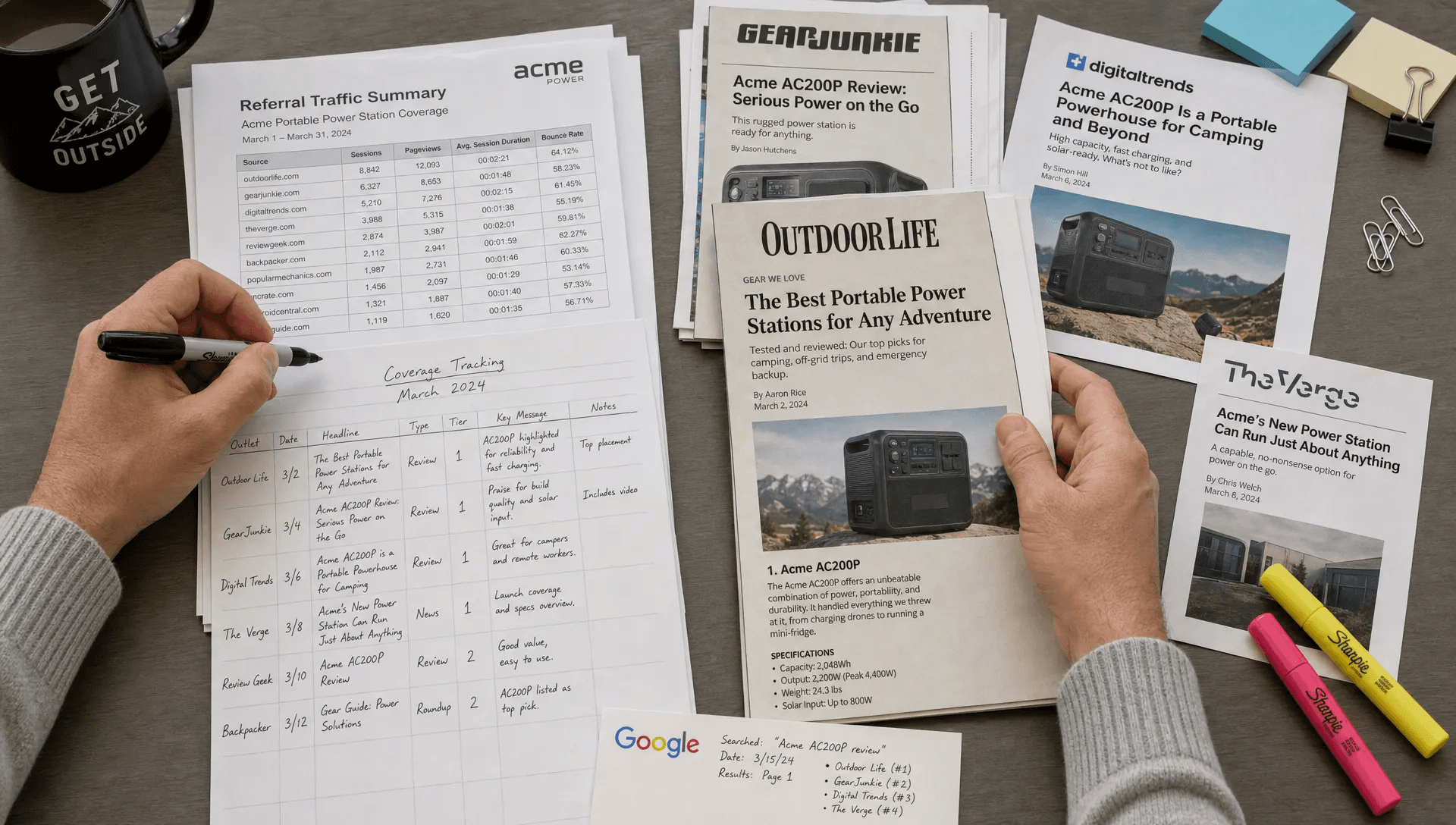
Get featured on 500+ media outlets
Guaranteed placement, no PR experience needed.
Many marketers still evaluate links with a narrow question: does this link pass authority? If the answer is no, they move on. That habit misses how real buyers behave and how modern brand discovery works.
A no follow link may not pass classic link equity in the same way as a standard followed link, but people can still click it, search engines can still understand its context and prospects can still treat the mention as proof that your brand exists beyond your own website. For PR, SEO and growth teams, that can translate into referral traffic, higher trust, branded search demand, assisted conversions and stronger visibility across the web.
The mistake is assuming a no follow link has no business value because it is not the strongest direct SEO signal. In practice, links are not only ranking mechanics. They are pathways, citations, trust markers and prompts for action.
What a nofollow attribute actually means
A nofollow attribute is an HTML signal, usually written as rel="nofollow", that tells search engines the publisher is not giving the link a standard editorial endorsement. It was originally introduced to fight comment spam and paid link abuse. Today, Google treats nofollow as a hint for crawling and ranking rather than a hard command in every case.
That does not mean every nofollow placement helps rankings. It means the situation is more nuanced than “followed equals valuable, nofollow equals worthless.” A reader can click either type. A journalist can discover your brand through either type. A search system can see the surrounding text, publication context and entity relationships around either type.
For a simple comparison, it helps to separate SEO mechanics from business outcomes.
| Link type | Search signal | Business value to measure |
|---|---|---|
| Dofollow link | Standard editorial link signal that can pass authority | Rankings, referral traffic, authority growth, conversions |
| Nofollow link | Link with an attribute that limits standard endorsement signals | Referral traffic, trust, brand discovery, assisted conversions |
| Sponsored link | Link marked as paid or commercial | Campaign attribution, compliance, direct response, audience reach |
| UGC link | Link in user generated content such as comments or forums | Community visibility, customer intent, reputation signals |
If your team is still deciding how much weight to give followed links in a broader SEO strategy, MediaBoost has a separate guide on what dofollow backlinks signal and when they matter. The key point here is different: even when a link is nofollow, the placement may still influence buyers.
Business value starts with the audience, not the attribute
The strongest argument for a no follow link is simple: search engines are not the only audience. A feature in a trusted industry publication, a mention in a high-intent forum, a profile on a respected marketplace or a citation in a popular newsletter can all put your brand in front of people who are actively evaluating solutions.
When a no follow link appears in the right context, it can send visitors who already understand the problem and are more likely to convert. This traffic may be smaller than traffic from a broad keyword ranking, but it can be more commercially relevant. A founder reading a financing article, a buyer comparing vendors or a journalist researching a category is not a passive visitor. They are often closer to taking action.
Referral behavior is also easy to undervalue because it rarely follows a clean last-click path. Someone may read an article, click your link, leave, search your brand name later and come back through organic search or direct traffic. If your reporting only credits the final click, the original placement disappears from the story.
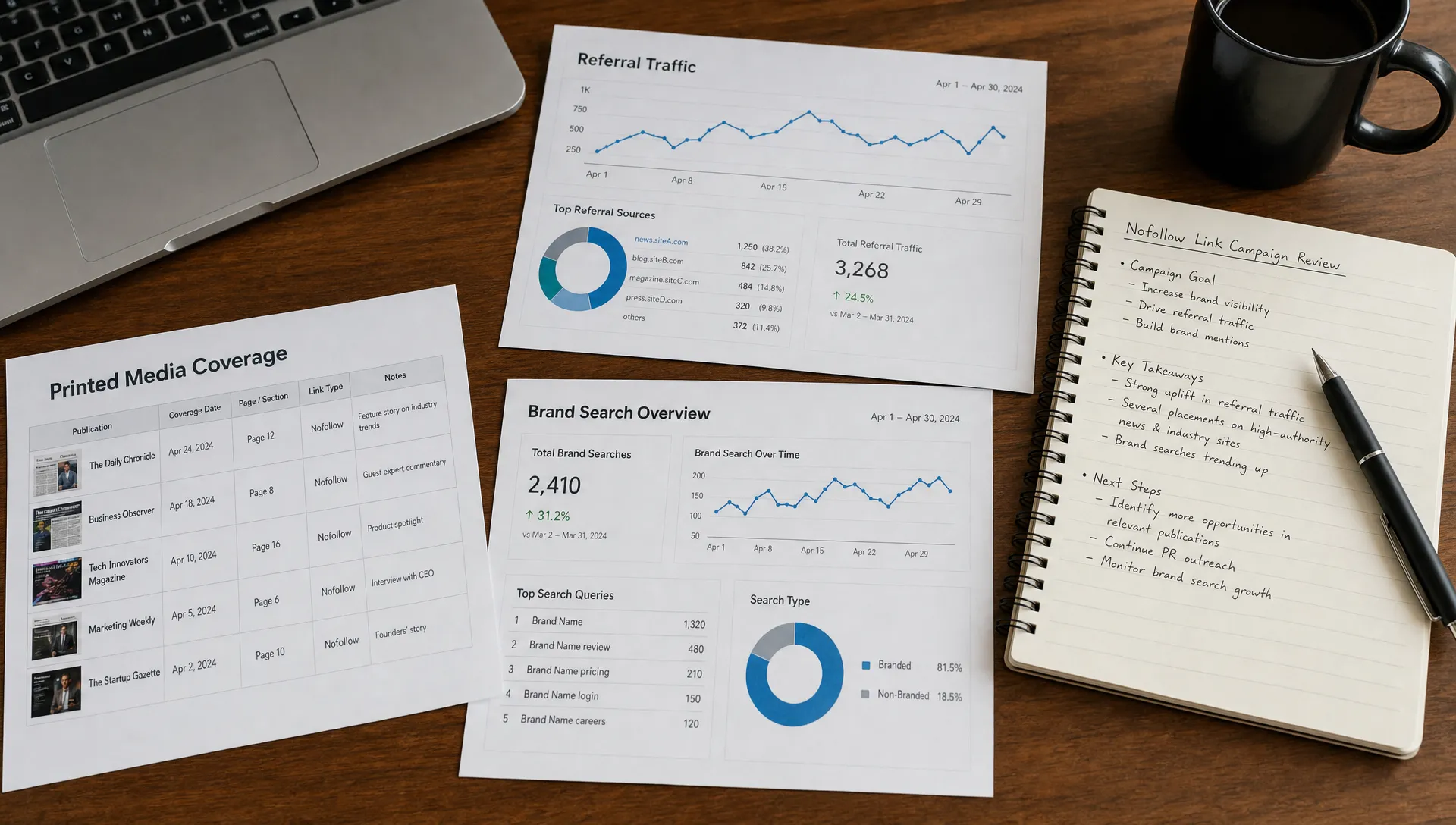
That is why nofollow value should be measured through a wider lens. Look at referral sessions, branded search lift, direct traffic changes, assisted conversions, demo requests, newsletter signups and sales conversations that mention the publication. The link attribute is only one data point.
Trusted mentions can create social proof
A placement on a recognizable publication does something your own landing page cannot do by itself. It places your brand in an external environment where the reader did not expect to hear only from you. That context can reduce skepticism.
This is especially relevant for newer companies, service businesses and agencies selling high-consideration offers. If a prospect sees your brand mentioned across credible sources, your company starts to feel more established. The link may be nofollow, but the trust signal is still visible.
That trust can influence:
- Sales calls, because prospects arrive with less doubt about legitimacy
- Outreach campaigns, because recipients can verify your media presence
- Investor or partner research, because third-party mentions support credibility
- Conversion rates, because recognizable publication logos can reinforce proof
- AI search visibility, because consistent web references help define your brand entity
None of these outcomes requires a followed link to exist. They require credible context, accurate messaging and enough visibility for the right audience to notice.
A nofollow placement can move buyers closer to action
Links sit inside experiences. If the experience creates interest, the link becomes the next step. That is true for editorial coverage, product launches, partner pages, social posts and branded media campaigns.
Luxury and retail brands understand this particularly well. Attention alone is not the finish line. The goal is to turn attention into intent, then into a measurable commercial step. The New Face explains this well in its article on how immersive commerce turns attention into action, where interactive product exploration, emotional brand worlds and clear next steps work together to move audiences closer to purchase.
The same principle applies to PR and SEO. A media mention that earns attention but gives readers no path forward is incomplete. A link, even with a nofollow attribute, gives interested readers a way to continue. It can lead to a landing page, a product announcement, an investor page, a booking form or a deeper educational resource.
The attribute affects how search engines interpret the link. It does not stop the link from helping a person take the next step.
Nofollow links can support brand search and demand creation
SEO teams often focus on non-branded keywords because they are easier to map to rankings. But brand search is one of the clearest signs that external visibility is working. When people search your company name, product name or founder name after seeing media coverage, your brand has created demand that did not exist before.
A no follow link can contribute to that behavior. A reader may not click immediately, especially if they are on mobile, skimming during work or saving the idea for later. Instead, they search for the brand when the need becomes urgent. If your analytics show an increase in branded search impressions, direct traffic or returning visitors after a campaign, the placement may have influenced demand even when the link itself was not followed by search engines.
This is where PR and SEO overlap. PR creates the reason to care. SEO captures the demand that follows. A healthy measurement model should account for both.
Why nofollow links matter more in AI-driven discovery
AI-powered search systems and answer engines rely on patterns of information across the web. They evaluate entities, context, mentions, reputation and consistency. A single nofollow link will not magically make a brand appear in AI answers, but credible mentions across trusted publications can help reinforce who the brand is, what it does and where it fits in a category.
This is one reason media placements are becoming more valuable outside traditional SEO. Brands need to be visible in the sources that people, search engines and AI systems use to understand markets. Live links, publication context and consistent descriptions all contribute to that broader visibility.
MediaBoost covers this shift in more detail in its guide to how SEO and backlinks work together in AI search. The practical takeaway is that link attributes matter, but they are not the entire visibility equation.
For brands distributing announcements, product launches or funding news, the goal should be to create a credible footprint. That footprint can include followed links, nofollow links, unlinked brand mentions and syndications. Each one can help a buyer, journalist, analyst or AI system connect your brand to the right topic.
Where a nofollow link can be especially valuable
Not every nofollow placement is worth pursuing. A link from a low-quality site with no relevant audience, thin content and spammy outbound links is unlikely to help your brand. The value comes from fit.
A no follow link is often worth attention when it appears in one of these contexts:
- A trusted news publication that your customers recognize
- A niche industry site with a focused, decision-ready audience
- A comparison page, marketplace profile or partner directory with purchase intent
- A founder interview, podcast recap or expert roundup that adds credibility
- A community thread where buyers discuss real problems and vendors
- A press release pickup that supports a broader announcement campaign
The best placements have relevance, real readership and a believable reason for the link to be there. If the link feels useful to the reader, it is more likely to create business value.
How to judge the value before you chase the link
A stronger link strategy starts with better evaluation. Instead of asking only whether a placement is followed, evaluate whether it can influence the right people and strengthen your brand’s search footprint.
| Evaluation factor | Strong sign | Weak sign |
|---|---|---|
| Audience relevance | The publication reaches buyers, partners or industry insiders | The audience is broad but unrelated |
| Editorial context | Your brand is mentioned in a meaningful, topical article | The link is placed in generic or spun content |
| Trust signal | The source is recognizable or respected in your niche | The site exists mainly to sell links |
| Click potential | The anchor and surrounding copy create a clear next step | The link is hidden, vague or unrelated |
| Brand lift | The placement supports credibility, search demand or sales enablement | The placement cannot be used or measured anywhere |
| Risk level | The link is natural, compliant and contextually relevant | The tactic looks manipulative or undisclosed |
This approach also helps protect your site from risky link building. A natural backlink profile usually includes a mix of followed links, nofollow links and brand mentions. Trying to force every placement into a dofollow link can lead to low-quality tactics that undermine trust.
What to do after earning a nofollow media mention
The value of a placement depends partly on what you do next. Too many brands treat coverage as a one-time win, then let it sit in a report. A smarter process turns the mention into a reusable asset.
Start by tracking the basics: referral traffic, landing page engagement, conversions, branded search trends and assisted conversions. Use UTM parameters when appropriate and compare campaign windows against previous periods. If the mention supports sales, add it to pitch decks, outbound sequences, investor updates and customer proof sections.
Then look at the content around the link. Does the article describe your company clearly? Does the destination page match the promise of the placement? Is there a strong next step for readers who arrive through the link? A nofollow placement can still underperform if it sends people to a generic homepage with no relevant message.
Finally, use the placement to build momentum. Share it with your audience, reference it in future outreach and use the credibility to support additional PR. Strong media coverage can lead to more coverage, interviews, partnership conversations and organic mentions over time.
Press release distribution and nofollow links
Press releases are often misunderstood in backlink strategy. A release should not be used as a shortcut to manipulate rankings. Its real purpose is to distribute news, create a credible public record and get your message in front of relevant audiences.
Some media placements may use nofollow attributes. Others may provide different types of live links or citations depending on the outlet’s editorial rules. That is normal. What matters is whether the campaign supports a legitimate announcement, reaches credible publications and gives your team proof it can use in marketing, sales and reputation building.
MediaBoost’s model is built around press release distribution and media placements across 500+ trusted publications, with done-for-you submissions, editorial review, live backlinks and proof reports. For brands that care about visibility, credibility and AI search presence, the reporting matters because it helps connect coverage to business outcomes rather than treating every link as an isolated SEO metric.
This is also why link building works best when it supports reputation, not just rankings. A strong campaign should align PR, SEO and brand trust so the coverage makes sense to readers and search systems alike.
The right mindset: value is cumulative
A single link rarely changes a business by itself. Real value comes from repeated, credible signals that build familiarity over time. A buyer sees your brand in a publication, then on a search results page, then in a sales deck, then in another article. Each touchpoint makes the next one easier to believe.
The right no follow link can be part of that sequence. It can introduce your brand to a high-value audience, validate your expertise, create a path to your site, support branded search and strengthen the external evidence around your company.
That does not mean nofollow links are equal to followed links for SEO. They are not. It means a link strategy that ignores nofollow placements is measuring too narrowly. Business value is not limited to PageRank.
Frequently Asked Questions
Does a no follow link help SEO? It may not pass classic link equity like a followed link, but it can still support SEO indirectly through referral traffic, brand searches, media visibility, content discovery and entity signals.
Is a nofollow link bad? No. A nofollow link is not a penalty or a negative signal by default. It is simply a link with an attribute that changes how search engines interpret endorsement.
Should I ignore nofollow links when evaluating PR coverage? No. PR coverage should be judged by credibility, relevance, audience quality, referral behavior, brand lift and sales usefulness, not just link attributes.
Can nofollow links drive conversions? Yes. If the placement reaches the right audience and points to a relevant page, readers can click, sign up, book a demo, request information or return later through branded search.
Should press release links always be dofollow? Not necessarily. Press release campaigns should prioritize legitimate news distribution, trusted placements, accurate messaging and measurable visibility. Forcing dofollow links can create unnecessary risk.
Turn media visibility into measurable business value
If your brand is investing in PR, launches, funding announcements or category visibility, do not judge success by link attributes alone. The right coverage can build trust, drive qualified attention and support your search footprint even when some placements use nofollow attributes.
MediaBoost helps brands get featured across 500+ trusted publications with done-for-you submissions, editorial review, live backlinks and proof reports. If you want media placements that support credibility, SEO and AI visibility, start with a strategy that measures the full business impact of every link.