How to Vet Media Sources Before You Pitch a Story
The best pitches start before you write the email. Learn how to evaluate media sources for audience fit, credibility, recent coverage and brand safety so your outreach earns attention instead of getting ignored.
Get featured on 500+ media outlets
Guaranteed placement, no PR experience needed.
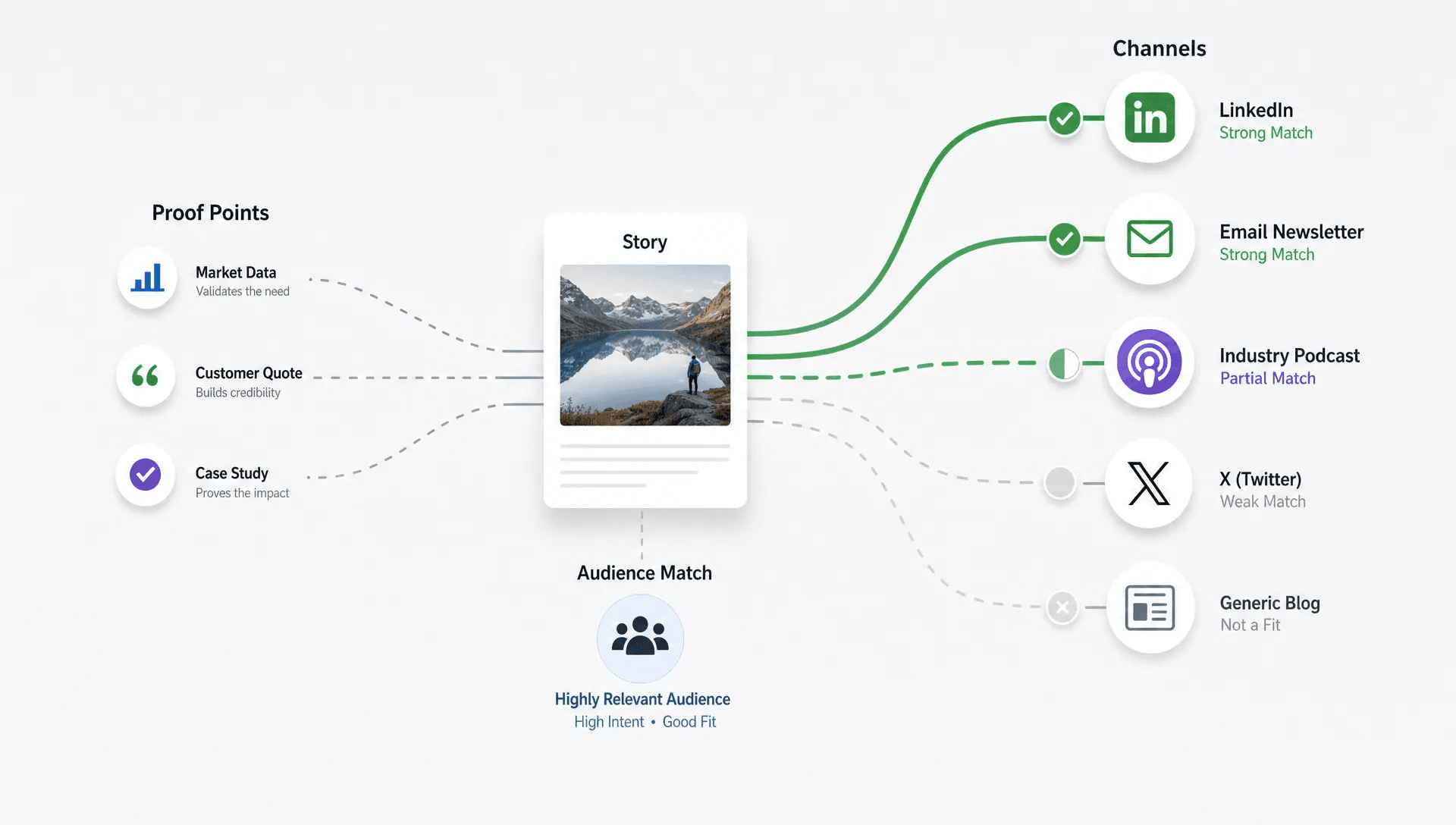
A strong pitch starts long before the email subject line. The quality of your media sources determines whether your story reaches the right audience, earns trust and creates useful visibility, or disappears into a crowded inbox with hundreds of similar announcements.
Vetting media sources is the process of checking whether a publication, journalist, newsletter, podcast, industry blog or community channel is actually relevant, credible and safe for your brand before you pitch. It is not the same as collecting a giant contact list. A smaller list of well-qualified sources will usually outperform a broad list of loosely related names because each pitch can be specific, timely and useful.
The goal is simple: pitch fewer people, pitch better people and avoid wasting time on outlets that cannot help your story.
What counts as a media source?
A media source is any channel or person that can publish, amplify, quote, discuss or influence a story. For PR teams and founders, that usually includes traditional publications and individual journalists, but it can also include trade newsletters, niche blogs, podcast hosts, analysts, YouTube interview shows, local business journals and active community moderators.
Different sources serve different goals. A national business outlet may help with investor visibility. A trade publication may reach buyers. A local outlet may validate a hiring, expansion or community impact story. A respected newsletter may drive more qualified attention than a large general news site because its audience is more concentrated.
| Media source type | Best fit | What to verify before pitching |
|---|---|---|
| National news outlets | Major funding, market data, executive moves, public interest angles | Newsworthiness, current coverage priorities, journalist beat fit |
| Trade publications | Product launches, industry trends, B2B announcements, technical stories | Niche relevance, editorial depth, buyer audience quality |
| Local and regional media | Hiring, expansions, events, local impact, founder stories | Geographic relevance, community angle, local proof points |
| Newsletters | Expert commentary, trend analysis, curated resources | Audience specificity, engagement signals, editorial standards |
| Podcasts and interview shows | Founder credibility, expert positioning, long-form education | Host focus, guest quality, listener fit, production consistency |
| Industry blogs and communities | Early awareness, peer validation, technical trust | Moderation quality, transparency, audience authenticity |
Before you evaluate any source, define what success looks like. If the goal is credibility, prioritize recognized outlets and strong editorial standards. If the goal is sales influence, prioritize sources your buyers actually read. If the goal is SEO support, assess the outlet's indexing, relevance and link practices, not just its brand name.
Start with audience fit, not outlet size
The biggest mistake in media outreach is treating reach as the main measure of quality. A source with a large audience is only useful if that audience overlaps with the people who should care about your story.
Start by answering three questions:
- Who needs to know this story?
- What problem, trend or decision does the story help them understand?
- Where do those people already go for credible information?
A fintech story may belong in a payments trade publication before it belongs in a general startup blog. A healthcare operations story may need health IT sources, hospital administration publications or regional business media, depending on the angle. A consumer product launch may fit lifestyle editors, commerce writers or local TV segments, but each requires a different pitch.
If you are still building your target universe, start with a structured process for building a media outlets list that gets results, then vet each source before adding it to your active outreach list.
Audience fit is also about format. Some journalists write data-driven trend pieces. Others publish quick funding briefs, founder profiles, product roundups or opinion columns. If your story does not match the format they already produce, you are asking them to change their job for you. That rarely works.
Check recent coverage before you trust an old media list
Media lists age quickly. Journalists change jobs, beats shift, publications adjust strategy and some outlets reduce original reporting in favor of syndicated or sponsored content. A contact who covered your topic two years ago may no longer be relevant today.
Review the source's recent output, not just its description. Look at the last 10 to 20 articles, episodes or newsletter editions and ask whether your story would feel natural beside them. Pay attention to repeated themes, quoted sources, headline style and story formats.
For individual journalists, check whether they are still writing for the outlet and whether their beat is active. A technology reporter may now cover policy. A business editor may only handle opinion submissions. A former staff writer may now be a freelancer with a different pitching preference.
Strong vetting often reveals better angles. If a reporter has recently covered supply chain pressure in retail, a generic product launch pitch may fall flat. A pitch about how your data reveals a new consumer behavior pattern may be much more relevant. Understanding how news media outlets decide which stories to publish can help you connect your announcement to audience value, timing and editorial fit.
Evaluate editorial credibility
Not every publication that looks professional will strengthen your brand. Some sources exist mainly to republish low-quality submissions, sell vague exposure or host thin sponsored content. Others have real audiences but weak editorial controls. Your brand is judged by the company it keeps, so credibility matters.
Look for clear signals of editorial quality. Credible sources usually have named editors or writers, transparent contact information, bylines with author history, visible publishing standards and clear labeling for sponsored or contributed content. They also tend to correct errors, cite sources and separate reporting from advertising.
Be cautious when a site publishes almost anything without review, hides ownership information, has no visible editorial team or fills pages with unrelated guest posts. A backlink from a weak or irrelevant site may not help your reputation, and in some cases it can make your coverage look manufactured.
Use this quick credibility screen before you pitch:
| Signal | Good sign | Warning sign |
|---|---|---|
| Bylines | Named authors with relevant article history | Generic staff labels on most articles |
| Editorial standards | Clear policies, corrections or contributor guidelines | No visible standards or submission rules |
| Content quality | Original reporting, analysis, interviews or useful curation | Thin posts, copied summaries or keyword-heavy articles |
| Sponsorship labels | Paid placements clearly identified | Sponsored content disguised as editorial coverage |
| Site focus | Consistent topic area and audience | Unrelated categories published side by side |
| Brand environment | Reputable advertisers, sources and contributors | Spam ads, sensational claims or low-trust topics |
A vetted source should pass both relevance and credibility checks. One without the other is not enough.
Study the writer, not just the publication
Pitching a publication is too broad. In most cases, you are pitching a person. That person has a beat, a style, a deadline rhythm and a history of what they choose to cover.
Read several pieces by the journalist before reaching out. Notice whether they prefer exclusive data, executive quotes, customer examples, contrarian takes, company announcements or broader trend analysis. Look at the level of detail they include. Some writers need technical specificity. Others need plain-language business impact.
Then check whether your story offers something new for them. If they have already written a similar article, your pitch should add a fresh data point, a new geography, a new stakeholder or a stronger example. If your pitch simply repeats what they covered last month, it is not ready.
Also verify contact preferences. Many journalists state how they want to be contacted in their bio, on social profiles or in publication guidelines. If they say no attachments, do not send attachments. If they request embargo details in the first line, provide them. Vetting includes respecting the workflow of the person you want to help.
Look for real audience signals
A source can look impressive and still have little influence with your target market. Instead of relying only on traffic estimates or follower counts, look for signs that the audience is active and relevant.
Useful audience signals include thoughtful comments, shares from industry professionals, citations by other reputable outlets, newsletter replies, podcast reviews, speaker invitations and recurring references inside professional communities. For B2B stories, quality matters more than volume. A small but senior audience can create more value than a large casual audience.
Search beyond the source's own website. See whether people discuss its articles on LinkedIn, Reddit, Slack groups, industry forums or conference panels. If Reddit is part of your audience research, teams that already use Redditor AI can include those community signals in their vetting workflow before deciding which sources deserve outreach.
Audience research also helps you avoid mismatched pitches. If a newsletter audience consists mainly of developers, do not pitch a vague executive announcement. If a podcast speaks to agency owners, frame the story around operations, client results or market changes rather than internal company news.

Screen for brand safety and reputational risk
A media placement is not automatically positive. If the surrounding content conflicts with your values, includes misinformation or feels spammy, the association can weaken trust.
Brand safety vetting is especially important when pitching contributed content, paid placements, affiliate-heavy sites or unfamiliar niche outlets. Review the categories where your story would appear. Check recent headlines for sensationalism. Look at the comment sections and ad environment. Search the outlet name with terms like complaints, fake news, plagiarism or sponsored posts if anything feels off.
Common red flags include:
- No named editorial team or unclear ownership
- Publishing unrelated topics at high volume with little depth
- Promising guaranteed editorial coverage without review
- Hiding sponsored content labels or removing them on request
- Using misleading headlines that exaggerate claims
- Having broken pages, excessive popups or spam-like outbound links
- Asking for payment before explaining placement details or standards
Some paid distribution and sponsored content opportunities are legitimate when they are transparent. The issue is not payment by itself. The issue is presenting paid visibility as independent editorial coverage, or placing your brand in environments that may damage trust.
Verify contact quality before sending anything
Even a perfectly matched source will not help if your contact data is wrong. Before you pitch, confirm that the email address is current, the journalist is still active and the contact is the right person for your topic.
Avoid sending the same pitch to multiple people at the same outlet unless the publication specifically invites that approach. It can create internal confusion and make your outreach look careless. If several people might fit, choose the strongest match first and personalize the email based on their recent work.
For general editorial inboxes, read the submission guidelines carefully. Some outlets require a press release format. Others prefer a short pitch summary. Some want images, product details or source availability upfront. If the outlet has a formal submission page, using it may be more effective than guessing an editor's email.
Maintain a simple source record with the journalist's name, beat, outlet, recent relevant articles, contact preference, notes on audience fit and last verification date. This keeps your team from rebuilding the same research every campaign.
Use a simple media source vetting scorecard
A scorecard helps remove guesswork. It also keeps teams aligned when founders, marketers and agencies disagree about which outlets matter.
You do not need a complex model. Score each source from 1 to 5 across a few practical criteria, then prioritize the highest-scoring sources for personalized outreach.
| Vetting factor | What a high score means | Why it matters |
|---|---|---|
| Audience fit | The source reaches the exact people your story needs to influence | Improves relevance and response quality |
| Beat alignment | The journalist or channel regularly covers your topic | Reduces wasted pitches |
| Editorial credibility | The outlet has clear standards, real authors and trustworthy content | Protects brand reputation |
| Recent activity | The source has published relevant content recently | Confirms the opportunity is current |
| Story format fit | Your news matches the source's preferred article, segment or episode style | Makes the pitch easier to evaluate |
| Brand safety | The surrounding content is appropriate and trustworthy | Reduces reputational risk |
| Contact accuracy | The right person and preferred method are verified | Improves deliverability and professionalism |
A simple threshold can keep outreach disciplined. For example, only pitch sources that score strongly on audience fit, credibility and beat alignment. Lower-scoring sources can stay in a research list for later, but they should not receive your first wave of outreach.
Match your pitch to the source after vetting
Vetting does not end with approval. Once you know why a source fits, use that insight to shape the pitch.
For a trade editor, lead with industry impact. For a local reporter, lead with jobs, community benefit or regional relevance. For a podcast host, lead with the conversation your spokesperson can offer. For a newsletter writer, lead with the useful takeaway their readers can apply.
Your pitch should make it easy to say yes. Include the core news, why it matters now, who can comment, what proof you have and what assets are available. Avoid long company background unless it supports the angle. Journalists do not need every detail in the first email. They need enough to decide whether the story is worth a response.
This is where preparation matters. A strong source list paired with weak materials still underperforms. If your team is getting ready for outreach, use a complete media package for journalists so your press release, quotes, assets and proof points are ready when a source asks for more.
Keep your vetted list alive
Source vetting is not a one-time task. Treat your media list as a living asset. Update it after every campaign with response notes, coverage outcomes, bouncebacks, journalist preferences and new beat changes.
Track which sources replied, which passed, which asked for future updates and which covered the story. Note what angle worked. Over time, this becomes a proprietary map of which media sources actually move your brand forward.
Also remove sources that no longer meet your standards. If an outlet shifts toward low-quality sponsored content, if a journalist changes beats or if a community becomes irrelevant to your buyers, clean the list. A disciplined list is more valuable than a large one.
Frequently Asked Questions
How many media sources should I vet before pitching a story? The right number depends on your goal, but quality matters more than volume. For a targeted announcement, 20 to 50 well-vetted sources can be more effective than hundreds of generic contacts.
What is the most important factor when vetting media sources? Audience fit comes first. A credible outlet with the wrong audience will not help your story reach the people who matter. After audience fit, check beat alignment, editorial credibility and recent activity.
Should I pitch only major publications? No. Major publications can help with broad visibility, but niche trade outlets, newsletters, local media and podcasts often reach more qualified audiences. Choose sources based on the story's goal, not prestige alone.
How can I tell if a media source is low quality? Watch for missing bylines, unclear ownership, unrelated content categories, excessive sponsored posts, thin articles, misleading headlines and no visible editorial standards. If the source feels built for volume rather than readers, be cautious.
How often should I update my media source list? Review key contacts before every campaign and do a deeper cleanup at least quarterly. Media roles, beats and editorial priorities change often, so old lists can quickly lead to poor outreach.
Make every pitch start with a stronger source list
The best media outreach is selective. When you vet media sources for relevance, credibility, audience quality and contact accuracy, you give your story a better chance of reaching people who can actually use it.
If you want support turning a qualified story into credible placements, MediaBoost provides press release distribution and media placement across 500+ trusted publications, with done-for-you submissions, editorial review, guaranteed live backlinks and proof reports tailored to your campaign goals.