Link Building That Supports PR, SEO, and Brand Trust
Strong link building is not just about domain metrics. Learn how to use PR-led placements, credible media context and proof reports to improve search visibility and earn buyer trust in 2026.
Get featured on 500+ media outlets
Guaranteed placement, no PR experience needed.
Link building used to be treated as a narrow SEO task: find a site, get a link, track the authority metric. That approach is too small for how buyers, search engines and AI answer engines evaluate brands in 2026.
The strongest link building now sits at the intersection of PR, SEO and brand trust. A link is not only a pathway for crawlers. It is also a public citation, a credibility signal and a piece of context that helps people understand why your brand deserves attention.
For growth teams, founders, agencies and PR professionals, the goal is not to collect as many backlinks as possible. The goal is to earn or secure placements that make sense to real readers, support discoverability and reinforce the story your brand wants the market to remember.
Why link building cannot be separated from PR anymore
A backlink without context has limited value. A mention in a relevant publication, attached to a credible announcement or expert point of view, can do much more.
PR gives link building its reason to exist. It answers the question search engines and readers both care about: why is this brand being mentioned here?
That reason could be a product launch, funding announcement, research report, executive appointment, partnership, market expansion, customer milestone or timely expert commentary. When the story is clear, the link becomes part of a broader signal rather than a standalone SEO tactic.
This matters because search engines have become better at evaluating patterns. Google’s spam policies warn against links created primarily to manipulate rankings. That does not mean every PR placement is risky. It means link building needs editorial logic, transparent execution and a genuine reason for publication.
A strong PR-led link should pass three simple tests:
- Audience fit: The publication reaches people who could plausibly care about the announcement, category or market.
- Context fit: The link appears inside content that explains why the brand is relevant, not in a random or unrelated paragraph.
- Trust fit: The placement strengthens credibility because the outlet, story and destination all feel legitimate.
When those tests are met, link building supports both visibility and reputation. When they are ignored, backlinks can start to look like clutter.
The three outcomes good link building should support
A modern link building strategy should not be judged by domain metrics alone. Those metrics can be useful for screening opportunities, but they do not capture the full business value of a placement.
The better question is: what job is this link doing?
1. PR impact
From a PR perspective, a link should help shape public perception. It can validate that your company is active, growing and relevant enough to appear in trusted media environments.
A press release distributed across credible outlets, for example, can create a public record around a key business moment. That record can be used by sales teams, investors, partners, journalists, analysts and future customers who are researching your company.
This is where link building becomes reputation infrastructure. It helps your brand show up beyond your own website, which is especially useful when buyers want third-party confirmation before they trust your claims.
2. SEO impact
From an SEO perspective, backlinks still help search engines discover, contextualize and evaluate pages. The quality of those links matters more than the raw count.
A relevant backlink from a trusted publication can support branded search, referral traffic, entity recognition and topical association. It may also help important pages get crawled and understood more consistently.
Press release links should not be treated as a shortcut to rankings. They work best as part of a broader search strategy that includes useful owned content, technical SEO, strong internal linking and ongoing brand demand. For a deeper look at the balance between value and risk, MediaBoost’s guide to press release link building as an SEO tactic explains when this approach is smart and when it can become manipulative.
3. Brand trust
Trust is harder to measure than traffic, but it is often what turns visibility into revenue.
A prospect who sees your company mentioned across recognizable publications may feel more comfortable booking a demo, requesting a quote or sharing your brand internally. A journalist may be more willing to respond if they can quickly verify your recent announcements. An AI-powered search result may have more third-party material to reference when summarizing your brand.
That does not mean every media logo carries the same weight. Trust depends on relevance, editorial quality and consistency. A few well-aligned placements can be more persuasive than dozens of low-context links.
What separates durable link building from shallow link acquisition
Shallow link acquisition focuses on volume. Durable link building focuses on meaning.
The difference is visible in how opportunities are selected, how anchors are written, how landing pages are chosen and how results are reported.
| Link building choice | Shallow approach | Durable approach |
|---|---|---|
| Publication selection | Chases any site with a high metric | Prioritizes audience relevance and trust |
| Story angle | Generic brand mention | Clear news hook or expert contribution |
| Anchor text | Over-optimized commercial phrases | Natural branded or contextual anchors |
| Destination page | Sends every link to a sales page | Matches the link to a relevant page or announcement |
| Reporting | Counts links only | Tracks placements, live URLs, context, traffic and trust signals |
The durable approach is less mechanical. It asks whether each placement would still make sense if search engines did not exist. If the answer is yes, the link is usually more likely to support PR and trust as well as SEO.

How to build links that strengthen brand credibility
The safest and most effective link building programs usually start with brand substance. Before you pursue placements, identify what your company can credibly talk about.
That could include original data, customer outcomes, executive expertise, market observations, company milestones or practical educational content. The stronger the underlying asset, the easier it becomes to secure links that feel earned rather than forced.
A credibility-first link building workflow often includes five steps.
First, define the story. A vague goal like “we need backlinks” produces vague results. A specific story like “we are launching a new cybersecurity product for mid-market healthcare teams” gives media partners, editors and readers a reason to care.
Second, map the audience. A national business outlet, niche SaaS publication, local business journal and finance news site can all be valuable, but not for the same reason. Match outlets to the audience you need to influence.
Third, choose the right destination page. Not every backlink should point to your homepage. A press release, research page, product announcement, thought leadership article or industry-specific landing page may provide a more coherent reader journey.
Fourth, keep anchor text natural. Branded anchors, company names, URLs and descriptive phrases usually look more authentic than repetitive commercial keywords. If every link uses the same money phrase, the pattern can undermine trust.
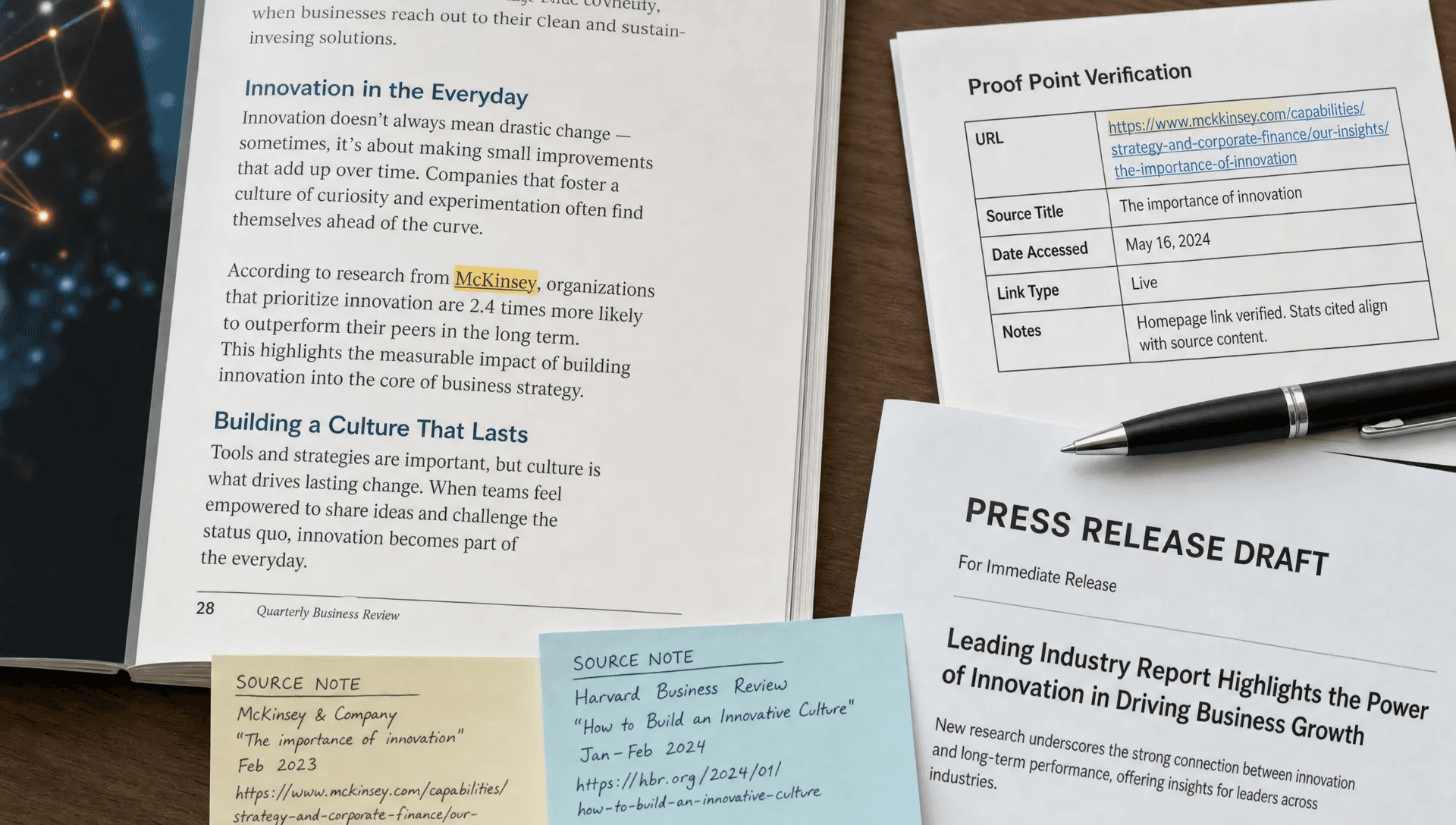
Fifth, document the results. Screenshots are not enough. A strong report should show live URLs, linked destinations, publication names and the status of placements. This gives marketing, sales and leadership teams proof they can actually use.
If your team is using AI to speed up research, messaging or campaign planning, resources such as AI marketing tools and strategy guides can help structure workflows without replacing the editorial judgment that credible link building requires.
The role of media placements in AI search visibility
AI-powered search experiences increasingly summarize brands, products and categories by drawing on information across the web. No company can fully control which sources an AI system references, but brands can improve the quality and consistency of the public information available about them.
This is where trusted media backlinks can help. A placement in a credible publication does not only send referral traffic. It also creates another public source that connects your brand to specific topics, industries, announcements and claims.
For example, if your company wants to be associated with fintech compliance, enterprise AI security or sustainable consumer goods, consistent mentions in relevant media environments can reinforce that association over time. The link is part of the value, but the surrounding text, publication context and entity signals matter too.
MediaBoost has covered this shift in more detail in its article on how quality backlinks shape brand visibility in the AI era. The key takeaway is that AI visibility is not built from backlinks alone. It comes from a broader pattern of credible, consistent and accessible brand signals.
Common link building mistakes that weaken PR value
Some link building mistakes do not just waste budget. They actively make a brand look less credible.
One common mistake is pursuing irrelevant placements because the site has a tempting authority metric. If your B2B software company appears on unrelated coupon sites, low-quality blogs or content farms, the link may not help the buyers you actually care about.
Another mistake is overusing exact-match anchor text. This often happens when SEO goals are disconnected from PR judgment. A natural article rarely links every brand mention with the same keyword-heavy phrase. Variation is normal, and branded anchors often look more trustworthy.
A third mistake is sending all links to aggressive conversion pages. Sometimes a product page is appropriate. In many PR contexts, a press release, announcement page or educational resource offers a better experience because it matches the reader’s intent.
Finally, many teams fail to track link context. A spreadsheet of URLs is useful, but it does not tell the whole story. You need to know whether the placement is live, whether the link works, whether the page is indexed, whether the article accurately represents the brand and whether the surrounding content supports the message.
How to measure link building across PR, SEO and trust
If link building supports multiple business goals, measurement should reflect that. A campaign may not produce immediate ranking movement, yet still create valuable sales enablement assets, referral traffic, branded search lift or stronger credibility during investor conversations.
The best reporting combines quantitative and qualitative signals.
| Goal | Useful indicators | What to look for |
|---|---|---|
| PR visibility | Number of live placements, outlet relevance, media logos | Are the placements credible and aligned with the story? |
| SEO support | Referring domains, crawl activity, keyword movement, indexed pages | Are links helping search engines discover and contextualize the brand? |
| Referral traffic | Sessions, engaged visits, assisted conversions | Are readers from placements taking meaningful actions? |
| Brand trust | Sales feedback, demo quality, branded search, partner response | Are third parties more willing to engage after seeing coverage? |
| AI visibility | Consistent third-party mentions, topical associations, brand summaries | Is public information about the brand clearer and more credible? |
This broader measurement model helps teams avoid two extremes. One extreme is judging every link only by rankings. The other is treating media coverage as impossible to measure. Neither is useful. Good link building has enough structure to report results and enough nuance to capture reputation value.
Where MediaBoost fits into a trust-first link building strategy
MediaBoost is built for brands that want media placements to support visibility, credibility and search presence without managing the submission process themselves.
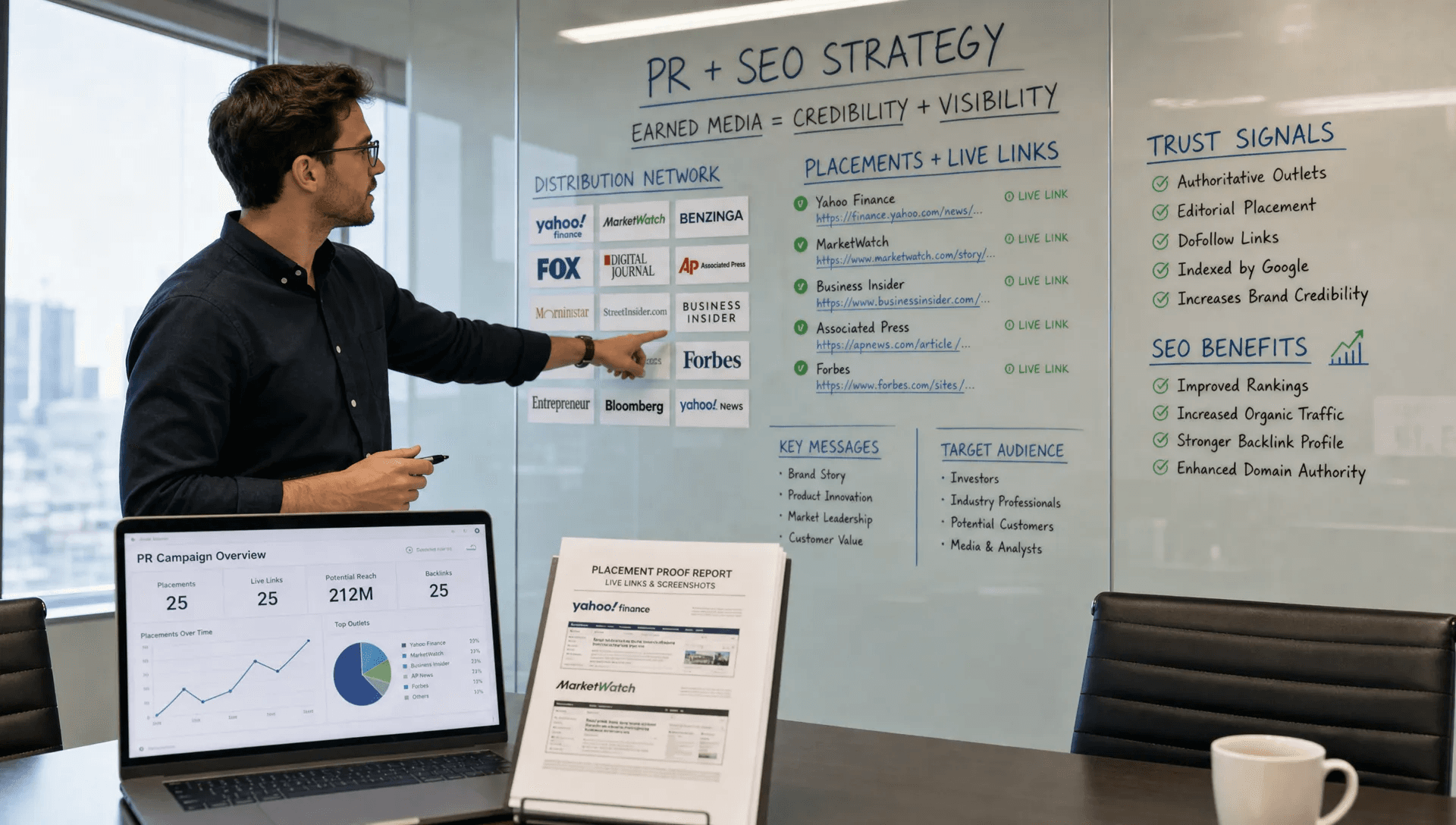
Through press release distribution and media placement services, MediaBoost helps companies get featured across 500+ trusted publications, with industry-specific packages, editorial review, done-for-you submissions, live links and proof reports. Packages can often be completed quickly, including 48-hour turnaround options depending on the campaign.
That makes it useful for teams that already have a real announcement or brand story, but need a faster and more predictable way to turn it into public media presence. The value is not just “getting a backlink.” The value is creating a credible footprint across outlets that buyers, search engines and AI systems can find.
For teams still deciding which publications belong in their strategy, MediaBoost’s guide on choosing media outlets that build real brand trust offers a practical way to think beyond vanity logos.
Frequently Asked Questions
Is link building still important for SEO in 2026? Yes, but quality, relevance and context matter more than volume. Links from credible, relevant sources can support discovery, authority and brand understanding, especially when they are part of a broader SEO and PR strategy.
Are press release backlinks safe for SEO? Press release backlinks are safest when they are tied to real news, written naturally and distributed through reputable channels. They should not be used as a spammy shortcut with repetitive exact-match anchors or irrelevant placements.
How does link building support brand trust? Link building supports brand trust when placements appear in credible outlets, explain a legitimate story and give prospects third-party proof that your company is active and relevant. The surrounding context matters as much as the link itself.
Should every backlink point to my homepage? No. The best destination depends on the story and reader intent. A product announcement, research asset, press release, case study or educational page may be more relevant than the homepage.
How quickly can PR link building show results? Some benefits, such as live media proof and referral traffic, can appear quickly. SEO and AI visibility benefits usually build over time as search engines and answer systems process a broader pattern of credible signals.
Build links that buyers can actually trust
The strongest link building does not feel separate from your PR strategy. It gives your announcements a wider footprint, gives search engines clearer signals and gives buyers more reasons to believe your brand is legitimate.
If your company has a story worth sharing, MediaBoost can help turn it into trusted media placements with live links, editorial review and proof reports across 500+ outlets.