Press Release Distribution Mistakes That Waste Budget
A bigger media list does not always mean better PR results. Learn the distribution mistakes that drain budget and how to protect every dollar before, during, and after your press release goes live.
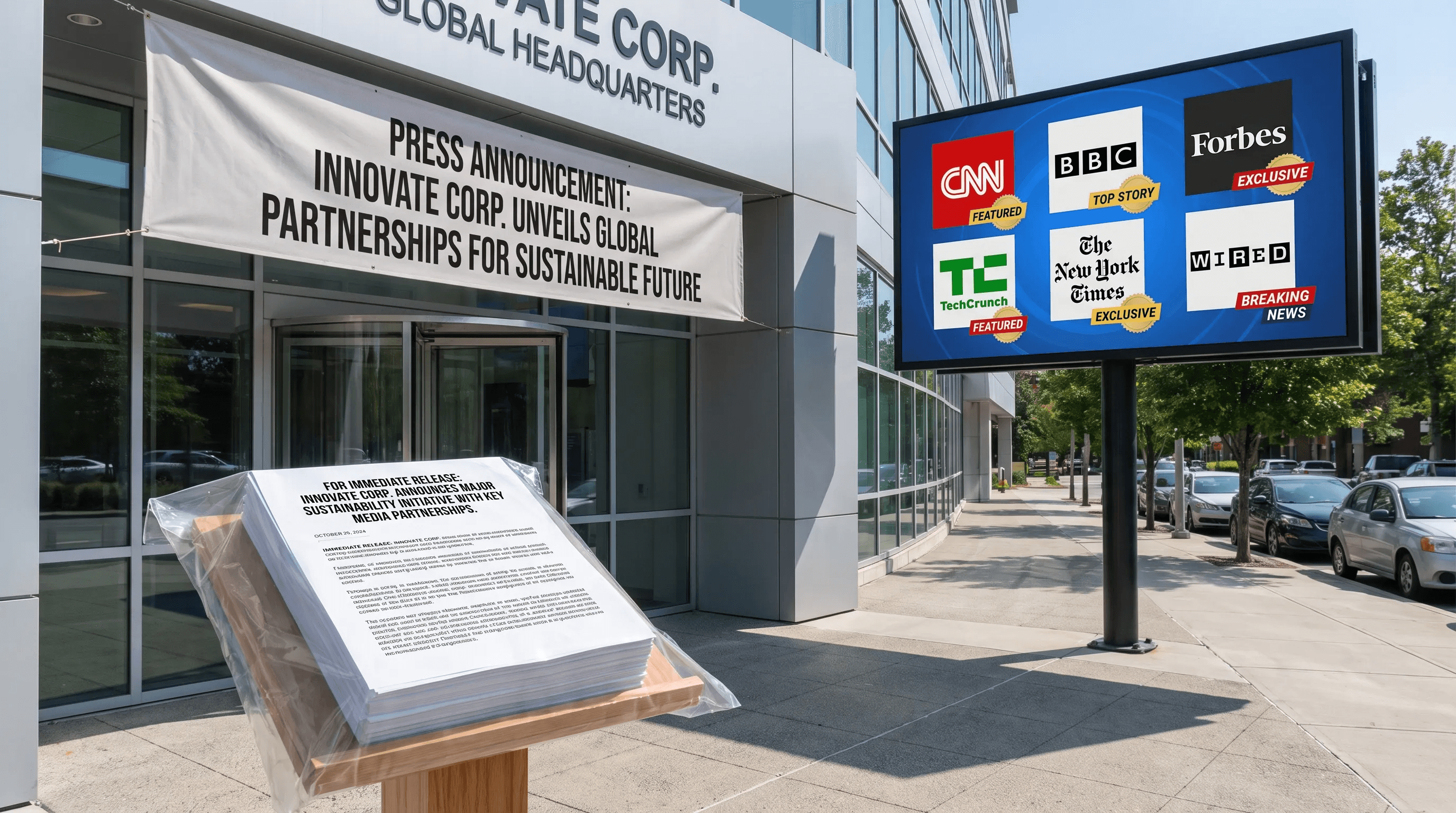
Get featured on 500+ media outlets
Guaranteed placement, no PR experience needed.
Press release distribution can be one of the most efficient ways to build credibility, earn media visibility, support SEO, and create third-party proof around a launch. It can also become an expensive vanity exercise if the distribution strategy is wrong.
The budget usually does not disappear because a brand chose PR. It disappears because the release was sent to the wrong audience, measured against the wrong goals, or purchased as a one-time blast with no plan for what happens after publication.
If you are preparing a launch, funding announcement, partnership, event, rebrand, or expert report, these are the press release distribution mistakes most likely to waste budget, plus what to do instead.
Why press release distribution budgets get wasted
A press release is not a magic switch. Distribution works best when the announcement has clear news value, the outlet mix matches the audience, and the team knows how success will be measured.
Here is a quick overview of common budget leaks:
| Mistake | Why it wastes budget | Better approach |
|---|---|---|
| Buying the biggest network | Reach looks impressive, but irrelevant placements rarely move the business | Prioritize audience fit, outlet quality, and industry relevance |
| Sending a weak announcement | Distribution cannot fix a release with no clear news angle | Strengthen the story before paying for placement |
| Tracking only publication count | A high number of links can hide poor visibility or poor relevance | Review live links, outlet quality, indexing, and referral paths |
| Treating PR as a backlink shortcut | Over-optimized anchors and low-quality placements can reduce trust | Use natural brand mentions and credible editorial context |
| Skipping post-publication work | The release goes live, then nobody uses the proof | Repurpose placements across sales, social, email, and investor materials |
Mistake 1: Paying for reach instead of relevance
The most common press release distribution mistake is choosing a package because it promises the largest number of outlets. A network of hundreds of publications can be valuable, but only if those publications make sense for your audience and objective.
A fintech startup announcing a compliance milestone needs different visibility than a consumer wellness brand launching a new product. A B2B SaaS company may care more about business, technology, and industry trade coverage than general lifestyle syndication. A premium mobility business, such as an executive chauffeur and event transportation partner, would likely benefit more from business, travel, corporate event, and executive lifestyle relevance than from a broad consumer-only blast.
Before buying distribution, ask who needs to see the announcement. Customers, investors, partners, journalists, procurement teams, local buyers, and AI search systems may all respond to different signals. Budget is wasted when distribution is optimized for logo quantity rather than the places your audience actually trusts.
Mistake 2: Distributing a release before the story is ready
Distribution amplifies the release you already have. It does not create news value on its own.
If the headline is vague, the lead is buried, or the announcement reads like an advertisement, even a strong distribution network will underperform. Journalists and readers need to understand what happened, why it matters now, and who is affected.
Common signs that a release is not ready include unclear timing, missing data, generic quotes, no named spokesperson, and a first paragraph that does not answer the core news questions. If the release needs improvement, fix the asset before you pay to distribute it. For a practical structure, review this guide on how to write a press release that gets picked up fast before committing budget to distribution.
Mistake 3: Confusing guaranteed submission with guaranteed business results
Some brands assume that paid distribution should guarantee traffic, leads, sales, journalist interviews, and rankings. That expectation creates poor decision-making.
A distribution provider can guarantee certain process outcomes, such as submission, placement type, live links, proof reports, or turnaround, depending on the offer. It cannot honestly guarantee that every reader will convert, that journalists will write original follow-up stories, or that search engines will reward a campaign in a specific way.
The right way to evaluate distribution is to separate controllable outcomes from business outcomes. Controllable outcomes include where the release is submitted, whether live links are delivered, whether reporting is provided, and whether the release is reviewed before submission. Business outcomes depend on the strength of the news, brand demand, offer clarity, follow-up, and timing.
Mistake 4: Choosing outlets before defining the goal
Not every press release has the same job. One release may be designed to build credibility before a sales campaign. Another may support investor relations. Another may help a local brand appear more established in search results. Another may create source material that AI search tools can discover when summarizing the company.
When the goal is unclear, distribution becomes a guessing game. Teams buy whatever looks broadest, fastest, or cheapest. That often leads to mismatched placements.
A better approach is to define the primary goal first:
- Build credibility for prospects who search the brand name
- Support SEO with authoritative brand mentions and live links
- Announce a launch, event, funding round, partnership, or milestone
- Create proof assets for sales decks, email campaigns, and social content
- Increase visibility across trusted publications that may inform AI search results
Once the goal is clear, the right distribution package becomes easier to evaluate.
Mistake 5: Ignoring proof reports and live-link verification
A press release distribution campaign is not complete when someone says it was sent. You need proof.
At minimum, you should be able to review where the release appeared, which links are live, and how those placements can be used. Without a proof report, your team may struggle to confirm whether the campaign delivered what was promised.
This matters because PR value often compounds after publication. A sales team can reference credible placements in outreach. A founder can add media logos or links to an investor update. A marketing team can turn the announcement into social posts, newsletter content, and website proof. None of that happens efficiently if the team does not have a clean report of live placements.

Mistake 6: Treating backlinks as the only KPI
Press release distribution can support SEO, especially when it creates credible brand mentions, live links, and trusted third-party references. But budget gets wasted when teams treat PR as a pure link-building shortcut.
Over-optimized anchor text, irrelevant outlet selection, and low-quality syndication can make a campaign look artificial. Modern PR should be built around credible visibility first. Links are part of the value, but they should sit naturally inside a legitimate announcement.
Think in terms of reputation signals, not just link counts. A release that clearly explains a real company milestone across relevant publications can support search visibility, branded search confidence, social proof, and AI discoverability. A release stuffed with awkward keywords may produce links, but it can weaken trust.
Mistake 7: Distributing at the wrong time
Timing is one of the easiest ways to waste budget. Many brands schedule distribution around internal convenience rather than the external news cycle.
A release sent late on a Friday, during a major industry event, or while a bigger breaking story dominates the media environment may receive less attention. Similarly, announcing a product before the landing page is ready or before the sales team has messaging can limit the campaign’s value.
Good timing depends on the announcement. Product launches often need coordination with website updates, email campaigns, demos, and social posts. Event announcements need enough lead time for registration. Funding or partnership announcements may require approval from multiple stakeholders before publication. If the release includes time-sensitive information, confirm embargoes, time zones, and approval workflows before distribution.
Mistake 8: Sending one generic version to every audience
A single press release can reach many outlets, but the story should still feel specific. Generic language wastes money because it makes the announcement less relevant to every reader.
This is especially important for brands serving multiple verticals. A cybersecurity announcement may matter to healthcare buyers for compliance reasons, to finance buyers for risk reasons, and to enterprise IT teams for operational reasons. If the release does not make the relevance obvious, the distribution may technically reach the audience without persuading it.
You do not need to create a completely different release for every segment, but you should tailor the angle, quote, headline, or supporting detail when the audience changes significantly. Industry-specific distribution works best when the release itself reflects that industry context.
Mistake 9: Comparing providers on price alone
Cheap distribution is not automatically bad, and expensive distribution is not automatically good. The mistake is comparing providers only by the sticker price without evaluating what is included.
A low-cost option may be fine for a simple announcement with limited goals. But if you need editorial review, relevant placements, live links, reporting, and a fast turnaround, a bare-bones package may end up costing more in lost time and missed credibility.
When comparing providers, look at the full value of the campaign: editorial support, outlet relevance, placement expectations, turnaround time, reporting, and whether the service is done-for-you or requires heavy internal management. If you are still defining your budget range, this 2026 breakdown of how much a press release costs can help you compare options more realistically.
Mistake 10: Doing nothing after the release goes live
The biggest hidden waste happens after distribution. Brands pay for placements, receive the report, and then move on. That leaves much of the value unused.
A press release should become a reusable credibility asset. Add the strongest placements to sales enablement materials. Share the announcement on LinkedIn with a founder comment. Include media links in investor updates, partner outreach, newsletters, and customer onboarding sequences. If the release supports a product launch, connect it to demo pages, comparison pages, and campaign landing pages.
The goal is not just to get published. The goal is to make publication useful.
A pre-distribution checklist to protect your budget
Before you buy press release distribution, run through this checklist:
- The announcement has a clear reason to exist now
- The headline explains the news without hype
- The first paragraph answers who, what, when, where, why, and why it matters
- The distribution audience matches the business goal
- The package includes clear expectations around placements, links, and reporting
- The website or landing page is ready before publication
- The team has a plan to reuse the coverage after it goes live
If you cannot check these boxes, pause before spending. A short delay to improve the release and distribution plan can protect the entire campaign budget.
Frequently Asked Questions
What is the biggest press release distribution mistake? The biggest mistake is paying for broad reach without audience relevance. A large outlet count looks impressive, but the campaign performs better when placements align with the people, industries, and trust signals that matter to your brand.
Is cheap press release distribution a waste of money? Not always. It depends on your goal. Cheap distribution may be enough for a basic announcement, but it can waste money if you need editorial review, credible outlets, live links, industry-specific placement, or detailed proof reports.
How do I know if a press release is ready for distribution? A release is ready when the news angle is clear, the headline is specific, the lead explains the announcement quickly, quotes add substance, and all approval details are final. If readers cannot understand the importance in the first few seconds, revise before distributing.
Should I measure press release distribution by backlinks? Backlinks matter, but they should not be the only KPI. Also evaluate outlet relevance, brand visibility, live-link quality, proof reports, referral paths, social proof, and how the placements can be reused in sales and marketing.
When should I distribute a press release? Distribute when the announcement, website, sales messaging, and follow-up plan are ready. Avoid publishing during periods when major competing news is likely to dominate attention, unless the timing is unavoidable.
Spend PR budget where it can compound
Press release distribution is most valuable when it is planned as a visibility system, not a one-time blast. The right announcement, sent to the right outlets, with the right proof and follow-up, can support credibility long after the release goes live.
MediaBoost helps brands get featured across 500+ trusted publications with done-for-you submissions, editorial review, guaranteed live backlinks, proof reports, and fast turnaround options. If you want distribution that is built around credibility, SEO support, and AI visibility, start with MediaBoost and turn your next announcement into a measurable media asset.