Semrush Backlink Analytics: A Simple Audit Workflow
Backlink audits get messy when you chase every metric at once. This workflow shows how to use Semrush data to separate valuable links, risky patterns, competitor opportunities and next actions.

Get featured on 500+ media outlets
Guaranteed placement, no PR experience needed.
If you searched for semrush backlink analytics, you probably do not need another tour of every Semrush menu. You need a practical way to turn backlink data into decisions: which links are helping, which patterns deserve caution, which competitors are earning better mentions and what to do next.
A backlink audit is not a hunt for one magic score. Authority metrics, link counts and traffic estimates are useful, but they can mislead when read in isolation. A simple workflow keeps the audit focused on quality, relevance, risk and action, especially if you are planning new PR placements, digital PR campaigns or link building work.
This guide walks through a repeatable audit process using Semrush data, with enough structure for agencies, founders and in-house marketers who want clean findings without drowning in exports.
The semrush backlink analytics audit workflow at a glance
The goal of this workflow is to move from raw backlink data to a prioritized action plan. You are not trying to label every link as “good” or “bad.” You are trying to understand whether your backlink profile supports the way you want your brand to be discovered in search, cited by publishers and recognized by AI answer engines.
Use this quick map before you start exporting data:
| Audit stage | What you are checking | Best output |
|---|---|---|
| Baseline | Referring domains, link growth, authority distribution | Profile snapshot |
| Quality | Source credibility, topical relevance, editorial context | Keep, monitor or investigate list |
| Anchors | Branded, commercial, URL and generic anchor mix | Anchor risk notes |
| Pages | Which URLs attract links and which need protection | Page-level priority list |
| Competitors | Link gaps and replicable mentions | Opportunity shortlist |
| Reporting | Findings, proof and next actions | Client or leadership-ready summary |
If your site already has thousands of backlinks, audit a representative sample first. For smaller sites, you can review every referring domain manually and still finish with useful conclusions in a few hours.
Step 1: Set your baseline before judging links
Open your domain in Semrush Backlink Analytics and start with the overview. Record referring domains, total backlinks, authority distribution, follow versus nofollow split and recent link growth. These numbers create your baseline, not your verdict.
The strength of semrush backlink analytics is that it helps you see profile shape quickly. For example, a site with 300 backlinks from 20 domains is very different from a site with 300 backlinks from 210 domains. The first may have repeated sitewide links or syndicated placements. The second may suggest broader publisher diversity.
Look at the timeline as well. A sudden spike is not automatically a problem. It may come from a press release, product launch, funding announcement, viral mention or syndicated media pickup. The question is whether the spike has a clear business explanation and whether the linking domains make sense for your market.
Step 2: Review referring domains before individual backlinks
Backlink counts can inflate quickly, especially when one site links from many pages. Referring domains are usually a better starting point because they show how many distinct websites are citing you.
Sort domains by Authority Score, but do not stop there. Open samples from each tier and look at the actual source. A lower authority niche publication may be more valuable than a high-score site with thin content, irrelevant categories or obvious outbound link selling.
When reviewing each referring domain, ask three questions. Is the site real and maintained? Is its audience relevant to your brand? Does the link appear in a context where a reader would naturally expect to see your company mentioned?
For a tool-neutral evaluation method, MediaBoost’s guide on how to analyze backlinks for quality, relevance, and risk is a useful companion because it focuses on link context rather than vanity metrics alone.
Step 3: Separate editorial context from mechanical links
Use semrush backlink analytics to open the backlink examples behind your most important referring domains. This is where you separate useful citations from mechanical links that exist only because of templates, profiles, widgets or directories.
A strong editorial backlink usually sits inside a relevant article, company announcement, research mention, review, interview, roundup or resource page. It has surrounding text that explains why your brand is being referenced. The page itself should have a real topic, an identifiable audience and a reasonable reason to link out.
Mechanical links are not always harmful, but they rarely deserve the same strategic weight. Examples include footer links, auto-generated author pages, thin directory listings, scraper pages and random profile links. Keep them in your data, but do not let them shape your growth strategy.
If many of your links come from non-editorial sources, your next link building work should prioritize trusted publications, relevant PR angles and verifiable live placements instead of more directory volume.
Step 4: Check anchor text for natural patterns
Anchor text is one of the fastest ways to spot whether a backlink profile looks organic. In the Semrush Anchors report, group anchors into broad categories: brand name, naked URL, generic text, topical phrase and commercial keyword.
A natural profile usually has a strong share of branded anchors, URL anchors and contextual phrases. A risky profile often leans too heavily on exact-match commercial terms, especially if those anchors appear on low-quality sites.
You do not need a universal “perfect” anchor ratio. A SaaS brand, ecommerce store, local service company and funded startup can all have different patterns. The practical question is whether the anchor mix reflects how real publishers, customers and partners would cite the brand.
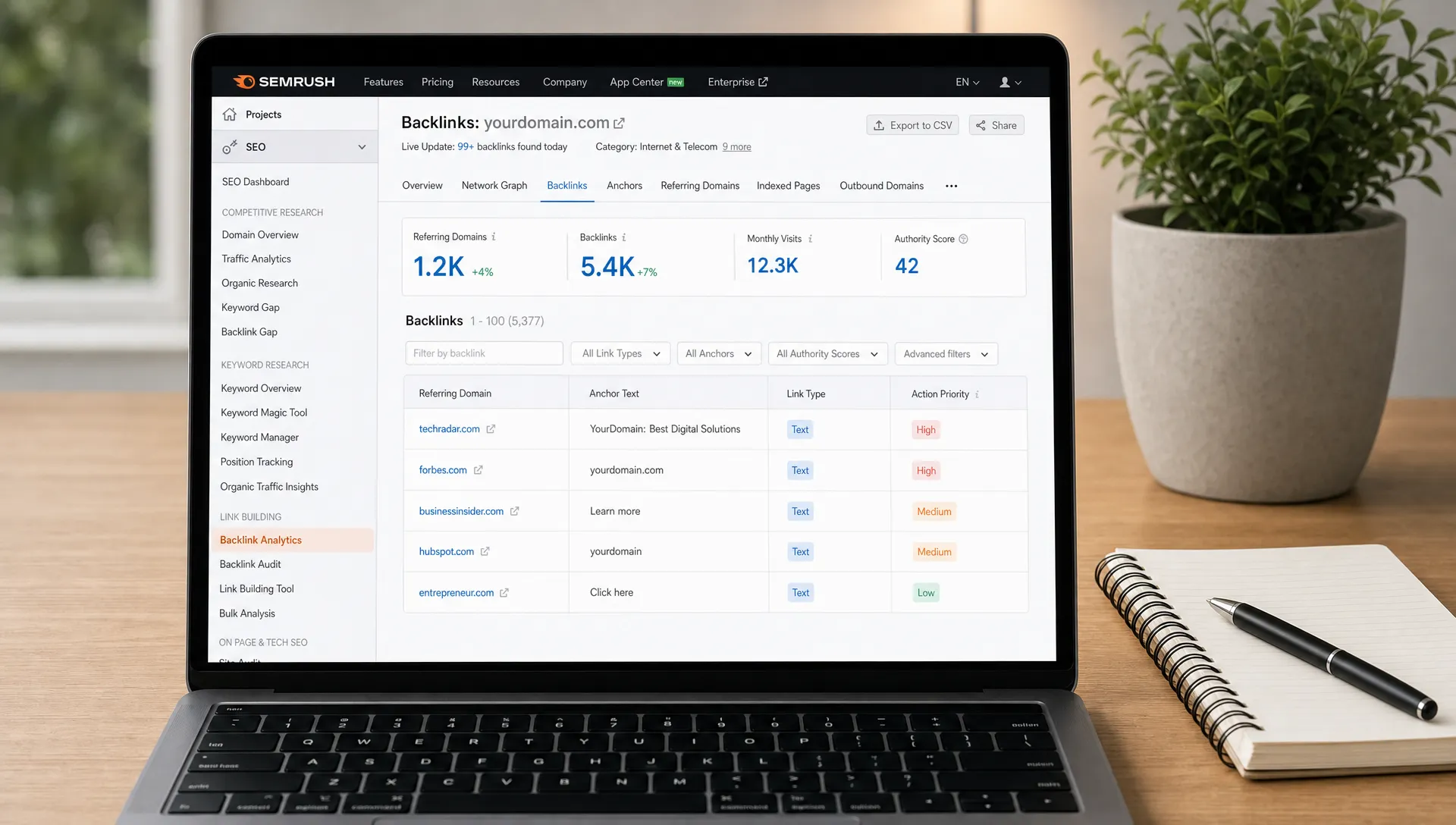
If you find a cluster of exact-match anchors from unrelated domains, mark it for deeper review. Do not rush into disavowing links unless there is a clear pattern of manipulative or harmful linking. In most audits, documentation and future link quality matter more than panic cleanup.
Step 5: Audit page-level value, not only domain-level strength
At this stage, semrush backlink analytics should help you answer a more practical question: which pages are earning trust? Move from domain-level reports to indexed pages or target URLs, then identify which assets attract backlinks.
You may find that your homepage earns most branded mentions, while blog posts, research pages, product pages or press announcements receive very few links. That is not unusual, but it affects your content and PR plan.
Page-level backlink review helps with three decisions:
- Which URLs should be protected during redesigns, migrations or content refreshes
- Which content formats already attract citations and deserve expansion
- Which commercial pages need supporting assets, such as comparison guides, data pages or earned media mentions
If a linked page is outdated but still valuable, update carefully. Preserve the URL when possible, keep the topic aligned with the backlinks it already earned and avoid deleting sections that explain why publishers linked to it.
Step 6: Compare competitors without copying their whole profile
Competitor backlink research is useful when it reveals patterns, not when it creates a blind copy list. In Semrush, compare your domain with a few direct competitors and review domains that link to them but not to you.
The best opportunities are not always the highest authority sites. Look for repeatable categories: industry publications, podcast pages, partner ecosystems, award lists, software directories, local business journals, founder interviews, data citations or conference pages.
A semrush backlink analytics competitor review should produce a shortlist of realistic opportunities. If a competitor earned a mention because they released original data, your action is not “ask that site for a link.” Your action is to create a credible asset that deserves similar coverage.
For a deeper process, use MediaBoost’s article on how to find your competitors’ best backlinks to separate replicable links from one-off mentions that are unlikely to be earned by outreach.
Step 7: Turn findings into keep, monitor and build actions
An audit only matters if it changes what you do next. Create three simple buckets instead of a bloated spreadsheet nobody uses.
“Keep” links are credible, relevant and worth protecting. These include trusted publication mentions, partner links, editorial citations and pages that send qualified referral traffic.
“Monitor” links are neutral or uncertain. They may come from low-visibility directories, syndicated pages, aggregator sites or domains with weak editorial standards. You do not need to act immediately, but you should watch for pattern changes.
“Build” opportunities are gaps your audit uncovered. These may include missing industry publications, competitor-covered media lists, unlinked brand mentions, PR-worthy announcements or content assets that need distribution.
If your team needs to sharpen the technical discipline behind repeatable audits, borrow from structured learning systems. For example, structured certification practice and readiness tracking can be a useful model for training analysts: define the objective, practice the task, identify weak areas and repeat until the workflow is reliable.
What a good backlink audit report should include
A semrush backlink analytics report should be short enough for decision-makers to read and detailed enough for SEOs to verify. Avoid exporting 20 tabs and calling it strategy.
A practical report includes the baseline metrics, the main quality findings, anchor text observations, page-level insights, competitor opportunities and a 30-day action plan. Add screenshots or live link examples only where they support a specific recommendation.
For agencies, proof matters. Clients want to see where links are live, why they matter and what changed after the campaign. If you package backlink findings for clients, the MediaBoost guide to client-ready proof reports can help you make reporting clearer and easier to verify.
Common mistakes to avoid during a Semrush backlink audit
The most common mistake is treating a single metric as truth. Authority Score, link count and estimated traffic are helpful signals, but none of them replaces manual review.
Another mistake is overreacting to low-quality links. Most sites collect strange backlinks over time. Scrapers, image hotlinkers and random aggregators are part of the web. Focus on patterns that appear intentional, repeated or clearly manipulative.
Finally, do not ignore brand visibility. A nofollow mention on a trusted publication can still build credibility, referral awareness and recognition in search ecosystems. For brands investing in PR, the value of a placement is not limited to whether the link passes traditional SEO signals.
Frequently Asked Questions
Is Semrush Backlink Analytics enough for a full backlink audit? It is enough for a strong working audit, especially when you combine its domain, backlink, anchor and competitor views with manual review. For higher-risk cleanup work, you may also compare data with Google Search Console and other crawlers.
How often should I audit backlinks? Most growing brands should run a light audit monthly and a deeper audit quarterly. Run an extra audit before a site migration, major PR campaign, domain acquisition or aggressive link building push.
Should I disavow every suspicious backlink I find? No. Disavowal should be reserved for clear spam patterns or links you believe could create a manual action risk. Many low-quality links can simply be documented and monitored.
What is the biggest value of competitor backlink analysis? The value is pattern recognition. You want to understand which types of publishers, assets and stories earn links in your market so you can build a better version of the opportunity.
Build a cleaner backlink profile after the audit
A backlink audit should leave you with fewer guesses and a clearer growth plan. Once you know which links are worth protecting, which patterns need monitoring and which publishers matter in your category, your next placements can be more intentional.
If your audit shows that your brand needs stronger editorial visibility, MediaBoost can help with press release distribution and media placements across 500+ trusted publications, including live links, editorial review and proof reports. Use your audit findings to guide the angle, the target publications and the pages that deserve more authority next.