Agency Link Building That Delivers Client-Ready Proof Reports
Clients do not just want backlinks. They want proof they can understand, share and trust. This guide shows agencies how to structure link building reports around live placements, context, risk control and renewal-ready evidence.

Get featured on 500+ media outlets
Guaranteed placement, no PR experience needed.
Agency link building has a simple commercial problem: clients do not renew retainers because an agency was busy. They renew because the work created visible assets, clear evidence and a credible path toward business impact.
That is why client-ready proof reports matter. A spreadsheet full of outreach attempts may help your operations team, but it rarely helps a founder, CMO or account director explain why the campaign deserves another month of budget. For agencies, the real deliverable is not just a backlink. It is a documented placement that a client can open, verify and share internally.
In 2026, this matters even more. Search results, AI-generated answers and buyer research journeys all reward credible brand presence across trusted sources. Link building still has technical SEO value, but the agency conversation has expanded. Clients want to know where they were featured, what was said, whether the link is live and how the placement supports reputation as well as rankings.
Why agency link building needs better proof
Most agencies have felt the gap between work performed and work perceived. Your team may have qualified domains, written pitches, coordinated edits, submitted releases and chased publication timelines. The client sees only the final invoice and a handful of URLs.
That gap creates friction. Clients ask whether links are real, whether outlets are relevant, whether the placements are safe and whether the agency is simply reselling low-quality inventory. A proof report answers those questions before they become objections.
A strong report also protects the agency. It creates a shared record of what was ordered, what was delivered, when each placement went live and what evidence supports the deliverable. If a client changes internal stakeholders or questions a campaign weeks later, the account manager does not have to reconstruct the story from Slack messages and scattered screenshots.
This is where many fulfillment models fall short. They focus on delivery volume, not documentation quality. For client-facing agencies, that is not enough. The best agency link building workflows are designed around proof from the start.
If you are evaluating fulfillment partners, MediaBoost has a deeper breakdown of what link building companies should prove before you hire, including placement quality, relevance and reporting standards.
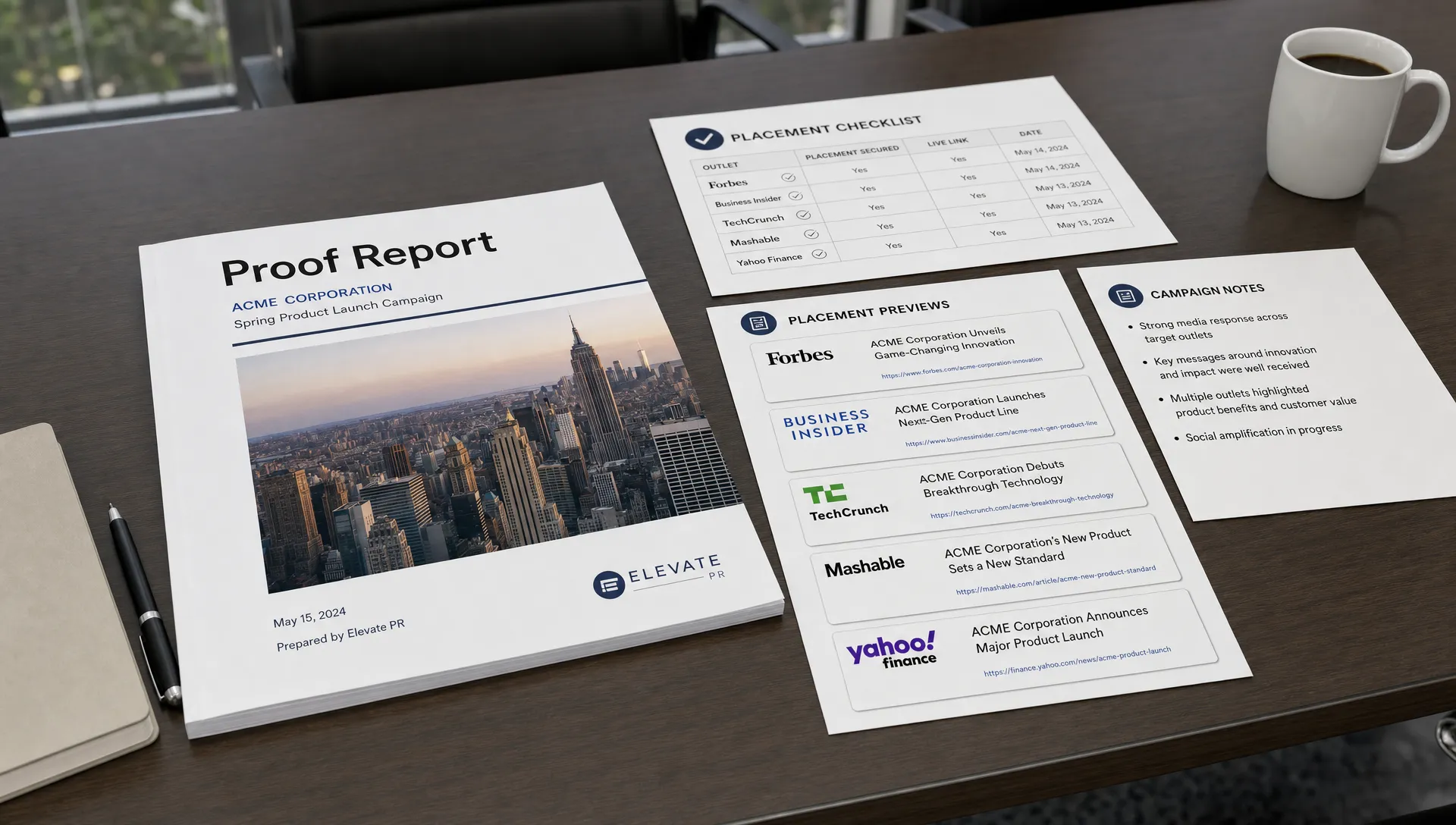
What a client-ready proof report should include
A proof report should be easy for an account manager to present and easy for a client to verify. It does not need to be bloated with every possible metric. It needs to answer the questions that matter.
| Proof element | What it confirms | Why clients care |
|---|---|---|
| Live placement URL | The content is published and accessible | The client can verify the deliverable directly |
| Publication or outlet name | The brand appeared on a specific media property | Stakeholders can understand the credibility of the mention |
| Publish date | The placement went live within the campaign window | It supports timeline accountability |
| Target URL | The link points to the agreed client asset | It prevents confusion about landing pages |
| Anchor text or link context | The link appears naturally within relevant copy | It helps clients assess quality and risk |
| Link status | The link is live at the time of reporting | It reduces disputes about broken or missing links |
| Screenshot or archive evidence | The placement was captured visually | It protects against later page changes |
| Campaign notes | The placement is tied to a business objective | It helps non-SEO stakeholders understand the value |
The goal is not to impress clients with a giant report. The goal is to remove uncertainty. If a client can open the report and understand the value in under five minutes, the agency has done its job.
Proof reports should also separate facts from interpretation. A fact is “this placement is live on this date.” An interpretation is “this will improve rankings for a target keyword.” Agencies should be careful with the second type of claim. Good links can support SEO performance, brand visibility and discoverability, but rankings depend on many variables outside a single campaign.
Google’s own link spam guidance makes the risk clear: links intended to manipulate rankings can create problems. That does not mean all link building is bad. It means agencies need to focus on relevance, natural context, editorial quality and transparent reporting.
Proof reports are not just SEO assets
The strongest reports serve more than the SEO team. A CMO may use them to show brand momentum. A sales leader may use them as credibility proof during enterprise conversations. A founder may use them in investor updates. An agency owner may use them to defend scope, justify renewal and demonstrate that a campaign produced real public assets.
This is why link building now sits closer to digital PR than it did years ago. A link from a credible placement is not just a signal to search engines. It can also become social proof, sales collateral and a trust marker for people researching the brand.
That expectation is common beyond SEO. Mid-market teams evaluating AI automation, NetSuite ERP and system integration partners such as DataOngoing also want clear diagnostics before committing budget; link building clients now bring that same proof mindset to agency retainers.
For agencies, this shift is an opportunity. Instead of reporting backlinks as isolated technical wins, frame them as documented brand visibility. MediaBoost explores this broader lens in its article on link building that supports PR, SEO and brand trust.
What separates a proof report from a fulfillment dump
Many vendors send agencies a list of URLs and call it a report. That may satisfy a basic delivery requirement, but it is not client-ready.
A fulfillment dump is built for the vendor. A proof report is built for the agency-client relationship. The difference shows up in structure, language and verification.
A client-ready report should include a short executive summary before the placement table. This summary can state how many placements went live, which campaign or announcement they supported, what industries or outlet categories were included and whether any items require follow-up. That gives the account manager a narrative, not just a file.
The report should also avoid unexplained acronyms and vanity metrics. Domain authority, domain rating and traffic estimates can be useful internal screening signals, but clients often misinterpret them. If you include third-party metrics, explain that they are directional indicators rather than guarantees of performance.
Most importantly, the report should be clean enough to forward. If the agency has to rewrite the vendor’s proof before sending it to the client, the fulfillment partner has not really saved time.
Building a proof-first agency link building workflow
Client-ready reporting is easiest when proof collection is built into the workflow. If proof is treated as an afterthought, the final report becomes a scramble.
Start with the intake. Before placements are ordered, confirm the campaign objective, target pages, preferred messaging, restricted anchors, industry category and any compliance concerns. This matters for regulated, technical or high-trust industries where sloppy wording can create approval delays.
Next, make editorial review part of the process. A link is more defensible when the surrounding content makes sense. Press releases, media placements and contributor-style assets should have a clear news angle or business rationale. If the copy exists only to force a link, clients can sense it and so can quality reviewers.
During fulfillment, track status in a way that maps to the final report. Each placement should move through clear stages such as submitted, under review, published, verified and reported. This gives account teams a reliable delivery view without exposing clients to operational noise.
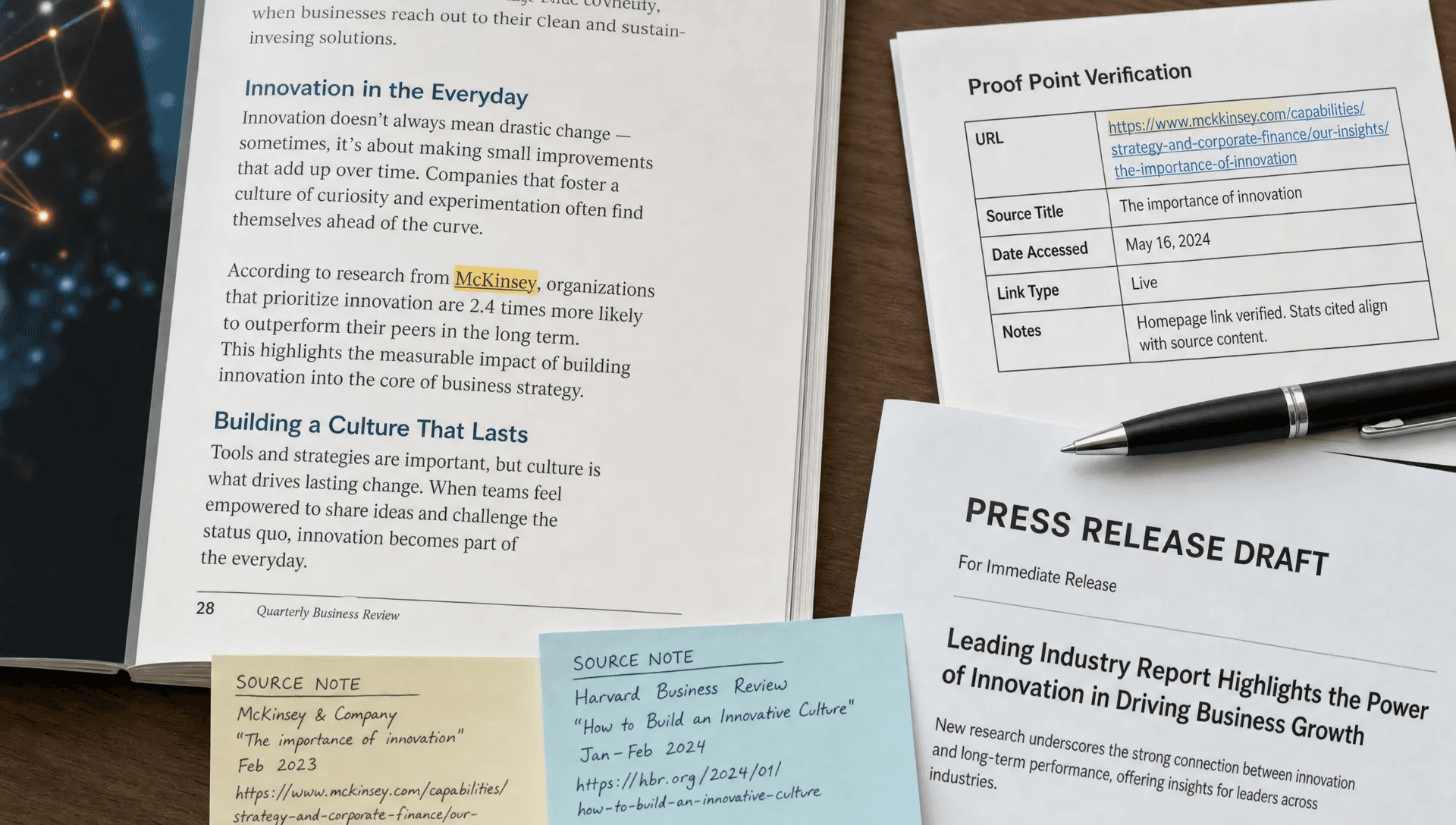
After publication, verify every placement before reporting. Open the URL, check that the page loads, confirm the brand mention, confirm the link target and capture evidence. For agencies managing multiple campaigns, this QA step is where trust is won or lost.
Finally, deliver the report in a format the client can use. Some clients prefer spreadsheets because they can filter placements by campaign or outlet. Others prefer a concise PDF-style summary. The best agency workflow can support both: structured data for analysts and a short narrative for executives.
How press release distribution fits into agency link building
Press release distribution can be useful when the story is legitimate and the reporting is transparent. It works especially well for announcements such as product launches, funding updates, executive hires, partnerships, event participation, research releases and market expansion.
It becomes risky when agencies sell press releases as a shortcut to rankings without regard for newsworthiness, link attributes or placement context. A syndicated release should not be positioned the same way as an earned editorial feature. Each has a different purpose.
| Placement type | Best use case | Reporting focus |
|---|---|---|
| Press release distribution | Announcements, launches, corporate updates and credibility building | Live links, outlet list, publication dates and proof screenshots |
| Digital PR features | Expert commentary, data stories and journalist-led coverage | Editorial context, authority of publication and brand narrative |
| Niche editorial placements | Topic relevance and targeted referral context | Page relevance, anchor context and audience fit |
| Brand mentions | Awareness, entity building and trust signals | Publication quality, mention context and discoverability |
For agencies, the key is to position each format honestly. Press release placements can support visibility and trust, but they should be reported as media distribution assets rather than guaranteed ranking levers. If you want a deeper look at this distinction, MediaBoost explains when press release link building is smart SEO or a risky tactic.
What agencies should avoid in client reports
Bad reporting can weaken good delivery. It creates confusion, raises suspicion and gives clients reasons to question the whole campaign.
Avoid these common mistakes:
- Reporting URLs before verifying that they are live and accessible
- Hiding link attributes or failing to explain that they may vary by outlet
- Using only domain metrics without showing actual placement context
- Mixing outreach activity with completed deliverables in the same table
- Claiming ranking guarantees from link placements
- Sending raw vendor exports without agency branding or explanation
The last point is especially important for white-label or resale work. Clients hire your agency for judgment, not just access. A report should feel like it came from a strategic partner who understands the campaign, not from a fulfillment queue.
Agencies should also avoid overloading reports with irrelevant data. If a metric does not help the client make a decision, explain value or verify delivery, it probably belongs in an internal operations sheet rather than the client-facing report.
How client-ready proof reports support renewals
Renewals rarely happen because a client remembers every task completed during the month. They happen because the agency can tell a convincing story about progress.
Proof reports give that story substance. They show that placements went live, that the brand appeared across credible sources and that the agency delivered tangible assets. Over time, they also create a timeline of brand visibility that can be used in quarterly business reviews.
For account managers, this changes the renewal conversation. Instead of saying “we built links this month,” they can say “your announcement was distributed across these outlets, these live links are verified and these placements can now support sales enablement, search visibility and brand credibility.”
That framing is more valuable because it connects work to business context. It also makes the agency look organized. In competitive SEO and PR retainers, organization is a differentiator.
Where MediaBoost helps agencies move faster
MediaBoost is built for brands and agencies that need link building and media placement delivery with proof, not guesswork. The service provides press release distribution and media placement across 500+ trusted publications, with done-for-you submissions, editorial review, live links and proof reports.
For agencies, that combination matters because it reduces the operational burden behind client campaigns. Instead of managing every submission manually, your team can focus on strategy, messaging, account management and renewal conversations.
MediaBoost packages are tailored by industry and can often be completed quickly, with a 48-hour turnaround available for many campaigns. Agencies can also use proof reports to show clients where placements went live and how the campaign expanded public brand visibility.
The right fulfillment partner should make your agency look more credible, not less. That means predictable delivery, transparent reporting and assets your client can verify without a long explanation.
A simple proof report template agencies can adapt
A client-facing report does not need to be complicated. The following structure works for most campaigns:
| Section | What to include |
|---|---|
| Executive summary | Campaign goal, number of live placements, completion status and key notes |
| Placement table | Outlet, live URL, publish date, target URL, link status and context |
| Proof evidence | Screenshots, archive notes or verification date |
| Strategic notes | How the placements support PR, SEO, credibility or sales enablement |
| Next steps | Recommended follow-up campaign, content angle or reporting milestone |
This structure keeps the report useful for both marketing leads and executives. It also gives agencies a repeatable format that can scale across clients without turning each delivery into a custom reporting project.
If the client is highly technical, include a few extra fields such as link attribute, destination page type and whether the placement supports a product page, thought leadership asset or company announcement. If the client is more brand-focused, emphasize outlet credibility, messaging consistency and ways the sales team can use the placements.
Frequently Asked Questions
What is agency link building? Agency link building is the process of securing backlinks, media mentions or digital PR placements on behalf of clients. It can include outreach, press release distribution, editorial placements and brand visibility campaigns.
What makes a proof report client-ready? A client-ready proof report includes verified live URLs, publication names, publish dates, target URLs, link context, screenshots or other evidence and a short explanation of how the placements support the campaign goal.
Should agencies guarantee SEO rankings from link building? No. Agencies can report completed placements and explain how quality links may support SEO, authority and visibility, but rankings depend on many factors including content quality, technical SEO, competition and search engine updates.
Are press release links useful for agencies? Press release links can be useful when they support a legitimate announcement and are reported transparently. They are strongest when positioned as PR, credibility and visibility assets rather than a guaranteed ranking shortcut.
How fast should clients receive proof reports? Agencies should deliver proof reports shortly after placements are verified. With a structured workflow, reporting can be prepared quickly because evidence is collected during fulfillment rather than after the campaign is complete.
Turn link building delivery into client-ready proof
Agency link building works best when clients can see exactly what was delivered. MediaBoost helps agencies and brands secure media placements across 500+ outlets with live links, editorial review and proof reports designed to make delivery easy to verify.
If your agency needs faster fulfillment, clearer reporting and placement evidence your clients can share internally, explore MediaBoost’s press release distribution and media placement services at MediaBoost.