What to Expect From Link Building Packages in 2026
Link building packages in 2026 are less about raw link volume and more about credible visibility. Learn what deliverables, reports, guarantees and quality signals to expect before choosing a provider.
Get featured on 500+ media outlets
Guaranteed placement, no PR experience needed.
Link building packages in 2026 should not be judged by link count alone. The better question is whether the package can help your brand earn credible visibility, receive links in a relevant context and prove every placement after it goes live.
That shift matters because buyers are more skeptical, search engines are better at detecting low quality patterns and AI search experiences increasingly summarize brands based on trusted third party signals. A package that looked impressive five years ago because it promised “100 links fast” may now create more risk than value.
If you are comparing providers, expect the conversation to cover strategy, editorial standards, link attributes, reporting, timelines and how each placement supports broader brand trust. The strongest link building packages now sit closer to digital PR than old school backlink buying.
What changed about link building packages in 2026?
The market has matured. Brands still want backlinks because quality links can support discoverability, authority and referral visibility. But modern buyers also want proof that those links come from real publications, relevant pages and legitimate editorial or distribution processes.
Three changes define the 2026 landscape.
First, relevance carries more weight than volume. A single placement in a credible industry publication can be more useful than dozens of unrelated links from thin websites. Search systems evaluate context, topical connection and natural language around the mention, not just the link itself.
Second, link building overlaps with reputation building. When your company appears in recognized media outlets, trade publications or niche sources, the value is not limited to SEO. Those mentions can support sales conversations, investor materials, social proof and brand recall.
Third, AI visibility has become part of the conversation. Large language models and AI search products often rely on recognizable entities, consistent brand signals and reputable sources. A backlink package cannot guarantee inclusion in AI generated answers, but it can help create the kind of public web footprint that makes a brand easier to understand, verify and cite.
This is why 2026 packages should be evaluated less like a commodity and more like a visibility system.
What should a modern link building package include?
A credible package starts with a clear objective. Are you trying to strengthen category authority, launch a new product, support local visibility, build proof for investors or improve organic rankings over time? The deliverables should match that goal.
For example, a SaaS company launching a funding announcement may need digital PR and press release distribution. A local service business may need citations, local editorial mentions and authority around service pages. An agency managing multiple clients may need repeatable fulfillment and proof reports.
A strong package usually includes the following components.
| Package element | What you should expect | Why it matters |
|---|---|---|
| Strategy review | Basic assessment of goals, target pages, target audience and existing authority | Prevents random link acquisition |
| Placement criteria | Clear standards for publication quality, topical relevance and link context | Helps separate useful links from filler |
| Content or release support | Editorial review, press release preparation or content coordination | Improves acceptance and brand consistency |
| Anchor text guidance | Natural anchors with branded, URL and contextual phrasing | Reduces manipulation risk |
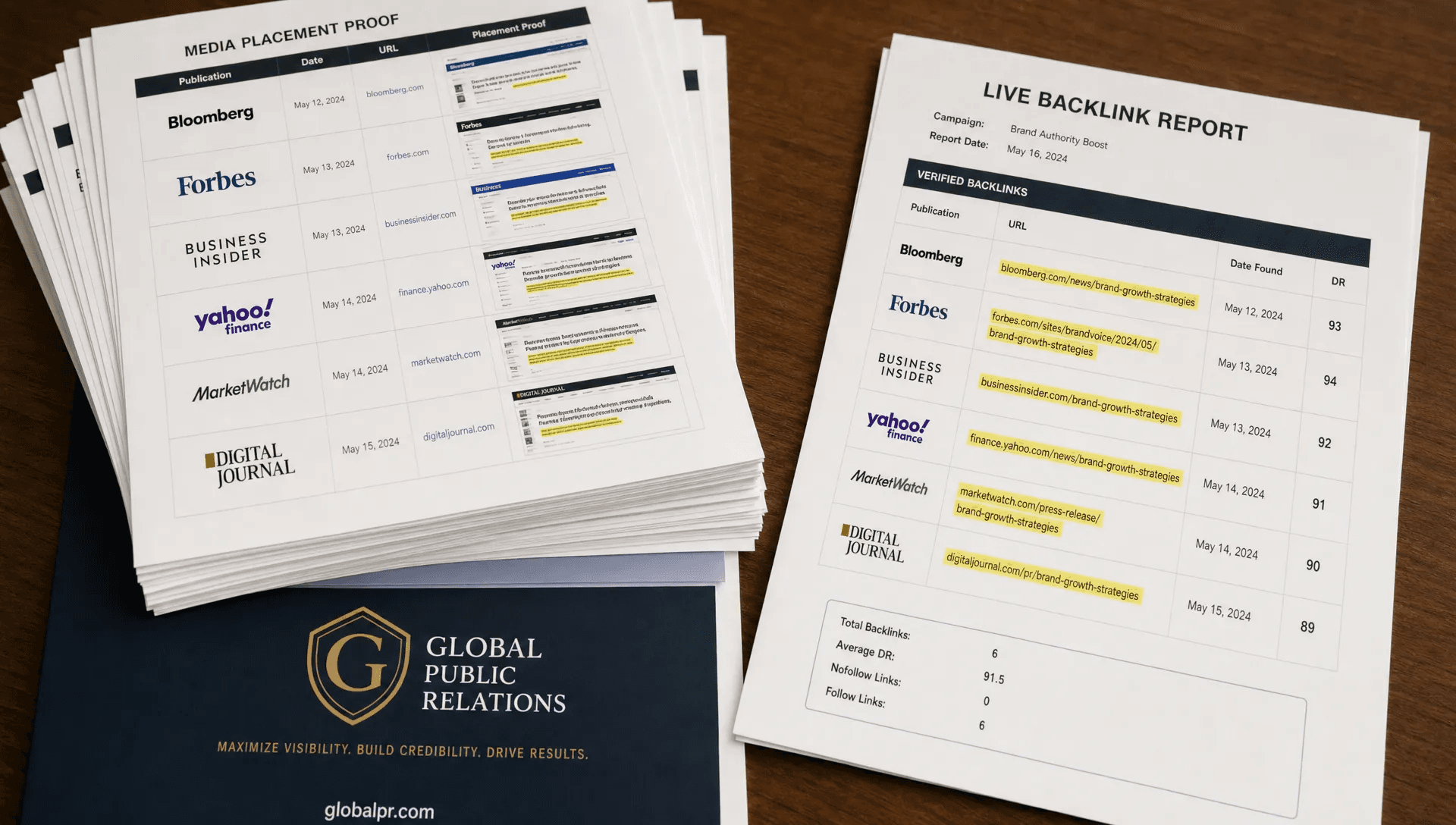
| Live link verification | URLs, publication names, dates and link details after placement | Gives you proof, not promises |
| Reporting | A shareable summary of placements, metrics and supporting evidence | Makes results easier to evaluate internally |
This is also where you should ask whether the package is built around manual outreach, digital PR, press release distribution or a blend of methods. Each approach has a different timeline, risk profile and best use case.
If you are still at the vendor selection stage, MediaBoost’s guide on how to choose the best link building services in 2026 provides a useful companion checklist for evaluating providers before you commit.
The main types of packages you will see
Not all link building packages are designed for the same outcome. In 2026, most offers fall into a few broad categories.
| Package type | Best for | Typical expectation | Watch out for |
|---|---|---|---|
| Digital PR | Brand announcements, expert commentary, data campaigns and authority building | Earned or distributed media coverage with strong brand value | Vague promises without publication examples |
| Press release distribution | Product launches, funding news, partnerships and company updates | Fast syndication across media outlets with live placement proof | Using non-newsworthy releases only for anchor manipulation |
| Editorial outreach | Thought leadership, niche authority and topical relevance | Contextual links from blogs, industry sites or publications | Low quality outreach farms and irrelevant placements |
| Guest contribution packages | Expert articles and founder perspectives | Content led links where the brand has something useful to say | Overoptimized anchors or duplicated content |
| Local SEO and AEO packages | Local demand generation, service business visibility and answer engine presence | Local relevance, service area authority and structured brand signals | Confusing local visibility goals with national PR goals |
For example, a contractor in Southern California may not need the same package as a fintech startup seeking national coverage. In that case, comparing national link building with an AEO and SEO agency in Orange County can help clarify whether local lead generation, answer engine visibility or broader authority is the priority.
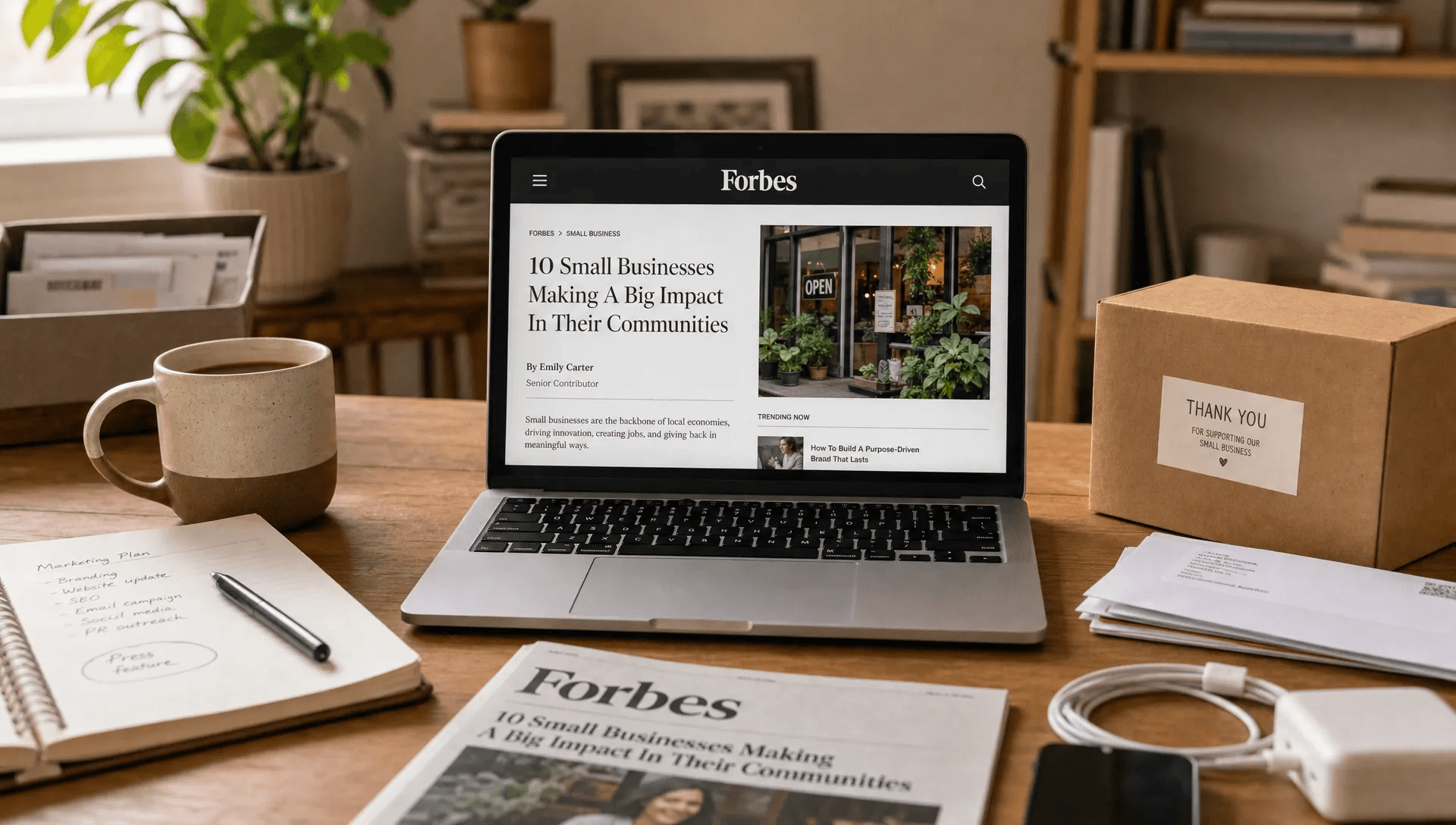
For companies using news as part of their authority strategy, press release distribution can be especially useful when the announcement is legitimate. MediaBoost, for instance, focuses on helping brands secure placements across 500+ trusted publications with done-for-you submissions, editorial review, live links and proof reports. That model is most valuable when the release supports a real business milestone, not when it is treated as a shortcut.
What quality signals should you expect?
The quality conversation should happen before any package starts. If a provider cannot explain how it judges placements, you may be buying activity instead of value.
Strong link building packages should define quality using several signals at once. Domain metrics can help, but they should not be the only filter. A site can have attractive third party metrics and still be irrelevant, overloaded with outbound links or built mainly to sell placements.
In 2026, better quality signals include topical fit, real readership, brand safety, editorial context and whether the placement makes sense to a human reader. The surrounding paragraph should explain why your brand is mentioned. The anchor should feel natural. The publication should not look like it exists only to host paid links.
You should also ask about link attributes. Some media and press release placements may use nofollow or sponsored attributes depending on the publisher’s policies. That does not automatically make them worthless, especially when the goal includes PR visibility, referral discovery and brand proof. But the provider should be transparent about what is being delivered.
Google Search Central’s spam policies continue to warn against manipulative link schemes. The practical takeaway is simple: packages should create legitimate visibility and useful context, not artificial patterns designed only to influence rankings.
What timelines are realistic?
Timeline expectations depend on the package type.
Press release distribution can move quickly because the content is prepared, reviewed and submitted through established channels. MediaBoost’s packages can often be completed within 48 hours, depending on the scope and package. That speed can be useful for time sensitive announcements, launches and credibility building.
Manual editorial outreach usually takes longer. Prospecting, pitching, follow-ups, content approvals and publication schedules can stretch over several weeks. That does not make it worse. It simply means the process is different.
The biggest red flag is a provider promising high authority editorial links almost instantly without explaining how they are acquired. Fast turnaround is realistic for distribution based models. It is less realistic for genuine earned editorial coverage unless relationships, inventory or syndication systems are already in place.
A good provider should tell you what happens at each stage: intake, content review, approval, submission, publication monitoring and final reporting. If you are an agency delivering work to clients, that final reporting step is especially important. MediaBoost’s article on agency link building with client-ready proof reports explains how verification can reduce back and forth after links go live.
What should reporting look like?
In 2026, a spreadsheet with a few URLs is not enough. You should receive a report that helps you verify the work and explain the value to stakeholders.
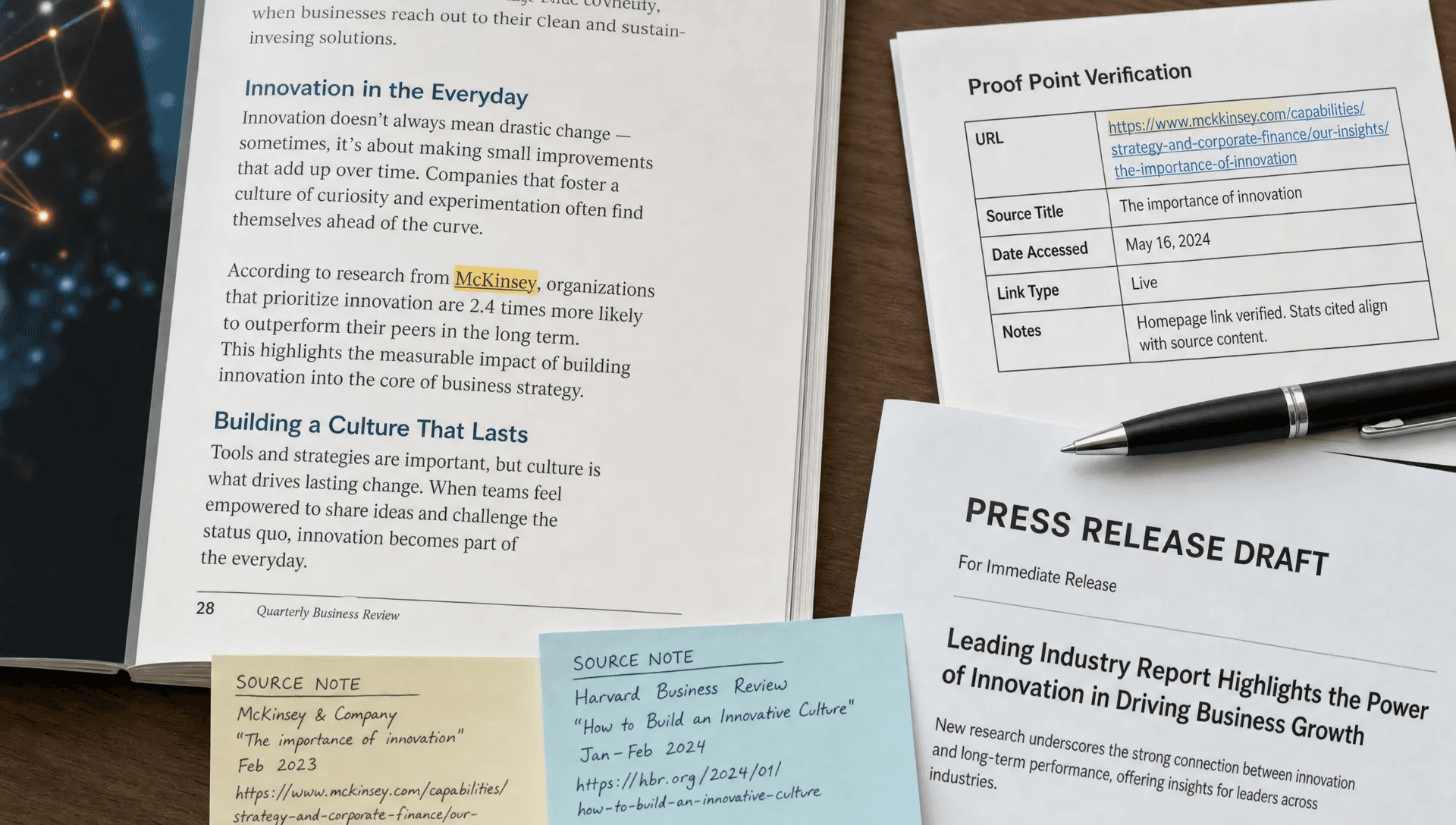
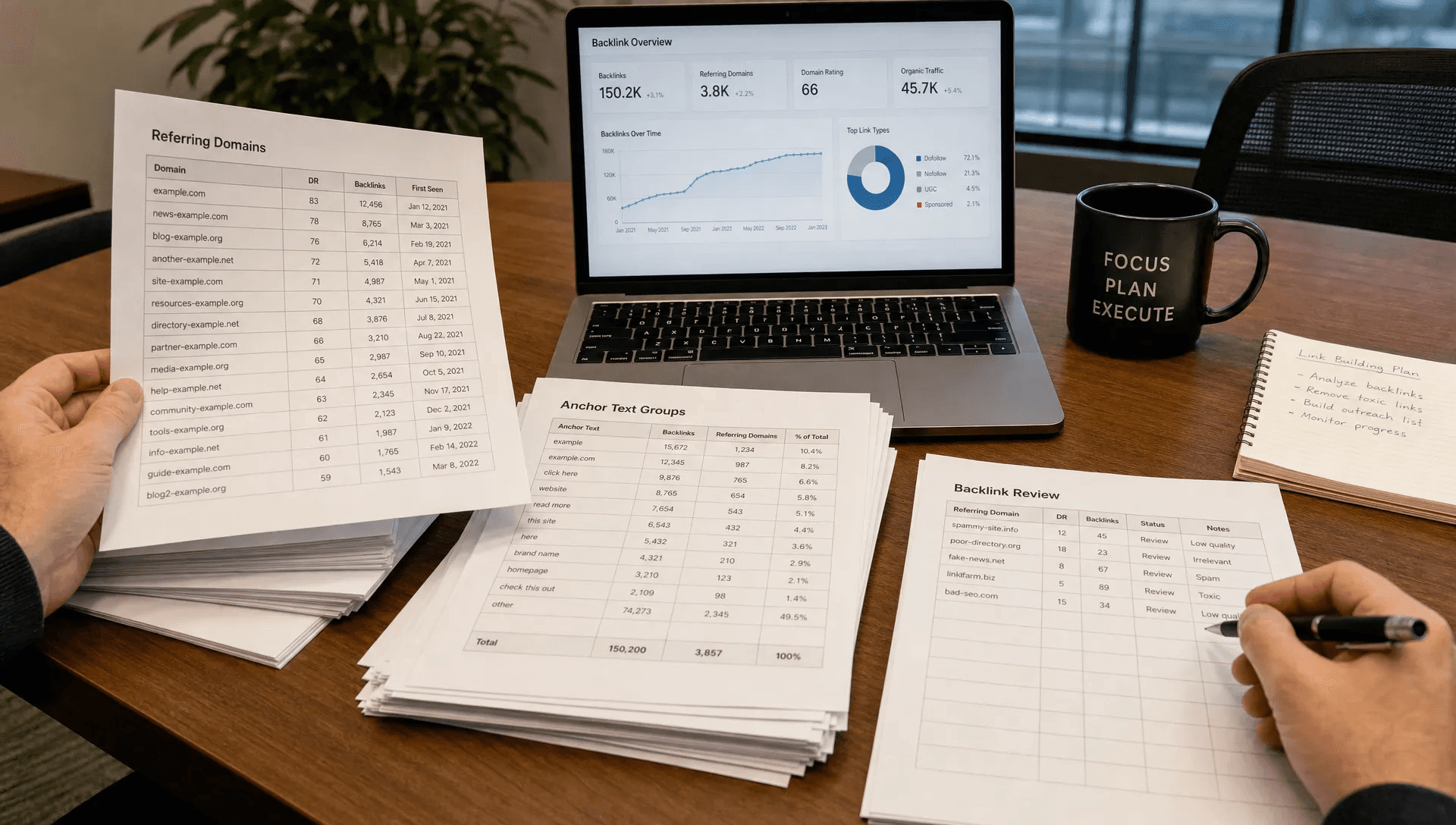
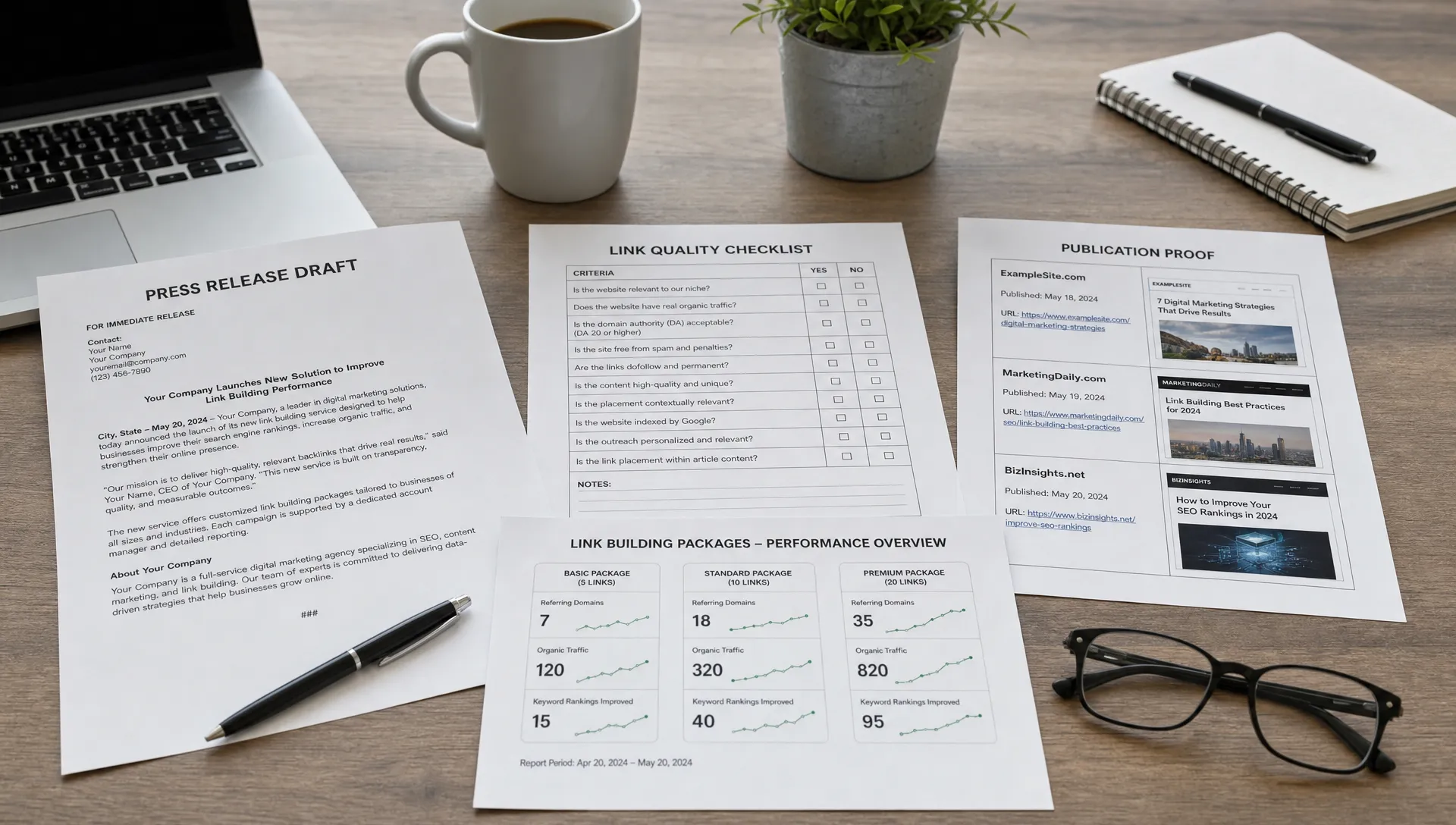
A useful report should include publication names, live URLs, placement dates, link destinations, anchor text, link attributes where available and screenshots or proof points. For PR led packages, it should also clarify the announcement or content angle used to secure the placements.
The best reports are not padded with vanity metrics. They separate confirmed placements from pending submissions. They make it clear which links are live, which publications picked up the story and what the brand can use for social proof.
For SEO teams, reporting should connect back to the baseline. That might include referral domain growth, branded search changes, target page indexing, ranking movement over time or assisted conversions. Not every metric will move immediately. Link building is usually a compounding channel, especially when paired with strong on-site content and technical SEO.
If you want to pressure test a vendor’s evidence before signing, review the questions in what link building companies should prove before you hire. It can help you distinguish transparent providers from vague ones.
What guarantees are reasonable?
Guarantees in link building require careful interpretation. A provider can reasonably guarantee deliverables that it controls, such as submissions, publication proof, live placement reporting or turnaround windows. It should not guarantee specific rankings, exact traffic numbers or permanent search visibility.
Reasonable guarantees may include confirmed publication delivery, live links, proof reports and replacement policies if a placement fails within a defined period. Unreasonable guarantees usually sound like “page one rankings in 30 days” or “authority links with no content required.”
For press release based packages, guarantees are often tied to distribution and placement confirmation. MediaBoost’s offer includes guaranteed submissions, live links and SEO proof reports across packages tailored by industry. That gives buyers a clearer record of what was delivered.
The key is to read the guarantee as an operational promise, not as an SEO outcome promise.
Red flags to avoid when buying a package
Some link building offers still rely on outdated tactics. Be cautious if you see any of the following:
- The provider sells only by quantity, with little discussion of relevance or publication quality
- Every anchor text is exact match and commercially aggressive
- The sample placements look like generic blogs with no real audience
- Reporting is delayed, incomplete or impossible to verify
- The vendor refuses to explain whether links are editorial, distributed, sponsored or user generated
- The package promises guaranteed rankings instead of guaranteed deliverables
A low price may be tempting, but cleanup costs can be higher than doing it correctly from the start. Poor link patterns can dilute your brand, waste budget and complicate future SEO work.
How to choose the right package for your goal
Start with the outcome you actually need. If your sales team needs logos and credible media proof, a PR distribution package may be a better fit than slow outreach. If your priority is niche topical authority, editorial outreach or expert content may be more appropriate. If you serve a specific city or region, local SEO and AEO signals may matter more than broad national placements.
Also consider your internal resources. Some packages require founder quotes, data, subject matter expertise or content approvals. Others are more done-for-you. MediaBoost’s model is built for brands that want submissions handled for them, with editorial review and proof reporting included, which can be useful when speed and simplicity matter.
Finally, check whether the package fits your risk tolerance. A conservative brand should prioritize branded anchors, reputable placements and transparent reporting. A growth stage brand may combine PR distribution with ongoing editorial outreach to build momentum.
Frequently Asked Questions
Are link building packages still worth it in 2026? Yes, if the package focuses on relevant placements, credible publications and transparent proof. Packages built only around cheap link volume are less useful and can create risk.
How many links should a package include? There is no universal number. A smaller package with high relevance and strong media value can outperform a larger package of weak links. Judge the package by quality, context and reporting.
Are press release links good for SEO? They can support SEO when the announcement is legitimate, the distribution is reputable and the links are part of a broader brand visibility strategy. They should not be used only to force exact match anchors at scale.
Should link building packages guarantee rankings? No. Providers can guarantee deliverables such as submissions, live links or proof reports, but rankings depend on many factors outside the provider’s control.
What should I ask before buying a package? Ask where placements may appear, how links are reviewed, what reporting includes, how anchor text is handled, what timeline is realistic and what happens if a placement does not go live.
Build links that also build trust
The best link building packages in 2026 are not just backlink bundles. They are structured visibility systems that combine credible placements, natural context, transparent reporting and brand value.
If your company needs faster media visibility, proof of placements and links from trusted publications, MediaBoost can help you distribute press releases across 500+ outlets with done-for-you submissions, editorial review, live links and proof reports. Use link building to strengthen the public evidence around your brand, not just to add another row to a spreadsheet.