White Hat Link Building That Earns Trust and Lasting Visibility
Earned links work best when they build trust, not just rankings. This guide explains how ethical backlinks, digital PR and credible media placements support lasting visibility in search and AI results.
Get featured on 500+ media outlets
Guaranteed placement, no PR experience needed.
White hat link building is the work of earning links because your brand, content or announcement is genuinely worth referencing. In 2026, that distinction matters more than ever. Search engines are better at detecting patterns that look manufactured, buyers are more skeptical of thin media mentions and AI-powered search systems tend to surface brands that appear consistently across credible sources. The goal is not to collect as many links as possible. The goal is to build a visible, verifiable reputation that compounds over time.
For brands investing in SEO, PR or media placement, trust is now the practical filter. A backlink from a relevant publication with real editorial context can support rankings, referral discovery, sales conversations and brand credibility. A pile of irrelevant links from weak sites can do the opposite.
What white hat link building means in 2026
At its core, white hat link building means acquiring backlinks through legitimate, transparent and value-led methods. The linking page should make sense for the reader. The anchor text should feel natural. The placement should exist because the linked resource adds useful context, not because someone forced an exact-match keyword into a random paragraph.
That sounds simple, but many link campaigns fail because they start with the wrong question. Instead of asking, “How many links can we get this month?” a healthier question is, “What proof, story or asset would a credible publisher want to cite?”
A useful link can come from a news mention, expert quote, original data, partner resource, customer story, product comparison, local coverage or well-written press release. The format matters less than the reason the link exists. If the reason is editorial value, white hat link building becomes a long-term visibility system rather than a temporary ranking tactic.
Why trust is the real SEO asset
Google has spent years tightening its stance on manipulative link schemes. The details change, but the principle is stable: links meant primarily to game ranking signals are risky when they lack editorial judgment, relevance or proper disclosure. For businesses, the bigger issue is not only algorithmic risk. Low-quality links can damage perception.
Imagine a potential customer, investor or journalist checking where your brand appears. A mention in a respected business publication, niche trade outlet or relevant local media source builds confidence. A backlink from a directory full of unrelated casino, crypto and supplement pages does not.
That is why white hat link building belongs at the intersection of SEO and reputation management. The best links are useful beyond the ranking signal. They create branded search demand, strengthen sales proof, give your team credible logos to reference and help AI systems understand who you are connected to online.
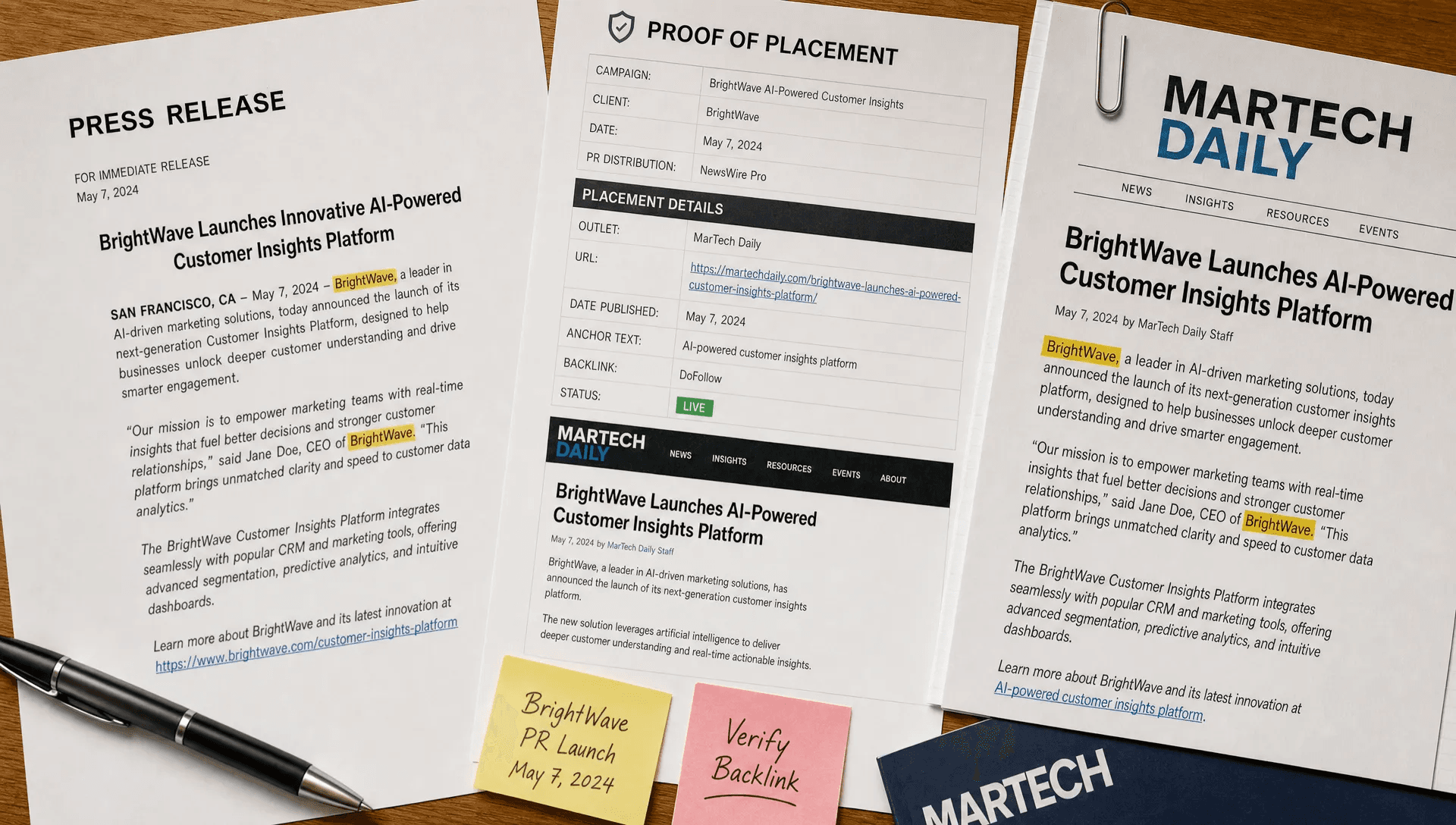
MediaBoost approaches this problem through press release distribution and media placement, helping brands appear across trusted publications with live links and proof reports. That type of visibility works best when it supports a real announcement, expert point of view or business milestone rather than a generic link drop.
The signals of a link worth earning
Not every link from a recognizable site is automatically valuable and not every small publication is weak. A strong white hat link building program evaluates the full context around each placement.
The first signal is topical relevance. A travel brand, for example, benefits more from tourism, lifestyle, conservation or destination coverage than from a random business directory. If a Uganda travel operator publishes detailed safari experiences, a contextual reference to Uganda gorilla trekking and wildlife tours makes sense inside content about African travel planning because it helps the reader explore a real service connected to the topic.
The second signal is editorial environment. Is the article written for humans? Does the page have a clear topic? Are outbound links used sparingly and naturally? A page that links to dozens of unrelated commercial sites is usually a warning sign.
The third signal is anchor text. Natural anchors are varied and descriptive. They may mention the brand, the topic, a report title or a useful phrase. Repeating the same commercial keyword across many placements can look artificial.
| Link quality signal | What to look for | Warning sign |
|---|---|---|
| Relevance | The publication and article topic fit your industry or audience | The page covers unrelated topics only to include links |
| Editorial context | The link supports a useful sentence or source reference | The link feels inserted after the article was written |
| Anchor text | Brand names, natural phrases and clear resource titles | Repeated exact-match commercial anchors |
| Publication quality | Real readership, indexed pages and visible editorial standards | Thin sites with copied content or excessive outbound links |
| Business value | The placement can support SEO, PR, referral traffic or credibility | The only promise is “high DA” with no context |
How to earn links without manipulating search
The most durable campaigns start with assets people can legitimately reference. These assets do not need to be expensive, but they do need to be useful. Original data is powerful because journalists, bloggers and analysts need evidence. A customer trend report, survey, benchmark or internal dataset can give publishers something concrete to cite.
Expert commentary is another reliable path. If your leadership team has real experience in a market, package that knowledge into quotes, explainers and timely opinions. Journalists often need subject-matter input quickly, and a concise expert response can earn mentions that generic guest posts cannot.
White hat link building also works well when you connect outreach to newsworthy moments. Product launches, funding updates, industry partnerships, awards, geographic expansion and research findings all give editors a reason to care. Without a news angle or a useful resource, outreach becomes another cold pitch asking for a favor.
This is where digital PR and SEO should work together. PR brings the story, audience fit and credibility. SEO brings technical checks, anchor diversity, landing page strategy and reporting. If you separate the two, you may win coverage that does not support search or chase links that do not support the brand.

Where press release distribution fits
A press release is not a magic ranking shortcut. It is a structured way to distribute a verified announcement to media outlets, financial platforms, industry publications and news aggregators. When the announcement is real and the distribution network is credible, it can support discovery, branded search and trust signals.
For companies without an in-house PR team, done-for-you distribution can also reduce friction. MediaBoost provides industry-specific packages, editorial review, guaranteed submissions, live backlinks and proof reports across 500+ outlets. The value is not just the link. It is the ability to show where your brand appeared, which pages are live and how those placements contribute to broader visibility.
If you are building a campaign that combines media coverage with SEO, this guide on link building that supports PR, SEO and brand trust explains how those disciplines reinforce one another.
The healthiest use of white hat link building through PR is to promote something worth announcing. A vague release about “being the best” rarely earns attention. A release tied to a data point, new product, market expansion or timely expert insight gives publishers a clearer reason to include your brand.
What to avoid, even when the offer sounds tempting
Risky link offers usually promise speed, volume and certainty without discussing relevance. A vendor may advertise hundreds of backlinks, guaranteed authority metrics or exact-match anchors across sites they control. Those offers can look attractive when competitors appear to be moving fast, but they often create cleanup work later.
Avoid tactics such as private blog networks, mass article spinning, irrelevant guest posting, hidden paid links and comment spam. Also be cautious with placements that exist only because money changed hands and no editorial value was added. Paid promotion can be legitimate when disclosed and handled properly, but undisclosed paid links designed to influence rankings cross into dangerous territory.
A better standard is simple: if a link would embarrass your team in front of a customer, journalist or search quality reviewer, it probably does not belong in your backlink profile.
White hat link building is slower than buying low-quality links in bulk, but it creates fewer liabilities. It also gives you assets your sales, investor relations and marketing teams can use outside SEO reports.
Measuring lasting visibility
Ranking movement is important, but it is not the only measure of success. The most reliable white hat link building metrics combine search performance, publication quality and brand impact.
Track whether your target pages gain impressions, clicks and keyword coverage over time. Monitor referral traffic where available. Review whether placements are indexed, live and contextually relevant. Look at branded search growth after announcements or media campaigns. If your sales team starts referencing media logos or prospects mention seeing your brand in trusted publications, that is also part of the return.
For AI-era visibility, entity consistency matters. AI search systems and large language models rely on patterns across the web to understand brands, topics and credibility. Strong backlinks from trusted sources can reinforce those patterns, especially when they include clear brand names, topical context and accurate descriptions. MediaBoost covers this idea in more depth in its article on how quality backlinks shape brand visibility in the AI era.
Do not judge a campaign after a few days. Editorial links, press placements and search signals often need time to be discovered, indexed and interpreted. A monthly review cadence usually gives a clearer picture than daily rank checking.
A practical framework for sustainable campaigns
Start with the page or brand asset you want to strengthen. Is it a homepage, service page, research report, product launch or thought leadership article? The destination should be useful enough to deserve attention.
Next, define the audience and publication categories that matter. A B2B software company may care about SaaS, finance, HR or cybersecurity publications. A local healthcare provider may need regional news, wellness outlets and professional associations. Relevance should guide the list before authority metrics do.
Then build a story angle around proof. This could be a statistic, customer result, founder insight, market trend or announcement. The stronger the proof, the easier it is for a publisher to justify the mention.
Finally, document everything. Keep records of live URLs, anchor text, target pages, publication categories and campaign notes. MediaBoost’s proof reports serve this need for brands that want transparency around where placements went live and how those links can be reviewed.
If you want a broader risk-aware process, this safe framework for SEO backlink building pairs well with a trust-first PR approach.
Frequently Asked Questions
Is white hat link building slower than other methods? It can be slower than buying bulk links, but it is designed to produce safer and more durable visibility. The best campaigns focus on relevance, editorial quality and proof rather than fast volume.
Can press releases help with link building? Yes, when the announcement is legitimate and distributed through credible outlets. Press releases work best for launches, research, company milestones, partnerships and timely expert commentary.
What anchor text should I use? Use natural anchors such as your brand name, publication title, report name or a descriptive phrase that fits the sentence. Avoid repeating the same exact commercial keyword across many placements.
How do I know if a backlink is risky? A backlink is risky when it appears on an irrelevant page, uses forced anchor text, comes from a thin site or exists only as part of a paid scheme with no editorial value.
Do backlinks still matter for AI search visibility? Yes, but context matters. Credible mentions, consistent brand descriptions and links from trusted sources can help search engines and AI systems understand your authority in a topic area.
Build visibility that holds up over time
Short-term link spikes are easy to sell. Trust is harder to build, but it lasts longer. If your brand wants media placements that support SEO, credibility and AI visibility, focus on stories, sources and publications that make sense to real readers.
MediaBoost helps brands turn announcements into credible coverage across 500+ outlets, with done-for-you submissions, editorial review, live backlinks and proof reports. To plan a campaign built around trust rather than shortcuts, visit MediaBoost and explore a placement strategy that fits your industry.