What a White Hat Link Building Service Should Include
Not all backlinks are worth the risk. This guide breaks down the safeguards, deliverables and proof a provider should offer before you trust them with your brand.

Get featured on 500+ media outlets
Guaranteed placement, no PR experience needed.
Anyone can promise backlinks. The harder question is whether those links would still make sense if a search quality reviewer, a journalist and your best customer all saw them. A white hat link building service should help you earn credible mentions in relevant contexts, document exactly what went live and avoid tactics that put future organic growth at risk.
For buyers, the challenge is that many providers use similar language. Ethical, authority, premium and editorial can mean very different things depending on how the links are sourced. The right way to evaluate a provider is to look past the sales page and ask what is actually included in the process, the deliverables and the reporting.
What a white hat link building service should include
A proper link building engagement is not just a list of domains. It should include strategy, content judgment, publisher vetting, anchor text controls, link attribute transparency and proof that every placement went live as described.
The service should also be honest about what link building can and cannot guarantee. It can improve brand visibility, support authority signals and create pathways for referral traffic. It cannot guarantee rankings on a fixed timeline, protect weak content from underperforming or make irrelevant links safe just because the domain has a high metric.
| Component | What to expect | Why it matters |
|---|---|---|
| Relevance review | Clear explanation of why each publication or page fits your brand | Reduces the risk of random, low-value placements |
| Editorial standards | Human review, useful content and no spun or mass-produced posts | Protects brand trust and placement quality |
| Anchor text plan | Natural brand, URL, partial-match and topical anchors | Avoids manipulative patterns |
| Link attribute clarity | Disclosure of dofollow, nofollow, sponsored or UGC where applicable | Keeps expectations aligned with search guidelines |
| Proof reporting | Live URLs, publication details, screenshots and placement notes | Makes the campaign auditable |
A white hat link building service should be able to explain each of these pieces before the first campaign goes live. If the provider only wants to talk about quantity, domain rating or speed, you are not getting the full picture.
Relevance should come before authority metrics
The first sign of a responsible provider is a relevance-first mindset. A link from a smaller industry publication can be more defensible than a link from a large general site if the article, audience and surrounding context are closely aligned with your business.
A white hat link building service should start by mapping your brand to the topics it can credibly own. For a fintech company, that might include payments, compliance, business banking or consumer finance. For a B2B software company, it might include operations, automation, data security or industry-specific workflows.
This is where link building overlaps with positioning. The goal is not to appear everywhere. The goal is to appear where your audience would expect to see you. If you want a deeper view of how links support reputation beyond rankings, MediaBoost has covered the relationship between PR, SEO and brand trust in more detail.
Editorial standards need to be visible
White hat link building depends on editorial value. That does not mean every placement has to be a major investigative feature, but it does mean the content should serve a real reader. It should be coherent, accurate, relevant to the publication and written with enough substance to justify the link.
A provider should show how content is reviewed before submission. Ask who writes it, who edits it and how factual claims are checked. If your campaign involves expert commentary, original data, press releases or thought leadership, the review process matters even more.
Some brands also improve link outcomes by strengthening the internal teams that create source material. For example, marketing and communications teams can build stronger subject matter expertise through structured professional learning such as Academia Europea UpSkilling, especially when campaigns depend on credible business, technology or creative insights.
A white hat link building service should not hide behind vague editorial language. It should be able to tell you how it avoids duplicate content, thin articles, irrelevant guest posts and AI-generated copy that has not been meaningfully reviewed.
Content should give publishers a reason to link
The safest links usually come from assets that make the publisher’s page better. That might be a useful data point, a clear expert quote, a product announcement, a research summary, an industry guide or a timely press release with real news value.
Thin content creates pressure to force links into places where they do not belong. Strong content does the opposite. It gives editors, writers and readers a reason to accept the mention naturally.
A white hat link building service should help shape linkable angles, not simply ask where you want the backlink pointed. For some brands, that means building campaigns around helpful resources. For others, it means distributing a newsworthy press release to credible publications, then documenting the live placements and links that result.
The practical test is simple: if the link were removed, would the article still make sense, and if the article were read by a prospect, would it improve or damage your brand? If the answer is uncomfortable, the tactic is not as safe as it sounds.
Anchor text should look natural in context
Anchor text is one of the easiest ways for link building to become risky. Exact-match commercial anchors can look attractive because they align with target keywords, but repeated use across many domains creates an obvious footprint.
A responsible provider should build a natural mix. Brand anchors, naked URLs, page titles, partial-match phrases and topical language usually create a safer profile than aggressive keyword repetition. The anchor should also fit the sentence. If it reads awkwardly to a human, it is probably too forced for a long-term SEO strategy.
This is especially important if your site already has a backlink history. Before adding more links, review your current anchor distribution and identify over-optimized patterns. MediaBoost’s safe SEO backlink building framework explains how to think about quality, context and risk before scaling.

Link attributes and disclosure should be clear
Not every link has the same role. Some links may pass ranking signals, some may be nofollowed, some may be marked sponsored and some may primarily support visibility, credibility or referral discovery. A provider that treats all links as identical is oversimplifying the work.
A white hat link building service should explain link attributes before you buy. If a placement is paid, sponsored or part of a distribution arrangement, the provider should not pretend it is the same as a fully organic editorial citation. The value may still be real, especially for brand visibility and proof of presence, but the expectations must be accurate.
This point matters for press release distribution too. A live link in a trusted publication can support credibility and discoverability, but the publisher’s policies determine the final placement format and link attributes. Ethical providers document what actually went live instead of making every link sound like a guaranteed ranking lever.
Reporting should prove the work, not just summarize it
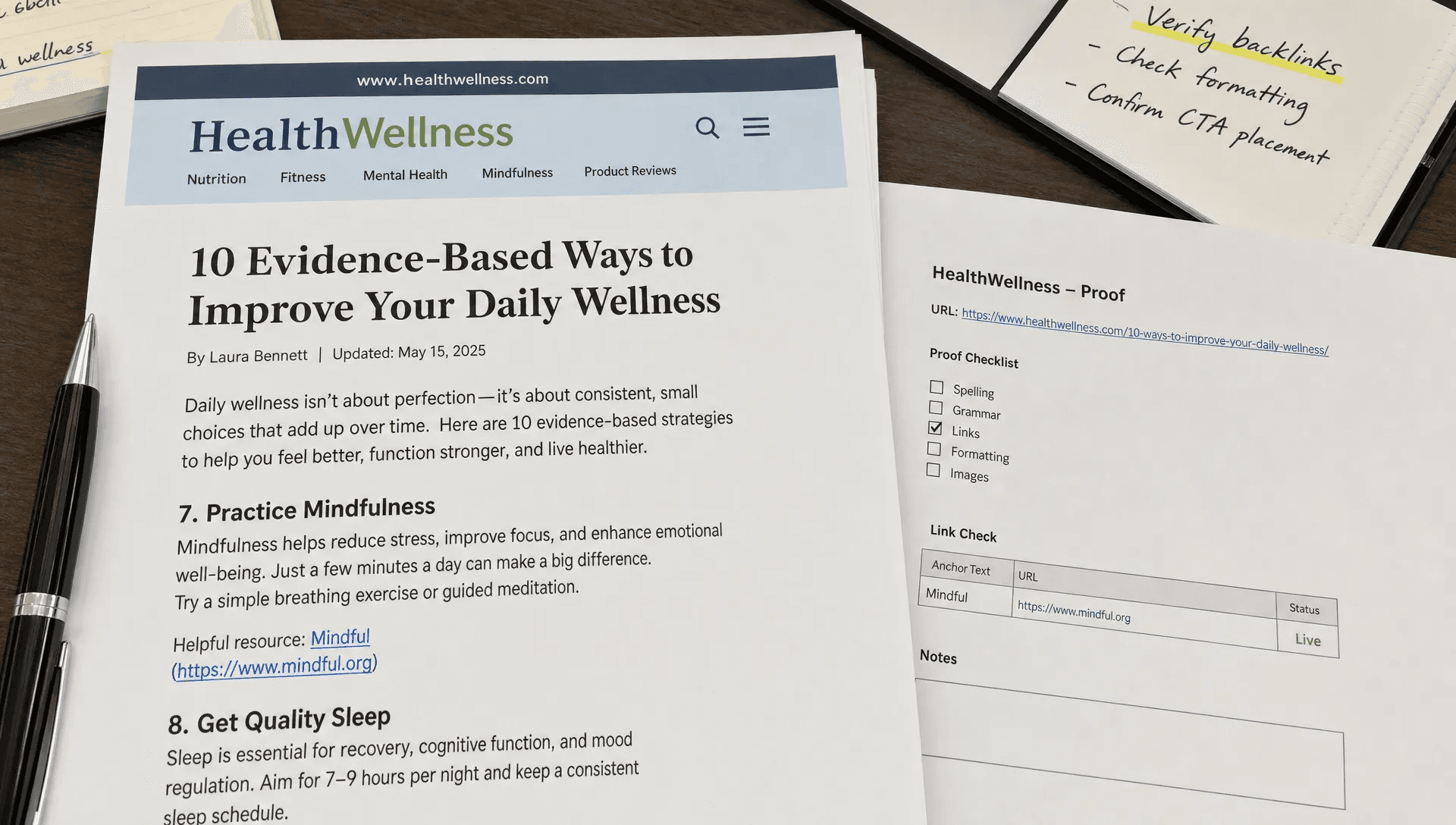
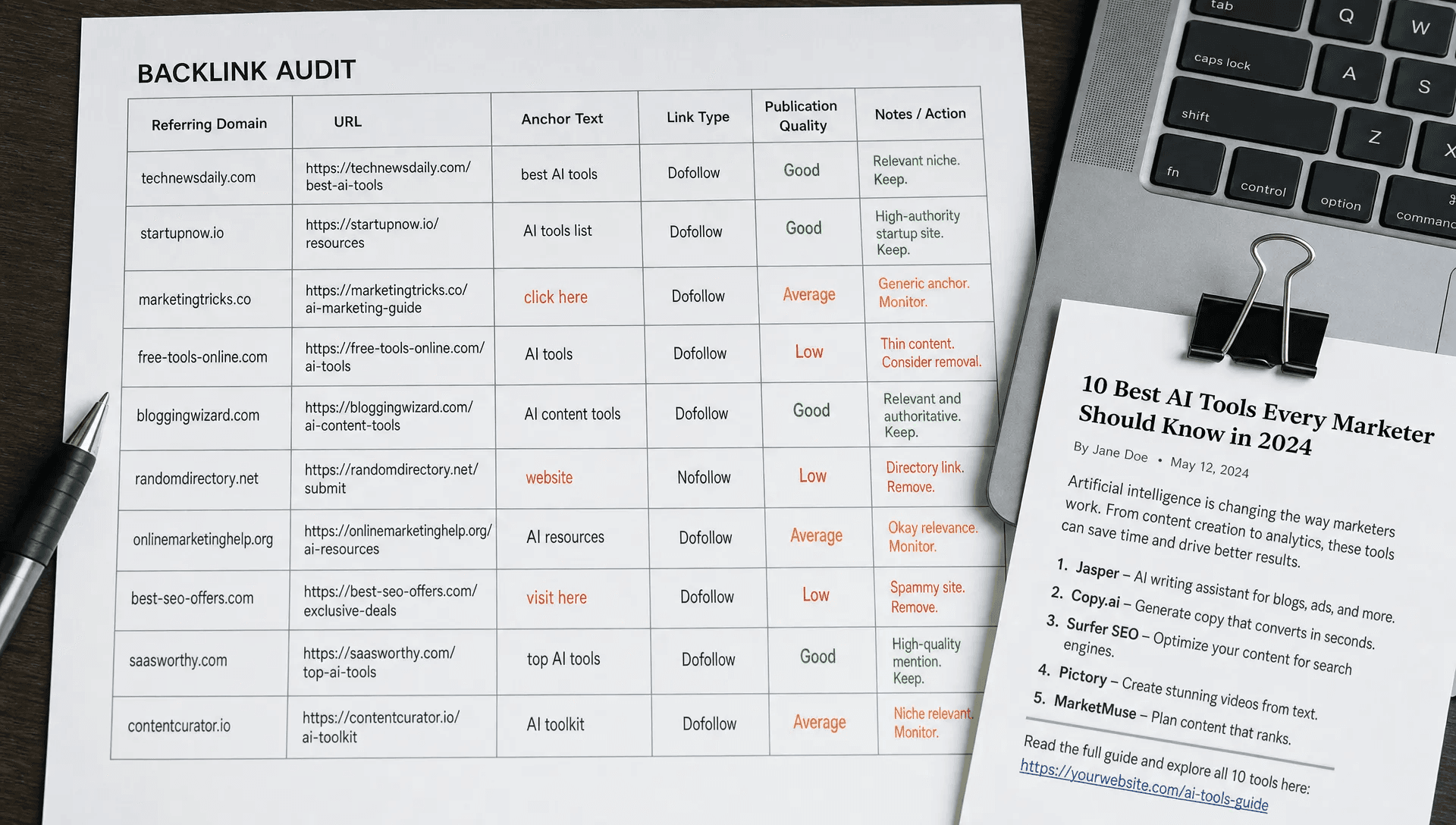
Good reporting is one of the clearest differences between a serious provider and a link seller. A spreadsheet with domain names is not enough. You need live URLs, publication names, landing pages, anchor text, link attributes where visible, dates, screenshots and notes about the surrounding content.
A white hat link building service should make it easy for your team, client or leadership group to verify every placement. This is especially important for agencies, where account managers need to translate the work into client-ready evidence without spending hours rebuilding reports from scratch.
Proof reports also help you evaluate future strategy. You can see which topics earned stronger placements, which publications were most relevant and whether the link mix looks natural over time. If you manage campaigns for clients, MediaBoost’s guide to client-ready proof reports outlines what those reports should contain.
Reporting should not stop at delivery. A trustworthy provider should be willing to discuss what worked, what did not and what should change before the next campaign.
Red flags to watch before you sign
Some warning signs are easy to miss because they are packaged as convenience. Fast delivery, high volume and guaranteed metrics can sound efficient, but they may hide shortcuts that create long-term risk.
Be cautious if a provider offers any of the following:
- Guaranteed rankings instead of guaranteed deliverables
- Hundreds of links with little or no relevance review
- Exact-match anchor text across many placements
- No explanation of publisher standards or content review
- No live URL reporting after publication
- Private blog network placements presented as editorial media
- Refusal to discuss link attributes or disclosure
A white hat link building service should welcome due diligence. If basic questions create defensiveness, the service may depend on tactics that do not hold up under scrutiny.
The biggest red flag is a provider that separates link building from brand reputation. Every placement becomes part of your public footprint. A poor-quality article on a questionable site is not just an SEO risk, it is a brand trust problem.
Questions to ask a provider before hiring
The best sales conversations are specific. Instead of asking whether the service is safe, ask how safety is built into the process. A credible provider should answer without relying on vague promises.
Useful questions include:
- How do you decide whether a publication is relevant to our brand?
- Who writes and reviews the content before submission?
- Can we approve topics, landing pages and anchor text?
- What link attributes should we expect?
- What proof will we receive after placements go live?
- How do you handle placements that are delayed, changed or rejected?
A white hat link building service should also be clear about timelines. Some editorial placements take longer because real review is involved. Press release distribution can often move faster because it follows a defined submission process, but speed should still come with quality control and documentation.
For brands that need visibility quickly, the key is to separate fast execution from careless execution. A 48-hour turnaround can be useful when the provider has a legitimate distribution process, editorial review and proof reporting in place.
How this applies to press release distribution
Press release distribution is not a replacement for every form of link building, but it can be a useful part of a white hat strategy when the announcement is real, the outlets are credible and the reporting is transparent.
The strongest use cases include launches, funding news, partnerships, executive appointments, market expansion, research findings and meaningful product updates. In these cases, the link supports a broader news item rather than being the only reason the content exists.
For a brand comparing options, a white hat link building service should be honest about the role of media placements. They can help build social proof, expand branded search results, support entity visibility and create a documented footprint across trusted publications. They should not be sold as a magic ranking switch.
MediaBoost focuses on done-for-you press release distribution and media placements across 500+ outlets, with editorial review, live links and proof reports. That kind of structure is most valuable when it is used for credible announcements and measured as part of a broader PR and SEO strategy.
Frequently Asked Questions
Is a white hat link building service the same as buying backlinks? No. Buying backlinks usually refers to paying for links with little concern for relevance, disclosure or editorial value. White hat link building focuses on credible placements, useful content, natural context and transparent reporting.
Can white hat link building guarantee rankings? No reputable provider should guarantee rankings. A provider can guarantee defined deliverables such as submissions, live placements or proof reports, but rankings depend on competition, content quality, technical SEO, search demand and many other factors.
Are press release links considered white hat? They can be part of a white hat approach when the release is newsworthy, the distribution is transparent and the links are reported accurately. The value often includes visibility, credibility and branded presence, not only direct ranking impact.
How many links should a campaign include? There is no universal number. The right volume depends on your site history, industry, content assets, goals and risk tolerance. Quality, relevance and documentation matter more than hitting an arbitrary link count.
Build links you can defend later
The right link building partner should make your brand easier to trust, not harder to explain. Before you commit, look for relevance, editorial review, natural anchors, link attribute clarity and proof that every placement went live.
If your goal is credible media visibility with documented placements, MediaBoost can help you turn a real announcement into a distribution campaign supported by editorial review, live links and proof reports. A strong campaign should give you assets your team can use with confidence, in search, in sales conversations and in brand-building work long after the links are published.